Electronic Bill of Lading (eB/L): The Future of Paperless Trade
For centuries, the Bill of Lading (B/L) has been the backbone of global trade—serving as a contract of carriage, a receipt for shipped goods, and a document of title. Traditionally, it has existed in physical, paper-based form, passed from shipper to carrier to consignee. However, in today’s fast-paced digital economy, businesses increasingly demand efficiency, security, and speed. This is where the Electronic Bill of Lading (eB/L) steps in, transforming international shipping into a truly paperless process.
What is an eB/L?
An Electronic Bill of Lading is a digital version of the traditional bill, designed to fulfill the same functions—contract of carriage, receipt, and title—while eliminating the inefficiencies of paper. Through secure digital platforms, blockchain-based systems, or carrier-approved portals, eB/Ls allow for instant transfer of rights, reducing delays and minimizing administrative burdens.
Why eB/L is the Future of Trade
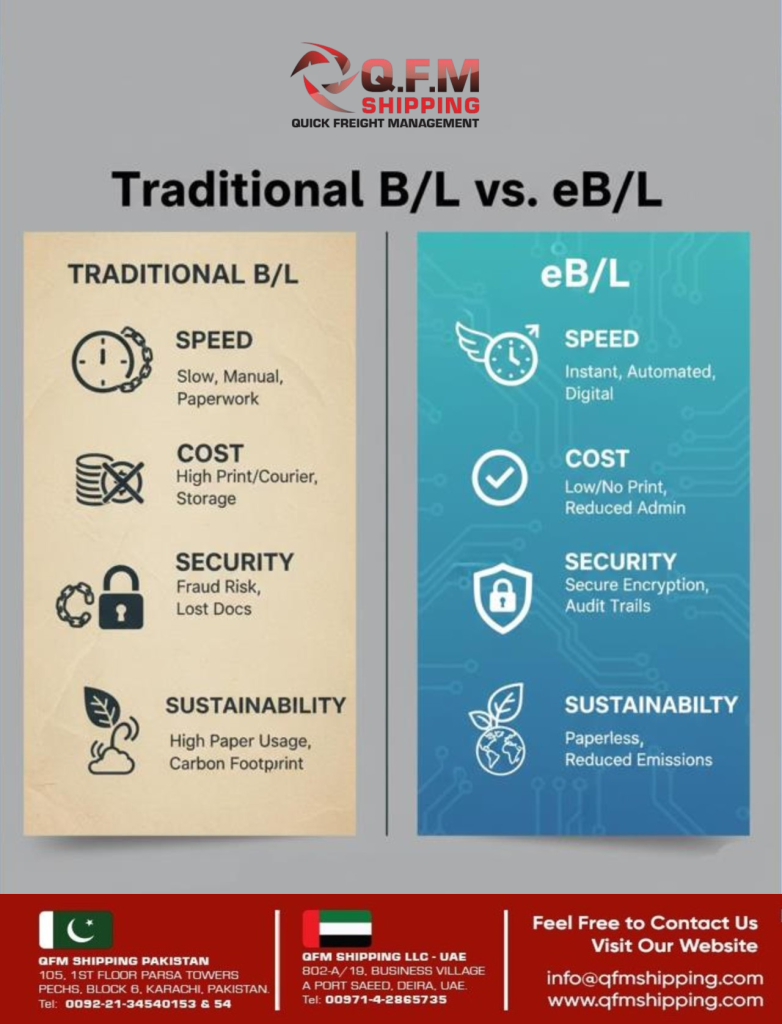
1. Speed and Efficiency
Traditional paper bills often travel slower than the cargo itself. An eB/L enables immediate transfer of documents across borders, eliminating courier delays and accelerating release of goods.
2. Enhanced Security
Paper bills are prone to fraud, forgery, and loss. eB/Ls, backed by blockchain or encrypted digital platforms, offer tamper-proof authentication and traceability.
3. Cost Reduction
By eliminating printing, courier services, and manual processing, companies can cut down operational costs significantly. Studies show eB/Ls can reduce administrative costs by up to 80%.
4. Sustainability
In the era of ESG (Environmental, Social, and Governance) reporting, going paperless aligns with global sustainability goals. An eB/L reduces the carbon footprint by minimizing paper use and courier logistics.
5. Regulatory & Legal Recognition
Global initiatives like the UNCITRAL Model Law on Electronic Transferable Records (MLETR) and adoption by shipping giants are paving the way for eB/Ls to gain full legal recognition worldwide.
Key Challenges to Adoption
-
Legal Framework Gaps: While some countries recognize eB/Ls, global harmonization is still ongoing.
-
Technology Integration: Small and medium exporters may struggle to adopt secure digital platforms.
-
Industry Standardization: Carriers, banks, and customs authorities need common standards for widespread use.
Real-World Adoption
Major carriers such as Maersk, Hapag-Lloyd, and CMA CGM are already piloting or scaling up eB/L platforms. Banks are beginning to accept electronic trade documents under letters of credit, and insurers are adapting their frameworks accordingly.
The Road Ahead: Towards a Paperless Global Trade
The move to 100% electronic trade documentation isn’t a question of if, but when. As digital ecosystems mature, eB/Ls will likely become the default for cross-border trade, just as digital boarding passes replaced paper tickets in aviation. For shippers, carriers, and freight forwarders, early adoption means staying ahead of the curve, cutting costs, and securing a competitive edge.
Conclusion
The Electronic Bill of Lading is more than a technological upgrade—it’s a paradigm shift. By merging efficiency, security, and sustainability, eB/Ls are set to revolutionize international trade. Businesses that embrace this digital transformation will not only streamline operations but also position themselves as leaders in the future of global commerce.
This is the presentation of QFM Shipping Pakistan
Getting Started is Easy
Ready to simplify your shipping? Contact us today for a free consultation and a custom quote. Our team is ready to design a logistics plan that will save you time, reduce costs, and give you peace of mind.
Contact Us:
-
Email: info@qfmshipping.com
-
Website: www.qfmshipping.com
