
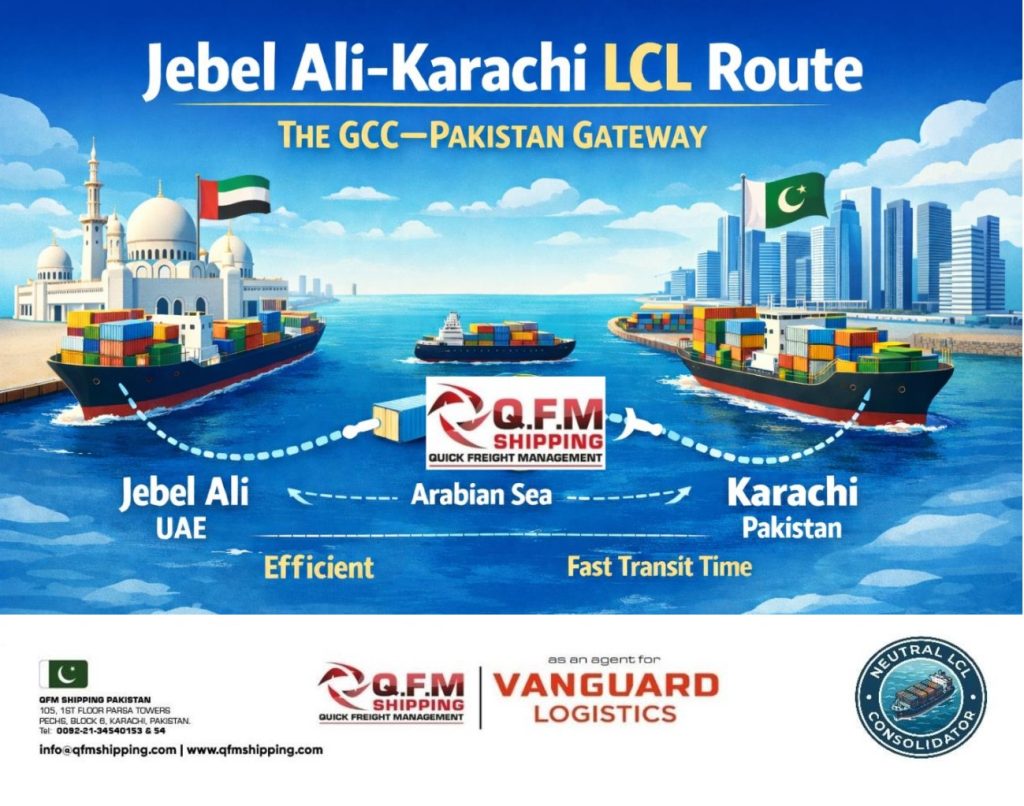
Jebel Ali–Karachi LCL Route | The GCC–Pakistan Gateway
The Jebel Ali–Karachi LCL route has emerged as one of the most strategic maritime corridors connecting the Gulf Cooperation Council (GCC) with Pakistan. As regional trade volumes grow and supply chains shift toward flexible, cost-efficient logistics, this route has become a preferred gateway for small and medium-sized importers, exporters, and regional distributors.
For businesses trading between the UAE and Pakistan, Less-than-Container Load (LCL) shipping via Jebel Ali offers reliability, frequency, and consolidation efficiency—especially when handled by an experienced neutral consolidator like QFM Shipping.
Why Jebel Ali Is the GCC’s Primary LCL Hub
Jebel Ali Port is the largest man-made port in the world and the most important logistics hub in the GCC. Its strategic advantages include:
-
Extensive feeder and mainline vessel connectivity
-
High-capacity bonded warehouses for LCL consolidation
-
Advanced customs clearance infrastructure
-
Strong links with GCC re-export markets (UAE, Saudi Arabia, Oman, Qatar, Bahrain)
For Pakistan-bound cargo, Jebel Ali acts as a collection and redistribution hub, aggregating shipments from across the Middle East before onward movement.
Karachi: Pakistan’s Maritime Trade Gateway
Karachi Port serves as Pakistan’s primary entry point for containerized imports and exports. Its proximity to industrial zones, consumption centers, and inland transport networks makes it the natural destination for GCC-origin LCL cargo.
Key advantages of Karachi for LCL imports include:
-
Direct access to Pakistan’s largest commercial market
-
Established customs processes for consolidated cargo
-
Strong deconsolidation and last-mile distribution ecosystem
How the Jebel Ali–Karachi LCL Route Works
The LCL flow between the GCC and Pakistan typically follows this structure:
-
Cargo collection across GCC markets
-
Consolidation at Jebel Ali warehouses
-
Weekly or bi-weekly sailings across the Arabian Sea
-
Arrival and deconsolidation at Karachi
-
Final delivery to consignee or inland destinations
This model allows shippers to move smaller volumes without waiting to fill a full container, significantly reducing inventory holding costs.
Transit Time & Service Reliability
Average transit time on the Jebel Ali–Karachi LCL route ranges between 10–14 days, depending on:
-
Cut-off schedules at origin
-
Consolidation timelines
-
Vessel rotation and port congestion
-
Customs clearance efficiency at destination
Compared to indirect routings or air freight, this route offers an optimal balance of speed, cost, and predictability.
Who Benefits Most From This Route?
This corridor is ideal for:
-
SMEs importing mixed or low-volume consignments
-
Retailers sourcing from multiple GCC suppliers
-
E-commerce sellers replenishing inventory frequently
-
Industrial buyers importing spare parts and components
For such shippers, LCL shipping via Jebel Ali avoids the financial burden of FCL while maintaining dependable delivery cycles.
The Role of QFM Shipping on This Corridor
QFM Shipping plays a critical role in optimizing the Jebel Ali–Karachi LCL gateway by operating as a neutral LCL consolidator focused on transparency, schedule integrity, and cargo security.
QFM Shipping supports this route through:
-
Structured LCL consolidation programs
-
Reliable weekly sailing schedules
-
Strong destination handling in Karachi
-
Clear documentation and visibility
-
Competitive freight economics for agents and direct shippers
As the exclusive agent of Vanguard Logistics in Pakistan, QFM Shipping brings global consolidation standards to regional trade lanes, ensuring consistency across GCC-Pakistan movements.
Why This Route Matters for GCC–Pakistan Trade
Trade between the GCC and Pakistan continues to expand across sectors such as:
-
Consumer goods
-
Electronics and appliances
-
Automotive parts
-
Building materials
-
FMCG and retail merchandise
The Jebel Ali–Karachi LCL route supports this growth by enabling scalable logistics—allowing businesses to ship more frequently, manage cash flow better, and respond faster to market demand.
Conclusion: A Gateway Built for Modern Trade
The Jebel Ali–Karachi LCL route is more than just a shipping lane—it is a strategic trade gateway linking GCC supply hubs with Pakistan’s commercial heart. With strong infrastructure at both ends and experienced operators like QFM Shipping managing consolidation and destination handling, this corridor continues to define efficient regional logistics.
For businesses seeking cost-effective, reliable, and scalable shipping between the GCC and Pakistan, this route remains one of the most practical solutions available today.
QFM Shipping is a Pakistan-based neutral LCL consolidator and freight-forwarding partner focused on network-centric logistics, exporter-first service design, and reliable multi-origin routing to global markets.
Ready to explore collaboration opportunities? Reach out to our team to discuss your LCL needs, strategic partnerships, and custom routing options. Let’s build stronger, smarter logistics together.
Email: info@qfmshipping.com
Phone: +92-21-34540153 & 54
+92-21-34540135 & 36
Tags:
Jebel Ali Karachi LCL route, GCC Pakistan shipping, LCL consolidation Jebel Ali, Jebel Ali to Karachi freight, QFM Shipping LCL, Pakistan LCL imports, QFM Shipping Pakistan
