
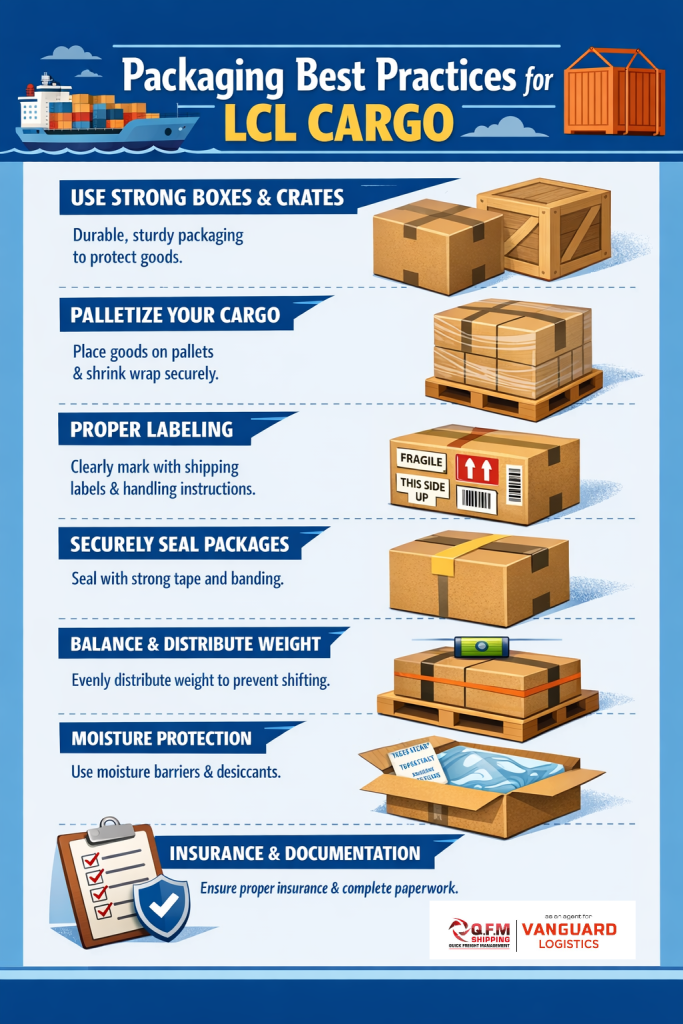
Packaging Best Practices for LCL Cargo
A Practical Guide for Safer, Cost-Efficient, and Damage-Free Shipments
Less than Container Load (LCL) shipping is an efficient and flexible option for businesses that do not require a full container. However, because LCL cargo is consolidated with shipments from multiple shippers, it is handled more frequently and exposed to higher risk if not packaged correctly. Proper packaging is therefore not just a recommendation—it is a critical success factor for cargo integrity, cost control, and customer satisfaction.
This guide outlines comprehensive, field-tested packaging best practices for LCL cargo, followed by how QFM Shipping Pakistan supports shippers through professional LCL handling and neutral consolidation services.
Why Packaging Matters More in LCL Shipments
Unlike FCL cargo, LCL shipments:
-
Are consolidated and deconsolidated multiple times
-
Share container space with cargo of varying sizes and weights
-
Are exposed to stacking pressure, vibration, and moisture
-
Rely heavily on clear labeling and documentation
Inadequate packaging can result in:
-
Physical damage or breakage
-
Cargo shifting and compression
-
Moisture ingress and corrosion
-
Claims, delays, and unexpected costs
Core Packaging Best Practices for LCL Cargo
1. Use Strong, Export-Grade Packaging
Always select packaging materials designed for international transport:
-
Heavy-duty corrugated cartons (double or triple wall)
-
Wooden crates compliant with ISPM-15 standards
-
Reinforced cartons for fragile or high-value goods
Weak domestic packaging is one of the most common causes of LCL damage.
2. Palletize Wherever Possible
Palletization improves handling safety and stability:
-
Use standard, good-quality pallets
-
Stack cartons evenly with no overhang
-
Secure cargo using shrink wrap, straps, or banding
-
Use corner protectors for added strength
Palletized cargo reduces handling risk during consolidation and deconsolidation.
3. Balance and Distribute Weight Correctly
Uneven weight distribution leads to:
-
Collapsed cartons
-
Load shifting during transit
-
Damage to neighboring cargo
Best practice:
-
Place heavier items at the bottom
-
Keep weight centered on pallets
-
Avoid top-heavy or unstable stacks
4. Apply Clear and Durable Labeling
Every package should be clearly labeled with:
-
Shipper and consignee details
-
Case numbers and total package count
-
Handling instructions (Fragile, This Side Up, Keep Dry)
-
Destination port and country
Labels should be waterproof, tear-resistant, and applied on multiple sides.
5. Protect Against Moisture and Humidity
Moisture damage is a major risk in sea freight:
-
Use plastic liners or moisture barrier bags
-
Insert desiccants or silica gel
-
Wrap sensitive cargo in waterproof material
-
Avoid direct contact with container floors
This is especially critical for electronics, metal goods, textiles, and paper products.
6. Secure and Seal All Packages
All cartons and crates must be properly sealed:
-
Use strong, export-grade adhesive tape
-
Reinforce seams and edges
-
Avoid using string or weak bindings alone
Poor sealing increases the risk of pilferage and cargo loss.
7. Separate Fragile and Sensitive Cargo
Where possible:
-
Use internal cushioning (foam, bubble wrap, molded inserts)
-
Crate fragile machinery or glass items
-
Clearly mark fragile cargo on all sides
Do not assume careful handling—design packaging to withstand rough conditions.
8. Ensure Accurate Documentation and Insurance
Correct packaging must be supported by correct paperwork:
-
Packing lists should match physical cargo
-
Declare cargo nature accurately
-
Arrange cargo insurance for LCL shipments
Insurance is especially important for LCL, where liability recovery can be complex.
Common LCL Packaging Mistakes to Avoid
-
Using domestic cartons for export shipments
-
Overloading cartons beyond weight limits
-
Missing or unclear labels
-
No moisture protection
-
Loose or unpalletized cargo when palletization is feasible
Avoiding these mistakes significantly reduces claims and delays.
How QFM Shipping Pakistan Supports LCL Cargo Packaging
QFM Shipping Pakistan plays an active role in ensuring that LCL cargo is properly prepared, consolidated, and protected throughout the shipping cycle.
QFM Shipping LCL Services Include:
Neutral LCL Consolidation
-
Professional consolidation with compatible cargo
-
Careful stowage planning to minimize damage risk
-
Neutral handling for freight forwarders and shippers
Pre-Shipment Packaging Guidance
-
Practical advice on export-grade packaging
-
Recommendations for palletization, crating, and labeling
-
Support for first-time and SME exporters
Warehouse Handling & Cargo Integrity
-
Controlled handling at origin warehouses
-
Proper segregation of fragile and sensitive cargo
-
Secure storage prior to container loading
Global LCL Network
-
Multi-origin consolidation from China, Dubai, Singapore, Europe, and the USA
-
Reliable routing into Karachi and Pakistan gateways
-
Consistent service standards across trade lanes
Documentation & Compliance Support
-
Assistance with packing lists and shipping documentation
-
Alignment between physical cargo and declared details
-
Reduced risk of disputes and customs delays
By combining correct packaging practices with QFM Shipping’s consolidation expertise, shippers significantly improve cargo safety, predictability, and cost efficiency.
Final Thoughts
Packaging is not a minor operational detail in LCL shipping—it is a strategic safeguard. Strong packaging protects cargo, reduces claims, avoids delays, and preserves commercial relationships. When paired with a knowledgeable LCL partner like QFM Shipping Pakistan, businesses gain both physical protection for their goods and operational confidence across global trade lanes.
Ready to explore collaboration opportunities? Reach out to our team to discuss your LCL needs, strategic partnerships, and custom routing options. Let’s build stronger, smarter logistics together.
Email: info@qfmshipping.com
Phone: +92-21-34540153 & 54
+92-21-34540135 & 36
Tags:
LCL cargo packaging best practices, LCL shipping packaging guidelines, export packaging for LCL cargo, how to pack LCL shipments, LCL consolidation packaging, sea freight packaging tips, cargo packaging for freight forwarding, neutral LCL consolidation Pakistan, QFM Shipping Pakistan LCL services
