
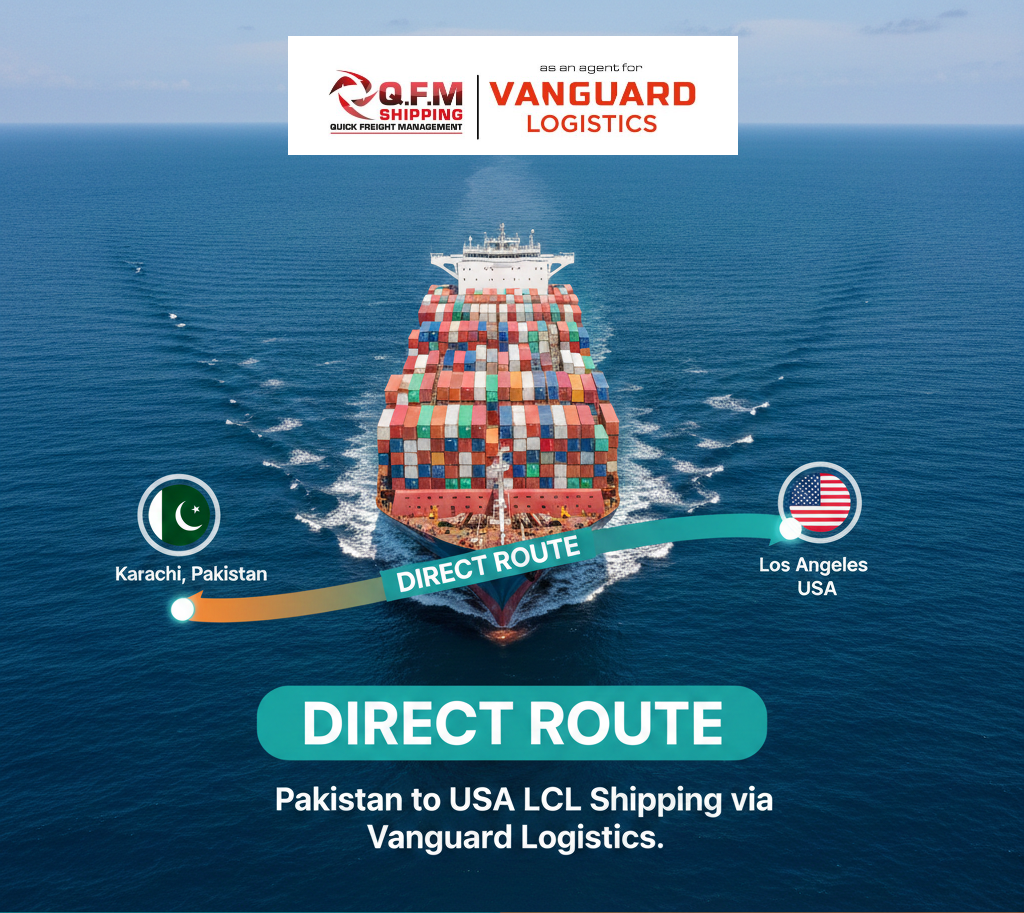
Pakistan to USA LCL Shipping via Vanguard Logistics | QFM Shipping Route Guide
Shipping smaller cargo volumes from Pakistan to the United States can be complex if you do not have enough volume for a full container (FCL). This is precisely where Pakistan to USA LCL shipping (Less-than-Container Load) becomes the most cost-effective and operationally efficient solution—especially when it is executed through a structured consolidation network.
As a logistics partner in Pakistan, QFM Shipping supports exporters, SMEs, trading companies, and freight forwarders by enabling access to Vanguard Logistics’ global LCL consolidation network, offering a predictable route structure, disciplined cut-offs, and end-to-end shipment visibility.
This guide explains the typical routing, process, documentation, timelines, cost drivers, and practical tips to move LCL cargo from Pakistan to the USA smoothly.
1) What LCL Means for Pakistan–USA Shipments
LCL (Less-than-Container Load) is an ocean freight service where your shipment shares container space with cargo from other shippers. You pay based on your chargeable volume/weight (often CBM or W/M), not for the entire container.
LCL is ideal when:
-
Your cargo is 1–15 CBM (typical LCL range, though larger is possible)
-
You ship regularly, but not enough for FCL
-
You want scheduled departures and predictable consolidation procedures
-
You need door-to-door options in the USA
2) How the Vanguard Logistics LCL Network Helps
International LCL is only as strong as its consolidation and destination handling discipline. Vanguard Logistics is known for structured consolidation operations across global trade lanes, which helps standardize:
-
Origin receiving and cargo cut-offs
-
Consolidation planning and container utilization
-
Documentation consistency
-
Destination deconsolidation and last-mile options
-
Network-driven routing options to major US gateways
With QFM Shipping coordinating locally in Pakistan, customers typically benefit from:
-
Faster execution at origin through a defined process
-
Reduced risk of missed cut-offs
-
Better communication and milestone tracking
-
A clearer cost structure (origin, freight, destination components)
3) Typical Pakistan to USA LCL Routing Flow (Route Map in Words)
While routing can vary based on carrier schedules, seasonality, and port congestion, most Pakistan to USA LCL shipments follow a structured sequence:
Step A: Cargo Pickup / Delivery to Origin Facility (Pakistan)
-
Cargo is either picked up from your factory/warehouse or you deliver it to the designated receiving point.
-
Export packing standards are checked (cartons/pallets/crates, labeling, etc.).
Step B: Origin Handling and Consolidation
-
Cargo is received, measured, weighed, and documented.
-
It is then consolidated with compatible cargo (by destination, handling class, commodity type, and cut-off windows).
-
The consolidated container is dispatched toward the chosen sailing route.
Step C: Ocean Freight to USA Gateway
-
Container moves on planned services to a US gateway (commonly aligned to where final delivery will occur).
-
Transit time depends on sailing schedule and any transshipment points.
Step D: US Arrival, Deconsolidation, and Customs Coordination
-
Container is unloaded and moved to the CFS (Container Freight Station) for deconsolidation.
-
The shipment is separated, and final paperwork and compliance steps are completed for release and delivery.
Step E: Final Delivery in the USA
You can choose:
-
CFS-to-door (delivery to your consignee’s address), or
-
CFS pickup (consignee collects from the facility), depending on your plan and destination.
4) Key Documents for Pakistan to USA LCL Shipping
A smooth shipment is often won or lost in documentation. For most commercial LCL exports from Pakistan to the USA, expect:
Commercial & Export Documents
-
Commercial Invoice
-
Packing List
-
Shipper’s Letter of Instruction (SLI) (when applicable)
-
Certificate of Origin (if required by buyer/commodity)
-
Insurance certificate (optional but recommended)
Ocean Freight & Shipment Documents
-
House Bill of Lading (HBL) for LCL shipments
-
Master Bill of Lading (MBL) for the consolidated container (handled within the network)
US Import Compliance (Importer/Consignee Side)
-
Consignee/Importer details (IRS/EIN where needed)
-
ISF (Importer Security Filing) 10+2 timing compliance (critical for USA)
-
Any commodity-specific requirements (FDA, FCC, USDA, etc., depending on goods)
Practical advice: Ensure your invoice and packing list are consistent on descriptions, HS codes (if used), quantities, and weights. Minor mismatches can create delays in clearance and CFS release.
5) LCL Packaging and Labeling Best Practices
Because LCL cargo is handled more frequently than FCL (received, moved, consolidated, deconsolidated), cargo integrity is critical.
Recommended standards:
-
Palletize where possible and use corner boards + stretch wrap
-
Use export-grade cartons (double wall for heavier items)
-
If fragile: crate and apply “FRAGILE / THIS SIDE UP” labeling
-
Each package should have:
-
Shipper name
-
Consignee name
-
Destination city/state
-
Piece count reference (e.g., 1/10, 2/10…)
-
Good packaging reduces damage risk and prevents rework at origin/destination stations.
6) What Impacts Transit Time for Pakistan to USA LCL?
There is no single fixed transit time, because LCL is schedule-driven and depends on routing and cut-offs. However, the biggest drivers are:
-
Cut-off timing (missed cut-off usually means waiting for the next cycle)
-
Port congestion and vessel schedule reliability
-
Transshipment frequency (direct vs. multiple legs)
-
US gateway selection and final delivery distance
-
Customs and ISF readiness on the consignee/importer side
-
CFS throughput at destination (peak seasons can slow devanning and release)
If speed is critical, request routing that prioritizes fewer handovers and confirm document readiness before cargo acceptance.
7) How LCL Costs Are Calculated (And How to Control Them)
Your total Pakistan–USA LCL shipping cost usually includes:
Origin Charges (Pakistan)
-
Pickup (if requested)
-
Receiving, handling, and documentation
-
Export processing and CFS/terminal-related fees (as applicable)
Ocean Freight
-
Charged by W/M (Weight/Measure) or CBM with minimums
-
Higher density cargo may shift chargeable basis
Destination Charges (USA)
-
CFS deconsolidation / handling
-
Documentation/processing fees
-
Delivery (if door service selected)
-
Customs brokerage (usually arranged by importer/consignee)
Cost-control tips:
-
Optimize carton dimensions (CBM drives cost)
-
Palletize smartly to reduce cubic loss
-
Avoid “loose cargo” when it inflates measurement
-
Confirm if your commodity triggers extra handling or compliance fees
-
Align shipment timing to avoid storage/demurrage scenarios
8) Common Mistakes That Cause Delays (And How QFM Helps Prevent Them)
Typical risk points in Pakistan to USA LCL shipping include:
-
Late documents (invoice/packing list errors, missing consignee data)
-
Under-declared cargo dimensions leading to re-measurement disputes
-
Weak packaging causing damage or rework
-
ISF not filed on time (US compliance)
-
Mismatch between shipping marks and paperwork
-
Unclear Incoterms leading to destination charge disputes
QFM Shipping’s value in a route guide approach is procedural: aligning your cargo readiness, cut-offs, documentation, and handover timing so your shipment enters the consolidation cycle correctly and arrives in the USA with minimal friction.
9) Who Should Use This Route Guide?
This Pakistan to USA LCL route is typically used by:
-
Textile and apparel exporters
-
Surgical instruments and light manufacturing exporters
-
Sports goods and leather products traders
-
E-commerce exporters shipping replenishment to US warehouses
-
SMEs shipping samples and small commercial lots
-
Freight forwarders needing a neutral, reliable LCL solution
10) Quick Checklist: Pakistan to USA LCL Shipment Readiness
Use this before booking:
-
Cargo packed for export handling (pallet/crate/carton quality)
-
Final dimensions and weights confirmed
-
Invoice and packing list finalized and aligned
-
Consignee/importer details confirmed (including compliance requirements)
-
Clear Incoterms (EXW, FOB, CFR, DAP, etc.) agreed with buyer
-
Delivery option selected (CFS pickup vs. door delivery)
-
Cargo ready before cut-off
Conclusion: A Practical Pakistan–USA LCL Route with Network Discipline
For exporters and forwarders, Pakistan to USA LCL shipping is not just about getting space on a vessel—it is about moving through consolidation and deconsolidation without delays, disputes, or documentation gaps.
By leveraging Vanguard Logistics’ LCL network and executing the Pakistan-side operations through QFM Shipping, shippers gain a clearer, process-driven route from cargo handover in Pakistan to release and delivery in the United States.
Call to Action
If you want a tailored Pakistan to USA LCL quote, share: cargo commodity, total cartons, dimensions, gross weight, pickup location (city), and US destination ZIP code. QFM Shipping will recommend the most efficient LCL routing via Vanguard Logistics and guide you from origin cut-off to US delivery.
QFM Shipping — Your LCL Consolidation Partner in Pakistan
Request routing options, consolidation schedules, and a practical execution plan for your next shipment.
Partner with QFM Shipping & Vanguard Logistics Services — and take your global forwarding business to the next level.
Connect with Us
Ready to explore collaboration opportunities? Reach out to our team to discuss your LCL needs, strategic partnerships, and custom routing options. Let’s build stronger, smarter logistics together.
Email: info@qfmshipping.com
Phone: +92-21-34540153 & 54 +92-21-34540135 & 36
Website: www.qfmshipping.com
Tags:
Pakistan to USA LCL shipping, LCL shipping Pakistan to USA, Pakistan to USA sea freight LCL, LCL consolidation Pakistan, Vanguard Logistics Pakistan agent, QFM Shipping Vanguard Logistics, LCL freight forwarder Pakistan, door to door LCL Pakistan to USA, LCL transit time Pakistan to USA, Karachi to USA LCL, Pakistan export shipping to USA, USA customs clearance for LCL, ISF filing LCL, LCL documentation Pakistan, ocean freight LCL to USA, LCL deconsolidation USA, LCL chargeable weight CBM, freight consolidation to USA
