
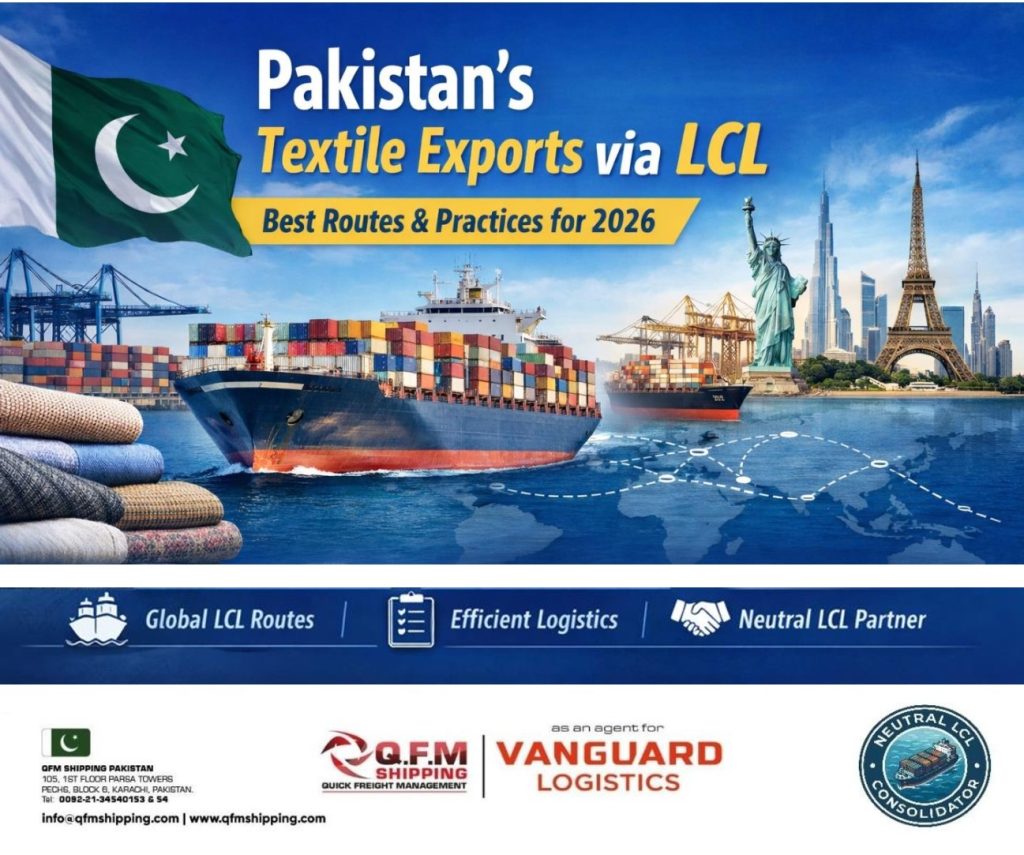
Pakistan’s Textile Exports via LCL: Best Routes & Practices for Cost-Effective Global Shipping
Introduction
Pakistan’s textile sector remains the backbone of the nation’s export economy, contributing over 60 % of total exports and employing millions across manufacturing and supply chains. In recent years, Less-Than-Container Load (LCL) shipping has emerged as a smart, flexible solution for textile exporters — especially SMEs — who need reliable, cost-efficient access to global markets without the scale or cost burden of full container shipments.
This guide explains why LCL matters, how it works for Pakistan’s textile exporters, the best global routes and logistics practices, and how to ensure your cargo reaches destinations safely and on schedule.
What Is LCL Shipping and Why It Matters for Textile Exports
LCL stands for Less Than Container Load. Instead of booking an entire container, exporters send smaller consignments that are consolidated with other shippers’ cargo in a shared container.
Key Advantages of LCL for Textile Exporters
-
Cost efficiency: You only pay for the space you use, reducing overhead for smaller shipments.
-
Frequent departures: Weekly consolidation sailings give flexibility and shorter lead times for markets with regular demand.
-
No need to wait: Exporters can ship as soon as orders arrive, improving cash flow and delivery predictability.
-
Accessible global reach: Modern LCL networks link Pakistan to Europe, the Middle East, North America, Asia and ASEAN markets via hub-and-spoke consolidation services.
Pakistan’s Textile Export Landscape (2026 Insight)
Pakistan’s textile exports continue to climb, with one recent government estimate placing export value at over USD 10.9 billion in the first seven months of the 2025–26 fiscal year.
This growth underscores the need for agile logistics solutions such as LCL, especially for small and medium textile exporters seeking cost-effective entry into competitive markets.
Pakistan Textile Exports via LCL: A Strategic Advantage for Exporters
Pakistan textile exports via LCL have become a critical logistics model for manufacturers seeking flexibility, cost control, and global reach. With textiles contributing the majority share of Pakistan’s export revenue, exporters must adopt efficient freight strategies to remain competitive in Europe, the GCC, North America, and emerging Asian markets.
For small and mid-sized textile exporters, Less-Than-Container Load (LCL) shipping provides a powerful alternative to full container shipments. Instead of waiting to fill an entire 20’ or 40’ container, exporters ship smaller consignments through weekly consolidation services from Karachi.
This is where QFM Shipping Pakistan, a neutral LCL consolidator and exclusive agent of Vanguard Logistics, plays a strategic role.
Why Pakistan Textile Exports via LCL Are Growing
Pakistan textile exports via LCL are expanding due to several market realities:
-
Buyers placing smaller, frequent orders
-
Faster fashion and shorter production cycles
-
Increased SME participation in exports
-
Cash-flow optimization needs
-
Diversification of export markets
LCL allows exporters to ship 2 CBM, 5 CBM, or 10 CBM without paying for unused container space.
Major LCL Export Routes from Pakistan
1️⃣ Karachi – Europe LCL Routes


Key gateways:
-
Hamburg
-
Rotterdam
-
Antwerp
These routes support Pakistan textile exports via LCL for garments, home textiles, denim, towels, and fabric rolls. Weekly sailings and strong transshipment connectivity ensure reliable lead times.
2️⃣ Karachi – GCC LCL Routes


High-volume destinations:
-
Jebel Ali (UAE)
-
Dammam (KSA)
-
Riyadh (via Dammam)
-
Doha
The GCC remains a strong textile and ready-made garment market for Pakistani exporters. Short transit times make LCL highly effective.
3️⃣ Pakistan – North America LCL Corridors

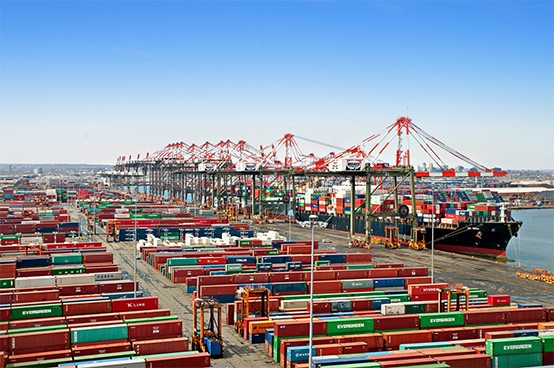
Via major hub ports, Pakistan textile exports via LCL reach:
-
New York
-
Savannah
-
Los Angeles
-
Toronto
Reliable consolidation through global neutral networks ensures competitive freight pricing and structured schedules.
Best Practices for Pakistan Textile Exports via LCL
1. Smart Packaging for Shared Containers
Textiles are sensitive to moisture and compression. Recommended practices:
-
Poly wrapping with moisture protection
-
Palletization for stability
-
Carton marking with export references
-
Volume optimization to reduce chargeable CBM
Since LCL cargo shares space, packaging integrity is critical.
2. Documentation Accuracy
For smooth customs clearance:
-
Commercial Invoice
-
Packing List
-
HS Codes
-
Certificate of Origin
-
Export GD
Incorrect paperwork increases delays and demurrage risk.
3. Work With a Neutral LCL Consolidator
Neutral consolidation ensures:
-
Competitive freight rates
-
No conflict of interest
-
Multi-destination weekly departures
-
Predictable cut-off schedules
-
Transparent tracking
QFM Shipping Pakistan operates as a neutral LCL platform, empowering freight forwarders and direct exporters with structured consolidation services.
4. Align Production with LCL Cut-Offs
Exporters should:
-
Schedule production based on weekly consolidation cycles
-
Avoid last-minute stuffing
-
Use inland trucking planning from Faisalabad, Lahore, and Sialkot
Efficient coordination improves cost control.
LCL vs FCL for Textile Exporters
| Factor | LCL | FCL |
|---|---|---|
| Volume | Small to medium | Large |
| Cost Structure | Pay per CBM | Fixed container cost |
| Flexibility | High | Moderate |
| Best For | SME exporters | Bulk contracts |
For growing exporters, Pakistan textile exports via LCL provide flexibility without capital lock-in.
Why QFM Shipping Pakistan Is Positioned for Textile LCL
As an established neutral LCL consolidator in Pakistan, QFM Shipping offers:
-
Weekly global consolidation departures
-
Europe, GCC, USA, and Asia coverage
-
Structured routing schedules
-
Competitive freight pricing
-
Transparent milestone tracking
-
Local expertise in Karachi operations
Through its global agency network, QFM strengthens Pakistan textile exports via LCL by providing predictable service reliability.
Ready to Optimize Your Textile Exports?
If you are exporting garments, denim, home textiles, towels, fabrics, or fashion products, QFM Shipping Pakistan can structure the right LCL solution for your cargo.
Get a Freight Quote Today
Email: info@qfmshipping.com
Phone: +92-21-34540153 & 54
+92-21-34540135 & 36
Location: Karachi, Pakistan
👉 Request your customized LCL export plan
👉 Weekly consolidation schedules available
👉 Neutral support for freight forwarders
Conclusion
Pakistan textile exports via LCL are no longer an alternative — they are a strategic necessity for competitive global trade. With proper packaging, documentation discipline, and a structured neutral consolidation partner like QFM Shipping Pakistan, exporters can unlock global markets with efficiency and control.
QFM Shipping Pakistan stands ready to support forwarders and exporters with professional, neutral LCL consolidation from Karachi to Hamburg.
QFM Shipping is a Pakistan-based neutral LCL consolidator and freight-forwarding partner focused on network-centric logistics, exporter-first service design, and reliable multi-origin routing to global markets.
Ready to explore collaboration opportunities? Reach out to our team to discuss your LCL needs, strategic partnerships, and custom routing options. Let’s build stronger, smarter logistics together.
Email: info@qfmshipping.com
Phone: +92-21-34540153 & 54
+92-21-34540135 & 36
Tags:
LCL shipping Pakistan, textile export logistics Pakistan, Karachi LCL routes, neutral LCL consolidator Pakistan, Pakistan to Europe LCL, Pakistan to GCC LCL, QFM Shipping Pakistan
