
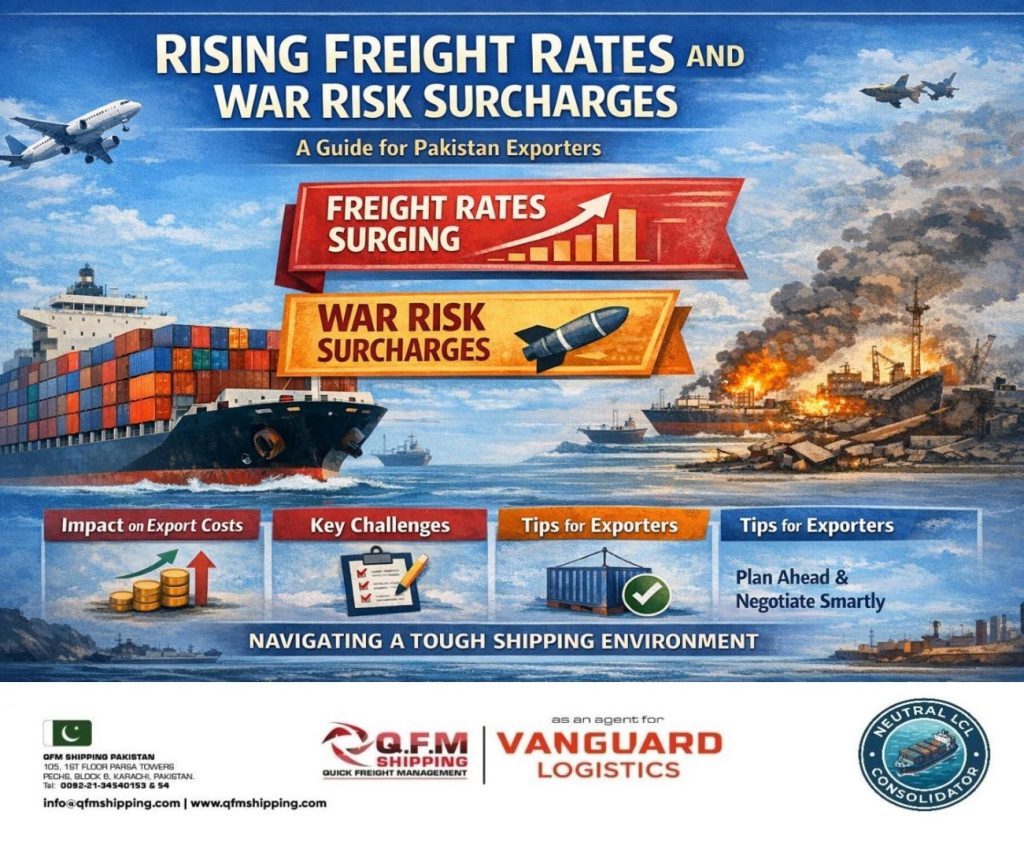
Rising Freight Rates and War Risk Surcharges: A Guide for Pakistan Exporters
Global shipping markets are once again experiencing major volatility. For exporters in Pakistan, rising freight rates and war risk surcharges are becoming a significant challenge that can directly affect profitability, delivery reliability, and supply chain stability.
With geopolitical tensions increasing and major trade routes facing disruptions, exporters must rethink their logistics strategies. Understanding these developments—and working with the right freight partner—can make a critical difference in navigating today’s complex shipping environment.
This guide explains what is driving these changes and how exporters can protect their supply chains with the support of experienced logistics partners like QFM Shipping Pakistan.
Why Freight Rates Are Rising Globally
Freight costs are influenced by multiple global factors. In the current environment, several developments are pushing shipping rates upward.
Geopolitical Conflicts
Conflicts in key maritime regions increase operational risks for shipping lines. When vessels transit through unstable areas, shipping companies face higher insurance costs and security risks.
These additional expenses are passed on to exporters through war risk surcharges and higher freight rates.
Longer Shipping Routes
When shipping companies avoid high-risk areas, vessels must take alternative routes.
This often results in:
-
Longer transit times
-
Increased fuel costs
-
Reduced vessel availability
-
Higher freight rates
For exporters shipping from Karachi to Europe, the Middle East, and North America, these route changes can significantly impact logistics planning.
Rising Marine Insurance Costs
Shipping insurers increase premiums when vessels enter conflict-risk zones. These premiums are typically charged as war risk surcharges, which are applied per container or per shipment.
Understanding War Risk Surcharges
A war risk surcharge (WRS) is an additional fee applied by carriers when shipping through areas considered high risk due to military conflict, piracy, or geopolitical tensions.
This surcharge covers:
-
Higher marine insurance premiums
-
Additional vessel security measures
-
Risk management costs for shipping lines
Depending on the region and market conditions, war risk surcharges can increase freight costs significantly.
For exporters working with competitive international buyers, these unexpected logistics costs can create serious challenges.
How Rising Freight Rates Affect Pakistan Exporters
Pakistan’s export economy relies heavily on global shipping. Industries such as textiles, garments, leather goods, surgical instruments, and rice depend on reliable and cost-effective logistics.
When freight rates increase, exporters face several challenges.
Higher Export Costs
Rising freight rates directly increase the cost of exporting goods. In highly competitive markets, exporters may struggle to pass these additional costs to buyers.
Delivery Delays
Alternative shipping routes and congestion at major ports can cause shipment delays. For time-sensitive exports such as fashion garments or seasonal products, delays can be costly.
Reduced Profit Margins
When exporters sign contracts months in advance, sudden freight increases can erode already tight profit margins.
The Strategic Role of QFM Shipping Pakistan
In times of global shipping uncertainty, working with a knowledgeable logistics partner becomes essential.
QFM Shipping Pakistan, an exclusive agent of Vanguard Logistics, plays a vital role in helping exporters manage freight volatility and maintain supply chain stability.
Access to Global Consolidation Networks
Through its partnership with Vanguard Logistics, QFM Shipping Pakistan provides exporters with access to one of the world’s most reliable LCL (Less-than-Container-Load) consolidation networks.
This enables exporters to:
-
Ship smaller cargo volumes efficiently
-
Reduce freight costs through consolidation
-
Access reliable global shipping schedules
Reliable Freight Planning
QFM Shipping Pakistan continuously monitors global shipping developments, including:
-
Freight rate trends
-
Route disruptions
-
Port congestion
-
geopolitical risks affecting shipping lanes
This allows exporters to plan shipments more strategically and avoid costly last-minute disruptions.
Alternative Routing Strategies
When major shipping routes face disruptions, QFM Shipping Pakistan helps exporters identify alternative routing options to maintain cargo flow and minimize delays.
For example:
-
GCC gateway routing via Jebel Ali
-
European consolidation routes via Istanbul or Hamburg
-
Flexible LCL consolidation solutions
These routing strategies can help exporters maintain reliable delivery timelines even during global logistics disruptions.
Neutral Consolidation Advantage
As a neutral consolidator partner, QFM Shipping Pakistan supports freight forwarders and exporters by offering flexible cargo consolidation solutions.
This ensures:
-
Greater shipping flexibility
-
Reduced logistics costs
-
Access to global trade lanes
Strategies Exporters Should Follow
To protect their supply chains during periods of rising freight costs, exporters should adopt proactive logistics strategies.
Plan Shipments Earlier
Booking shipments early helps secure space before freight rates increase further.
Work with Experienced Logistics Partners
Partnering with companies like QFM Shipping Pakistan allows exporters to access expert guidance and reliable shipping solutions.
Diversify Shipping Routes
Using alternative trade routes reduces dependency on any single shipping corridor.
Monitor Global Shipping Developments
Understanding global logistics trends helps exporters anticipate disruptions and respond quickly.
Logistics Strategy Is Now a Competitive Advantage
In the past, freight logistics was often considered a simple operational function. Today, it has become a critical strategic factor for global trade success.
Exporters who work with experienced logistics partners such as QFM Shipping Pakistan can better manage shipping risks, control costs, and maintain supply chain reliability even during periods of global disruption.
Conclusion
The global shipping industry is entering a period of increased volatility. Rising freight rates and war risk surcharges are likely to remain a challenge for exporters worldwide.
However, with the right logistics planning and support from experienced partners like QFM Shipping Pakistan, exporters can successfully navigate these disruptions and keep their supply chains moving.
By staying informed, planning shipments strategically, and leveraging global consolidation networks, Pakistan exporters can continue to compete effectively in international markets.
Tags:
rising freight rates, war risk surcharges, Pakistan exporters logistics, global shipping disruptions, freight risk management Pakistan, export logistics strategy Pakistan, QFM Shipping Pakistan
