
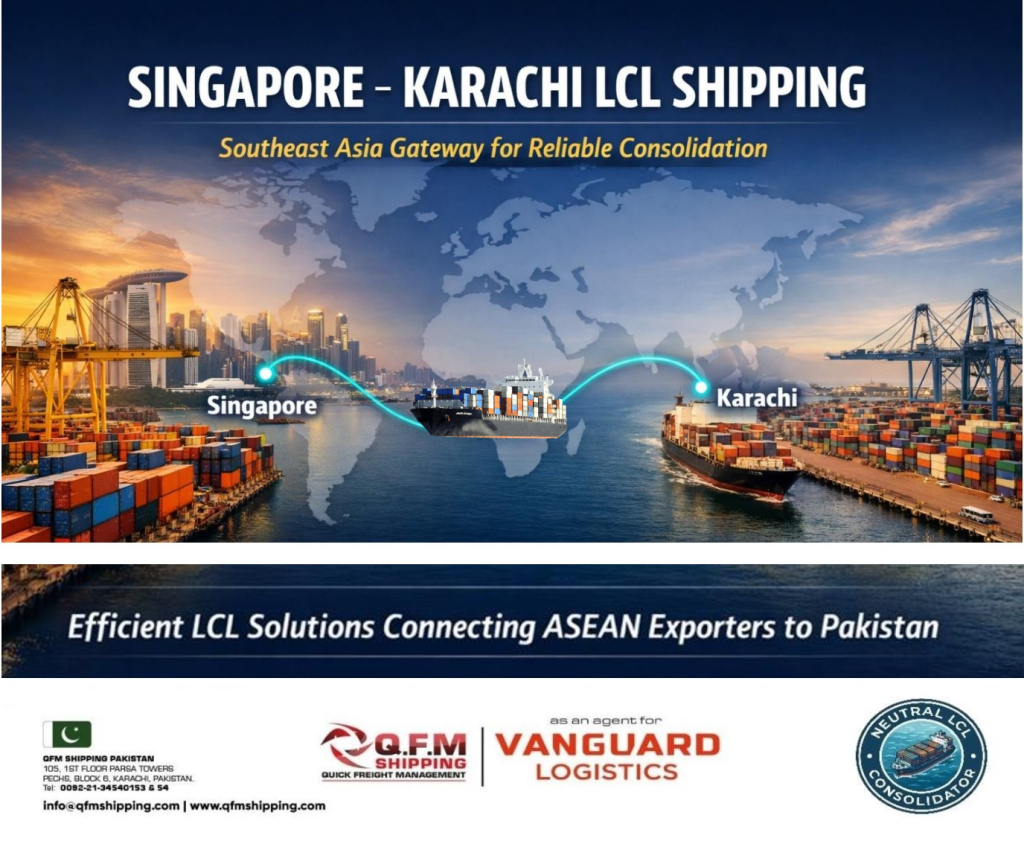
Singapore–Karachi LCL Shipping | Southeast Asia Gateway
Why Singapore Is the Southeast Asia Gateway to Pakistan
Trade between Southeast Asia and Pakistan continues to expand, driven by electronics, machinery, textiles, chemicals, consumer goods, and industrial components. At the center of this corridor stands Singapore — one of the world’s most advanced maritime hubs.
For Pakistani importers and regional exporters, Singapore–Karachi LCL shipping has become a strategic route for cost-efficient cargo movement. Through structured Less-than-Container Load (LCL) consolidation, small and medium-volume shipments can move reliably to Karachi, Pakistan’s primary maritime gateway.
This guide explains how the route works, transit expectations, cost drivers, and how businesses can optimize their LCL strategy.
What Is Singapore–Karachi LCL Shipping?
LCL (Less-than-Container Load) shipping allows multiple shippers to share container space. Instead of paying for a full 20ft or 40ft container, cargo is consolidated with other shipments bound for the same destination.
In the Singapore–Karachi corridor, cargo from:
-
Singapore
-
Malaysia
-
Thailand
-
Indonesia
-
Vietnam
-
Philippines
is consolidated in Singapore’s bonded warehouses and loaded into containers destined for Karachi.
Why Singapore Works as a Consolidation Hub
Singapore offers:
-
High-frequency sailings to South Asia
-
Efficient transshipment connectivity
-
Advanced port automation
-
Strong customs framework
-
Reliable feeder and mainline carrier networks
This makes it ideal for ASEAN cargo consolidation before final dispatch to Pakistan.
Typical Shipping Route: Singapore to Karachi
The maritime path typically follows:
Singapore → Strait of Malacca → Indian Ocean → Arabian Sea → Karachi Port
Depending on the carrier and service structure, shipments may be:
-
Direct sailings
-
Transshipped via Colombo
-
Routed via regional hubs
Transit Time: What to Expect
Average Transit Time:
14–22 days (port-to-port)
Transit depends on:
-
Direct vs transshipment routing
-
Carrier schedule frequency
-
Seasonal congestion
-
Customs clearance speed in Karachi
LCL shipments may require additional 2–4 days for consolidation and deconsolidation handling.
Cost Structure of Singapore–Karachi LCL Shipping
LCL pricing is generally calculated per:
-
Revenue Ton (RT)
-
Cubic Meter (CBM)
-
Weight-to-measure ratio (whichever is higher)
Cost Components Include:
-
Ocean freight
-
Origin consolidation charges
-
Destination deconsolidation charges
-
Documentation fees
-
Terminal handling charges
-
Customs clearance
-
Delivery (if door service requested)
For SMEs importing electronics, garments, spare parts, or industrial components, LCL significantly reduces capital lock-in compared to full-container shipping.
Industries Using Singapore–Karachi LCL Route
-
Electronics & IT equipment
-
Automotive spare parts
-
Textile raw materials
-
Industrial chemicals
-
Consumer goods & retail imports
-
Machinery components
Singapore acts as a redistribution center for global brands supplying South Asia.
Key Advantages of This Trade Lane
1. Cost Efficiency for Small Shipments
Businesses avoid paying for unused container space.
2. High Sailing Frequency
Singapore offers regular weekly departures toward Pakistan.
3. Flexible Volume Handling
Suitable for 1 CBM to 12 CBM shipments.
4. Strong Network Reliability
Singapore’s port efficiency reduces delay risk.
5. Ideal for Neutral Consolidation
Freight forwarders benefit from structured neutral LCL operations.
Challenges to Consider
Despite its advantages, importers should plan for:
-
Port congestion during peak season
-
Documentation discrepancies
-
Customs valuation delays
-
Inaccurate cargo measurement
-
Improper packaging for multi-shipper containers
Proper coordination with experienced LCL operators reduces these risks.
Documentation Required for Singapore–Karachi LCL Imports
-
Commercial Invoice
-
Packing List
-
Bill of Lading
-
HS Code declaration
-
Import License (if applicable)
-
Certificate of Origin (if required)
Incorrect documentation can delay cargo release at Karachi.
How Businesses Can Optimize LCL Shipping
✔ Consolidate Weekly Orders
Avoid frequent micro-shipments that increase per-unit cost.
✔ Use Accurate CBM Calculations
Over-declared volume increases freight charges.
✔ Ensure Proper Palletization
Prevents cargo damage during deconsolidation.
✔ Work with Neutral Consolidators
Protects client confidentiality for freight forwarders.
✔ Monitor Port Conditions
Plan shipments ahead of seasonal congestion.
Why Singapore–Karachi LCL Shipping Matters for Pakistan
Pakistan’s growing demand for ASEAN goods — especially electronics, chemicals, and industrial supplies — makes this corridor essential.
Singapore functions as:
-
A transshipment bridge between East Asia and South Asia
-
A consolidation center for global exports
-
A reliable maritime pivot for Pakistan-bound cargo
For SMEs, trading houses, and regional distributors, this route supports scalable import growth without high container costs.
Strategic Outlook: Southeast Asia–Pakistan Trade Growth
As ASEAN economies expand manufacturing and Pakistan increases industrial consumption, the Singapore–Karachi LCL corridor is expected to:
-
Increase sailing frequency
-
Improve transit predictability
-
Expand cold-chain and specialized cargo options
-
Strengthen neutral consolidation networks
Trade digitization and improved customs coordination will further enhance efficiency.
QFM Shipping Pakistan’s Role in Singapore–Karachi LCL Shipping
As a neutral and professionally managed freight consolidator, QFM Shipping Pakistan plays a critical operational role in the Singapore–Karachi LCL shipping corridor. Acting as a structured gateway for Southeast Asia cargo, QFM Shipping Pakistan coordinates origin consolidation through trusted Singapore partners, monitors sailing schedules, and ensures systematic deconsolidation at Karachi with full compliance to customs and port regulations. Through its neutral LCL model and global partnerships — including collaboration networks aligned with leading consolidators such as Vanguard Logistics — QFM Shipping Pakistan supports freight forwarders, importers, and trading companies with reliable space allocation, transparent costing, cargo tracking visibility, and controlled handling processes. This ensures that ASEAN cargo moving via Singapore arrives efficiently at Karachi, minimizing transit risk while maintaining cost discipline and operational neutrality.
Conclusion
Singapore–Karachi LCL shipping remains one of the most practical and cost-efficient trade corridors connecting Southeast Asia to Pakistan.
With reliable consolidation, competitive transit times, and strong port infrastructure, Singapore continues to serve as the primary Southeast Asia gateway for Pakistan-bound cargo.
For importers and freight forwarders alike, leveraging structured LCL solutions ensures flexibility, reduced costs, and scalable supply chain growth.
Ready to explore collaboration opportunities? Reach out to our team to discuss your LCL needs, strategic partnerships, and custom routing options. Let’s build stronger, smarter logistics together.
Email: info@qfmshipping.com
Phone: +92-21-34540153 & 54
+92-21-34540135 & 36
Tags:
Singapore–Karachi LCL shipping, LCL consolidation Singapore to Pakistan, Karachi LCL import, ASEAN Pakistan freight, Southeast Asia cargo to Karachi, neutral LCL services Pakistan
