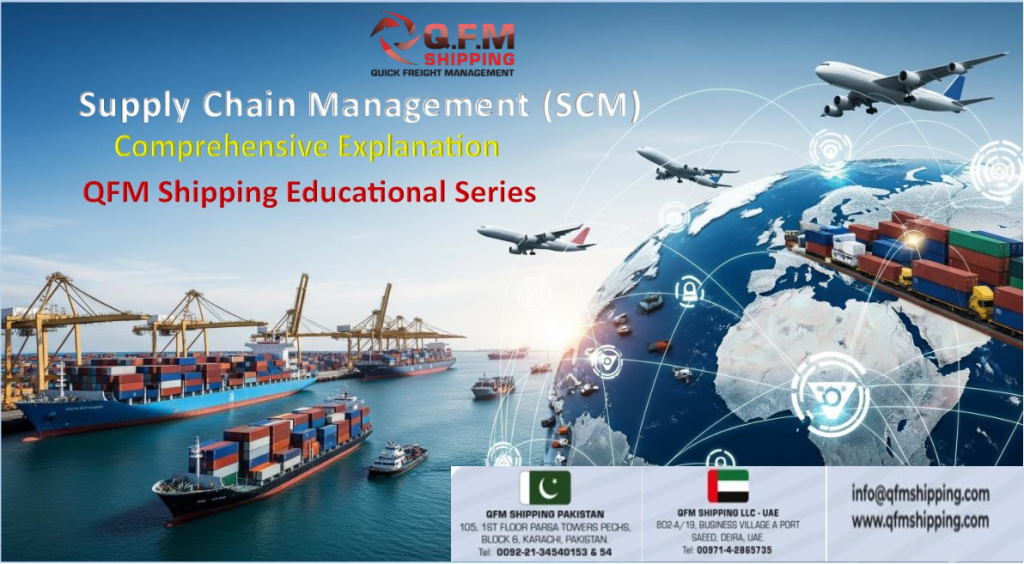
Supply Chain Management (SCM) is a vast and critical discipline that involves the strategic coordination of a business’s entire network of activities, processes, and resources to efficiently and effectively produce, procure, transform, and deliver products or services to the end customer. It’s about overseeing the complete “flow” of goods, information, and finances, from the raw materials’ source to the final consumption.
Think of it as the nervous system of a business, connecting all its organs (departments, partners, suppliers) to ensure a seamless and optimized operation.
The Scope of Supply Chain Management
Unlike logistics, which primarily focuses on the physical movement and storage of goods, SCM encompasses a much broader range of activities. It’s about managing the relationships and integration of all entities involved in bringing a product or service to market. This typically includes:
- Suppliers: Providing raw materials, components, or services.
- Manufacturers/Producers: Transforming raw materials into finished goods.
- Distributors/Wholesalers: Storing and distributing finished goods to retailers.
- Retailers: Selling products directly to consumers.
- Customers: The end-users of the products or services.
- Service Providers: Logistics companies (3PLs, 4PLs), IT providers, financial institutions, etc.
Key Components and Processes of SCM
While the exact breakdown can vary, most SCM models include these core components:
1- Planning (Strategy & Forecasting):
- Demand Planning/Forecasting: Predicting future customer demand accurately to inform production and inventory decisions. This is crucial for avoiding stockouts or overstocking.
- Supply Planning: Developing strategies to ensure the necessary resources (raw materials, labor, capacity) are available to meet forecasted demand.
- Sales and Operations Planning (S&OP): A collaborative process that integrates sales, marketing, production, and finance to create a unified plan for meeting customer demand while optimizing resources.
- Strategic Network Design: Deciding where to locate manufacturing plants, warehouses, and distribution centers.
2- Sourcing (Procurement & Supplier Management):
- Supplier Selection: Identifying, evaluating, and selecting the best suppliers for raw materials, components, and services based on cost, quality, reliability, and sustainability.
- Procurement: The actual process of purchasing goods and services, including negotiating contracts, issuing purchase orders, and managing payments.
- Supplier Relationship Management (SRM): Building and maintaining strong, collaborative relationships with key suppliers to foster trust, innovation, and responsiveness.
3- Manufacturing/Production (Operations):
- Production Planning and Scheduling: Organizing and scheduling the manufacturing processes to efficiently transform raw materials into finished products.
- Quality Control: Ensuring that products meet specified quality standards throughout the production process.
- Facility Management: Optimizing the use of manufacturing facilities, equipment, and labor.
- Lean Manufacturing/Continuous Improvement: Implementing methodologies to reduce waste and increase efficiency in production.
4- Delivery (Logistics & Distribution):
- Order Fulfillment: The entire process from receiving a customer order to delivering it.
- Warehousing: Managing storage facilities, including inventory placement, picking, packing, and shipping.
- Transportation Management: Planning, executing, and optimizing the movement of goods (inbound, outbound, and internal) across various modes (road, rail, air, sea). This is where logistics functions prominently.
- Distribution Network Management: Designing and managing the network of distribution centers and transportation routes to get products to customers efficiently.
- Last-Mile Delivery: The final leg of the delivery journey to the end customer, often the most challenging and costly.
5- Returns (Reverse Logistics):
Customer Returns: Managing the process of products being returned by customers (for refunds, exchanges, or repairs).
Recycling/Disposal: Handling end-of-life products or excess materials in an environmentally responsible way.
Repairs & Refurbishment: Managing products sent back for repair or restoration.
The Role of Information and Technology
At the heart of modern SCM is the flow of information. Effective SCM relies heavily on:
- Real-time Data: Gathering and analyzing data from all points in the supply chain to enable informed decision-making.
- Visibility: The ability to track products, orders, and resources across the entire supply chain.
- Integrated Systems: Utilizing technologies like:
- Enterprise Resource Planning (ERP): Integrated software suites that manage core business processes, often including SCM modules.
- Warehouse Management Systems (WMS): Software to manage and optimize warehouse operations.
- Transportation Management Systems (TMS): Software to optimize transportation planning and execution.
- Customer Relationship Management (CRM): Systems to manage customer interactions and data.
- Advanced Analytics & AI/Machine Learning: For predictive forecasting, optimization, and identifying bottlenecks.
- Internet of Things (IoT): Sensors and devices for real-time tracking of goods and assets.
- Blockchain: For enhanced transparency and traceability in complex supply chains.
Benefits of Effective Supply Chain Management
Robust SCM offers significant advantages:
- Cost Reduction: Minimizing expenses across procurement, production, inventory, and transportation.
- Improved Efficiency: Streamlining processes, reducing waste, and optimizing resource utilization.
- Enhanced Customer Satisfaction: Delivering products on time, in full, and in excellent condition, leading to stronger customer loyalty.
- Increased Profitability: By reducing costs and improving sales through better product availability.
- Competitive Advantage: Companies with superior supply chains can offer better service, lower prices, or faster delivery.
- Risk Mitigation: Proactively identifying and addressing potential disruptions (e.g., supplier failures, natural disasters, geopolitical issues).
- Greater Agility and Resilience: The ability to quickly adapt to market changes, unexpected events, and evolving customer demands.
- Better Cash Flow: Optimizing inventory levels means less capital tied up in stock.
- Sustainability: Facilitating ethical sourcing, waste reduction, and a smaller environmental footprint.
Challenges in Supply Chain Management
Despite its benefits, SCM faces numerous challenges:
- Complexity: Global supply chains are inherently complex, involving many different organizations, countries, regulations, and technologies.
- Visibility: Achieving true end-to-end visibility across all partners can be difficult.
- Demand Volatility: Unpredictable changes in customer demand make forecasting challenging.
- Geopolitical Instability: Trade wars, tariffs, political conflicts, and natural disasters can severely disrupt supply chains.
- Cost Management: Balancing cost efficiency with service levels and resilience.
- Supplier Relationship Management: Building and maintaining strong relationships with a diverse set of suppliers.
- Technological Integration: Implementing and integrating various SCM technologies can be complex and expensive.
- Talent Shortages: A lack of skilled supply chain professionals.
- Sustainability Pressures: Meeting growing demands for environmentally and socially responsible practices.
In conclusion, Supply Chain Management is a holistic and strategic approach to managing the entire flow of goods, services, and information, from the initial sourcing of raw materials to the final delivery to the consumer, and even reverse logistics. Its objective is to create maximum value for the customer while optimizing efficiency and minimizing costs for the entire network.
Global shipping, made local. Global logistics, made simple.
That’s the QFM promise.
Contact QFM Shipping today and experience logistics reimagined.
