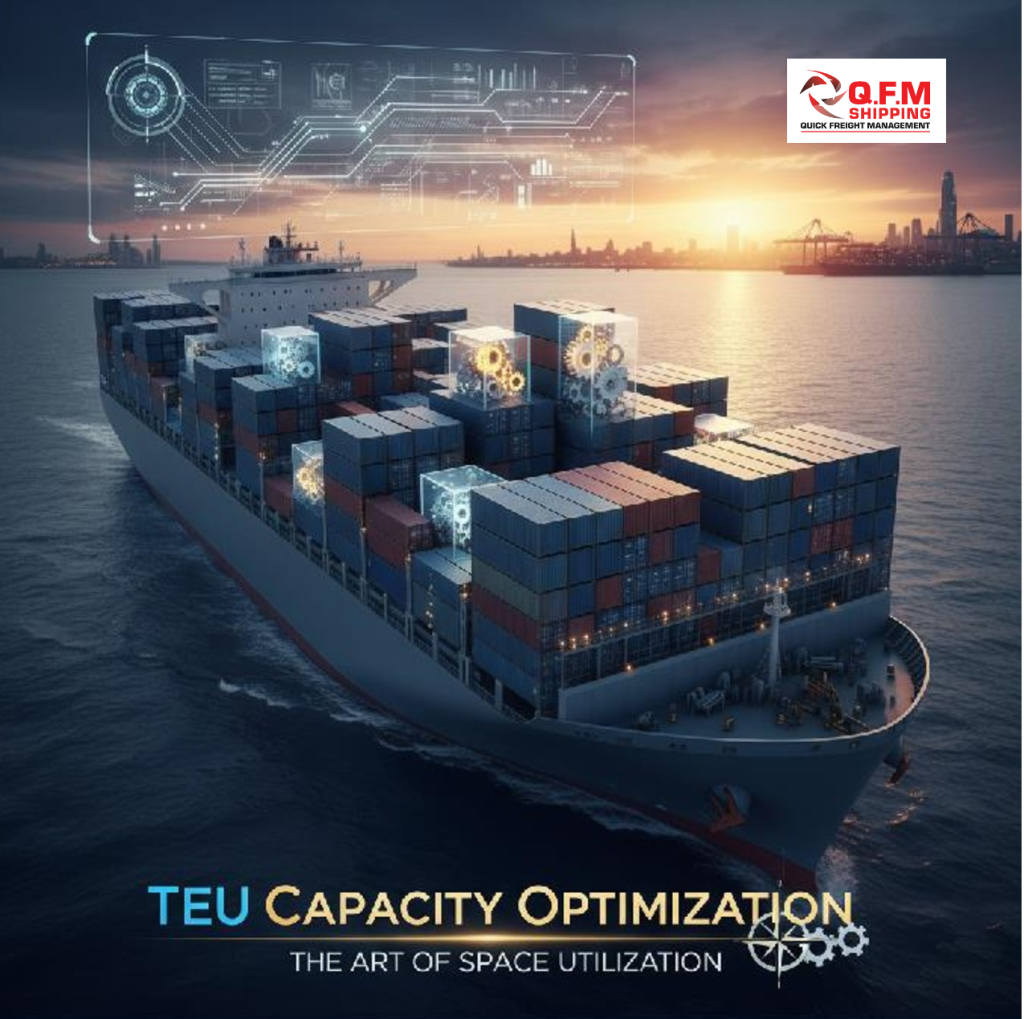
TEU Capacity Optimization | Maximizing Efficiency in Global Container Shipping
Introduction: The Art of Space Utilization
In global maritime logistics, every cubic meter of container space counts. The Twenty-Foot Equivalent Unit (TEU) is the standard measure of container capacity, representing the cornerstone of trade efficiency. As global shipping lines face increasing fuel costs, environmental regulations, and fluctuating freight rates, TEU capacity optimization has become a critical strategy to balance profitability, sustainability, and operational performance.
Understanding TEU Capacity
A vessel’s TEU capacity indicates how many 20-foot containers it can carry. However, theoretical capacity often differs from effective capacity due to factors like:
-
Container mix (20ft vs. 40ft)
-
Cargo weight limitations
-
Stability and stowage constraints
-
Route characteristics and port infrastructure
Thus, optimizing TEU capacity isn’t merely about loading more boxes—it’s about intelligent allocation, balance, and maximizing utilization within safe and regulatory limits.
1. Vessel Planning and Stowage Strategies
The foundation of TEU capacity optimization begins at the stowage planning stage. Advanced software systems now allow planners to simulate cargo distribution by weight, volume, and destination sequence.
Key practices include:
-
Dynamic stowage simulation: Ensures balance, stability, and efficient unloading at transshipment ports.
-
Bay utilization analysis: Helps identify underused areas on deck and below deck.
-
Route-based stacking: Minimizes container reshuffling at intermediate stops, reducing port time and costs.
By utilizing AI-assisted stowage systems, shipping lines can enhance load distribution, avoid deadweight imbalance, and ensure vessels sail closer to optimal TEU utilization.
2. Load Factor and Cargo Mix Optimization
Effective TEU optimization relies heavily on cargo mix management—balancing light and heavy containers to avoid exceeding weight limits while filling volume efficiently.
-
High-Cube and Reefer containers: Require specific planning due to unique dimensions and power needs.
-
Consolidated LCL cargo: Allows forwarders to optimize space by mixing smaller consignments from multiple clients.
-
Smart pairing of 20ft and 40ft units: Reduces space loss caused by uneven combinations.
This fine-tuned balance maximizes slot yield per voyage, enhancing revenue without compromising safety.
3. Digitalization and AI in Capacity Forecasting
The integration of AI-driven predictive analytics enables carriers to forecast container demand, reposition empties efficiently, and optimize TEU allocation across global trade lanes.
Tools and methods:
-
Machine learning forecasts: Predict seasonal surges and route-specific demand.
-
IoT tracking: Monitors container status, availability, and turnaround time.
-
Digital twin simulations: Allow virtual modeling of full fleet capacity to test various load strategies.
By forecasting TEU demand accurately, shipping companies can reduce dead space, eliminate unnecessary repositioning, and improve overall voyage economics.
4. Green Optimization: Reducing Carbon per TEU
Optimizing TEU capacity directly contributes to environmental sustainability. Fully utilized vessels emit less CO₂ per container, aligning with IMO 2030 and 2050 decarbonization goals.
Sustainability-focused strategies include:
-
Slow steaming: Paired with high load factors to maintain efficiency.
-
Smart routing and schedule alignment: Reduces idle time and fuel burn.
-
Use of eco-efficient vessel designs: Wider hulls, optimized propellers, and hybrid engines maximize capacity per fuel unit.
Through TEU optimization, carriers not only cut emissions but also enhance profitability through improved TEU-per-ton efficiency.
5. Port and Hinterland Coordination
True optimization extends beyond the ship. Port terminals, freight forwarders, and inland logistics networks play vital roles in achieving full TEU utilization.
-
Terminal efficiency: Quick turnaround and precise yard planning avoid vessel delays.
-
Intermodal integration: Aligning rail and trucking schedules ensures balanced container flow.
-
Digital booking platforms: Enable real-time coordination between shippers, NVOCCs, and carriers to fill unused space quickly.
Collaboration across the logistics chain ensures that each TEU slot is matched with demand in real time.
6. The Role of NVOCCs and Consolidators
For Non-Vessel Operating Common Carriers (NVOCCs) and freight consolidators, TEU capacity optimization is the core of profitability. By efficiently grouping LCL shipments, they:
-
Maximize TEU utilization on each sailing.
-
Provide competitive rates to small and medium shippers.
-
Reduce operational waste through intelligent routing and consolidation hubs.
For example, QFM Shipping’s Karachi–Jebel Ali and Karachi–Singapore weekly LCL services exemplify how strategic network planning and space optimization transform underused capacity into profit and reliability.
7. Metrics for Measuring TEU Efficiency
To quantify optimization success, carriers use key performance indicators (KPIs):
-
Load factor (%)
-
Slot utilization per voyage
-
TEU yield per ton-mile
-
Empty container ratio
-
Turnaround time per TEU
Continuous monitoring of these KPIs enables data-driven improvement in fleet deployment, route management, and pricing strategies.
Conclusion: Sailing Smarter, Not Just Fuller
TEU capacity optimization is not just a technical goal—it’s a strategic advantage. From digital load planning to AI forecasting and eco-efficient operations, it represents a convergence of technology, economics, and environmental responsibility.
In a market defined by volatility and global interdependence, those who master the art of optimizing every TEU will lead the next generation of sustainable and profitable maritime logistics.
At QFM Shipping, our commitment is not just to move cargo — it’s to move your business forward with dependable global connectivity.
Book Your Space Today
Contact Us:
Email: info@qfmshipping.com
Phone: +92-21-34540153 & 54
+92-21-34540135 & 36
Website: www.qfmshipping.com
Tags:
TEU capacity optimization, container shipping efficiency, slot utilization, stowage planning, NVOCC consolidation, QFM Shipping
