
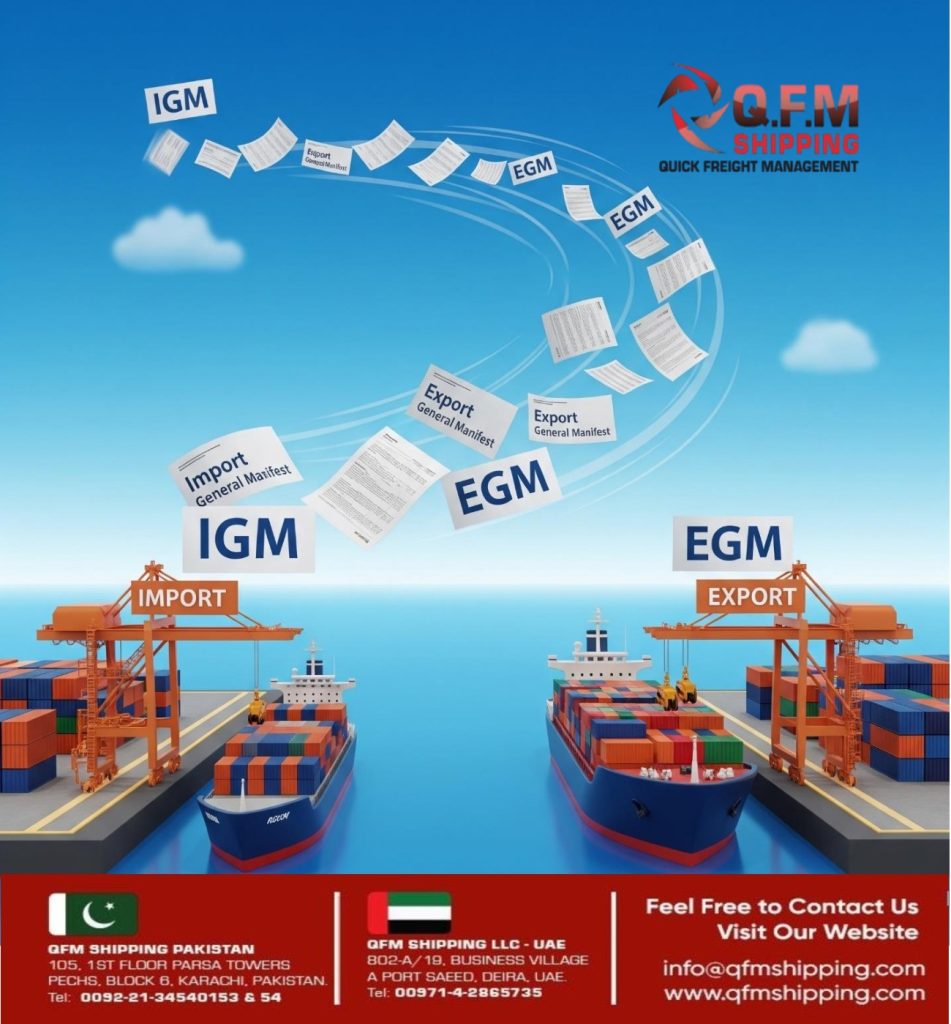
Checking the world of logistics can feel like learning a new language, especially when you’re faced with an alphabet of acronyms. But understanding these terms is key to the smooth operations. Today, let’s explain two of the most common documents in the shipping world: IGM and EGM.
What are IGM and EGM?
Both IGM (Import General Manifest) and EGM (Export General Manifest) are crucial manifest documents. A manifest is essentially a detailed list of all the cargo being carried on a particular vessel, aircraft, or vehicle. It’s a legally required document that provides customs officials with a comprehensive overview of the goods in transit.
IGM (Import General Manifest)
The IGM is a document submitted by the carrier (the shipping line, airline, etc.) to the customs authority of the importing country. It’s filed before the arrival of the vessel or aircraft. The IGM contains detailed information about all the goods destined for that port, including:
- The name of the vessel/aircraft and its arrival date
- A list of all bills of lading or airway bills
- Details of the consignee (the recipient)
- A description of the goods
- The number of packages and their weight
Think of the IGM as the “pre-arrival guest list” for customs. It allows them to pre-screen the incoming cargo and begin the clearance process efficiently, even before the goods are physically at the port.
EGM (Export General Manifest)
The EGM is the counterpart to the IGM. It’s a document submitted by the carrier to the customs authority of the exporting country. The EGM is filed after the vessel or aircraft has departed. It serves as a proof of export, confirming that the cargo has left the country. The EGM contains similar information to the IGM, but from the perspective of the exporting country:
- The name of the vessel/aircraft and its departure date
- A list of all bills of lading or airway bills
- Details of the shipper (the sender)
- A description of the goods
- The number of packages and their weight
The EGM is the “post-departure confirmation” for customs, verifying that the goods declared for export have indeed been loaded and shipped.
The Key Difference: A Simple Similarity
The fundamental difference between IGM and EGM is their purpose and the stage of the journey at which they are filed:
- IGM is for Imports: It’s a pre-arrival document filed at the destination port. It tells customs, “Here’s what’s coming.”
- EGM is for Exports: It’s a post-departure document filed at the origin port. It tells customs, “Here’s what just left.”
In essence, IGM is about arrival, and EGM is about departure.
Why is this knowledge helpful?
Understanding IGM and EGM is crucial for anyone in the operations department, as it helps you:
- Track shipments: You can monitor the status of a shipment by referencing the IGM number for imports and the EGM number for exports.
- Anticipate delays: Knowing the IGM filing status can help you predict when an import will be ready for customs clearance.
- Ensure compliance: Both documents are legally required, and any discrepancies can lead to significant penalties and delays.
By grasping these core concepts, you’re not just learning jargon; you’re gaining a deeper understanding of the processes that keep the global logistics network moving. Stay informed, stay ahead!
Global shipping, made local. Global logistics, made simple.
That’s the QFM Shipping promise.
Contact QFM Shipping today and experience logistics reimagined.
