QFM Shipping Educational Post
Introduction:
At QFM Shipping, we understand that moving goods is more than just getting them from Point A to Point B. It’s about a meticulously planned and executed sequence of activities that ensures products arrive safely, on time, and cost-effectively. While many focus on outbound shipping, the journey truly begins much earlier, with Inbound Logistics.
Inbound logistics is a critical, yet often overlooked, component of the overall supply chain. For any business that relies on raw materials, components, or finished goods from suppliers, mastering inbound logistics is paramount to operational success, cost control, and customer satisfaction.
Defining Inbound Logistics
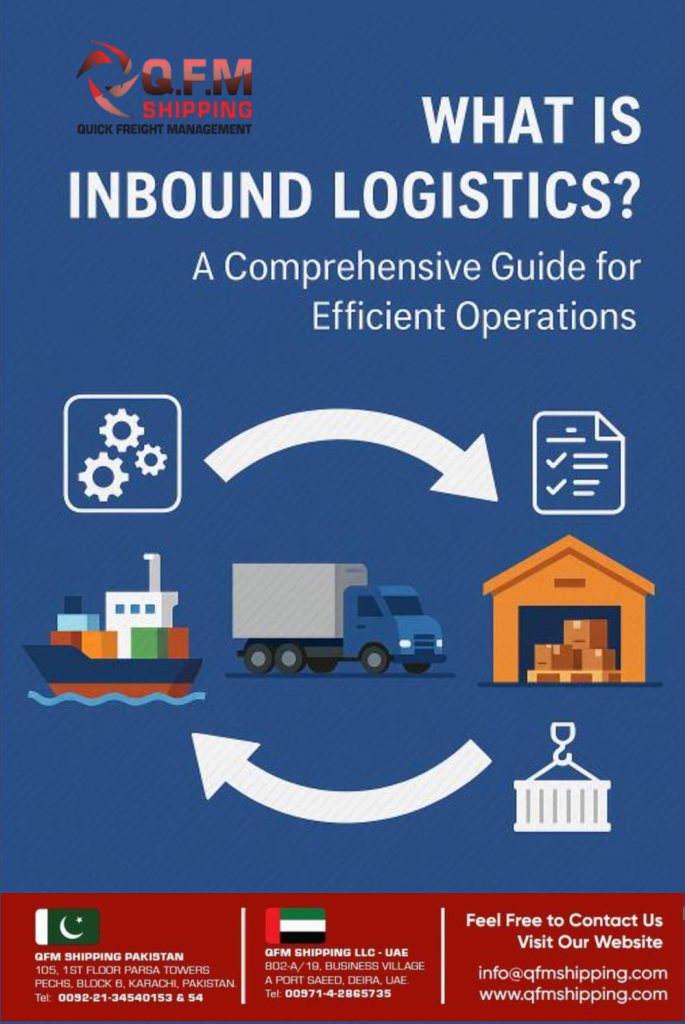
Inbound Logistics refers to the set of processes and activities involved in the receiving, storing, and internal distribution of goods, materials, and information that come into a company from its suppliers.
Simply put, it’s everything that happens from the moment goods leave your supplier’s location until they are ready for use or storage within your own facility (whether it’s a factory, distribution center, or retail store).
It’s the “flow into” your organization, ensuring you have what you need, when you need it, to keep your operations running smoothly.
Key Components and Activities of Inbound Logistics
Inbound logistics is a multi-faceted discipline encompassing a range of vital activities:
- Procurement and Supplier Management:
- Purchasing: Placing orders for raw materials, components, finished goods, or any other necessary supplies.
- Supplier Selection & Relationship Management: Identifying reliable suppliers, negotiating contracts, and fostering strong, collaborative relationships to ensure quality and timely deliveries.
- Order Tracking: Monitoring the status of orders from the supplier’s end, from production to initial shipment.
- Transportation Management (Inbound Freight):
- Carrier Selection: Choosing the best transportation partners (e.g., trucking companies, ocean carriers, air freight providers) based on cost, speed, reliability, and security.
- Route Planning & Optimization: Determining the most efficient and cost-effective routes for incoming shipments.
- Freight Consolidation: Combining smaller shipments from multiple suppliers into larger, more cost-effective loads (e.g., LTL to FTL conversion).
- Customs & Compliance: Managing international shipping regulations, customs declarations, tariffs, and duties for imported goods. This is where QFM Shipping’s expertise shines!
- Shipment Tracking: Real-time monitoring of goods in transit to anticipate arrival times and potential delays.
- Receiving Operations:
- Unloading: Efficiently and safely unloading incoming goods from trucks, containers, or other transport vehicles.
- Inspection: Verifying the quantity and quality of received goods against purchase orders and checking for any damage during transit.
- Documentation: Recording receipt of goods, updating inventory systems, and processing necessary paperwork (e.g., matching Bill of Lading with purchase order).
- Putaway and Storage:
- Putaway: Moving received goods from the receiving dock to their designated storage locations within the warehouse or facility. This needs to be efficient to avoid bottlenecks.
- Storage Management: Organizing and maintaining inventory within the warehouse, ensuring accessibility, proper conditions (e.g., temperature control), and security. This often involves inventory management principles like FIFO (First-In, First-Out).
- Information Flow:
- Crucial for seamless operations, this includes purchase orders, advanced shipping notices (ASNs) from suppliers, customs documentation, inventory updates, quality reports, and communication regarding delays or issues.
- Technology: Utilizing systems like ERP (Enterprise Resource Planning) and WMS (Warehouse Management System) to manage and share data efficiently.
Why is Effective Inbound Logistics So Important?
Mastering inbound logistics offers numerous benefits that directly impact a company’s bottom line and operational efficiency:
- Cost Reduction:
- Reduced Transportation Costs: Through carrier negotiation, route optimization, and freight consolidation.
- Lower Inventory Costs: By ensuring timely deliveries, reducing the need for excessive safety stock and associated carrying costs (warehousing, insurance, obsolescence).
- Minimized Damage & Loss: Proper handling and inspection reduce write-offs.
- Improved Efficiency & Productivity:
- Streamlined Operations: Smooth incoming flow prevents bottlenecks in production or retail.
- Better Resource Utilization: Efficient receiving and putaway processes optimize labor and equipment use.
- Reduced Lead Times: Faster and more predictable arrival of materials can shorten overall production or delivery cycles.
- Enhanced Supply Chain Visibility:
- Knowing exactly where incoming goods are at all times allows for better planning and proactive problem-solving. This visibility is vital for a shipping company like QFM.
- Stronger Supplier Relationships:
- Efficient inbound processes facilitate better communication and collaboration with suppliers, leading to more reliable partnerships.
- Better Inventory Control:
- Accurate receiving and putaway lead to precise inventory records, reducing discrepancies and improving planning.
- Better Production/Sales Planning:
- Reliable inbound logistics ensures that production lines don’t halt due to material shortages, and retail shelves remain stocked.
- Customer Satisfaction:
- Ultimately, efficient inbound logistics contributes to a smoother overall supply chain, which means products are available faster and more reliably for the end customer.
Inbound Logistics in the Context of QFM Shipping
For a company like QFM Shipping, our role in inbound logistics is often pivotal. We act as the trusted partner who manages the crucial transportation leg from your suppliers to your facility, especially for international shipments. Our services help you:
- Meet Customs Complexities: Ensuring your goods clear customs efficiently and compliantly.
- Optimize Freight Costs: Leveraging our network and expertise to find the most cost-effective shipping solutions.
- Provide Real-Time Tracking: Giving you complete visibility over your incoming shipments.
- Minimize Delays: Proactively managing potential issues to keep your supply chain flowing.
Conclusion
Inbound logistics is far more than just receiving goods; it’s a strategic function that lays the groundwork for the entire operational efficiency and profitability of a business. By meticulously managing the flow of materials and information into your organization, you can reduce costs, enhance productivity, and build a more resilient and responsive supply chain.
At QFM Shipping, we are committed to being your reliable partner in optimizing your inbound logistics, ensuring your critical supplies arrive seamlessly, every time.
Global shipping, made local. Global logistics, made simple.
That’s the QFM Shipping promise.
Contact QFM Shipping today and experience logistics reimagined.
