
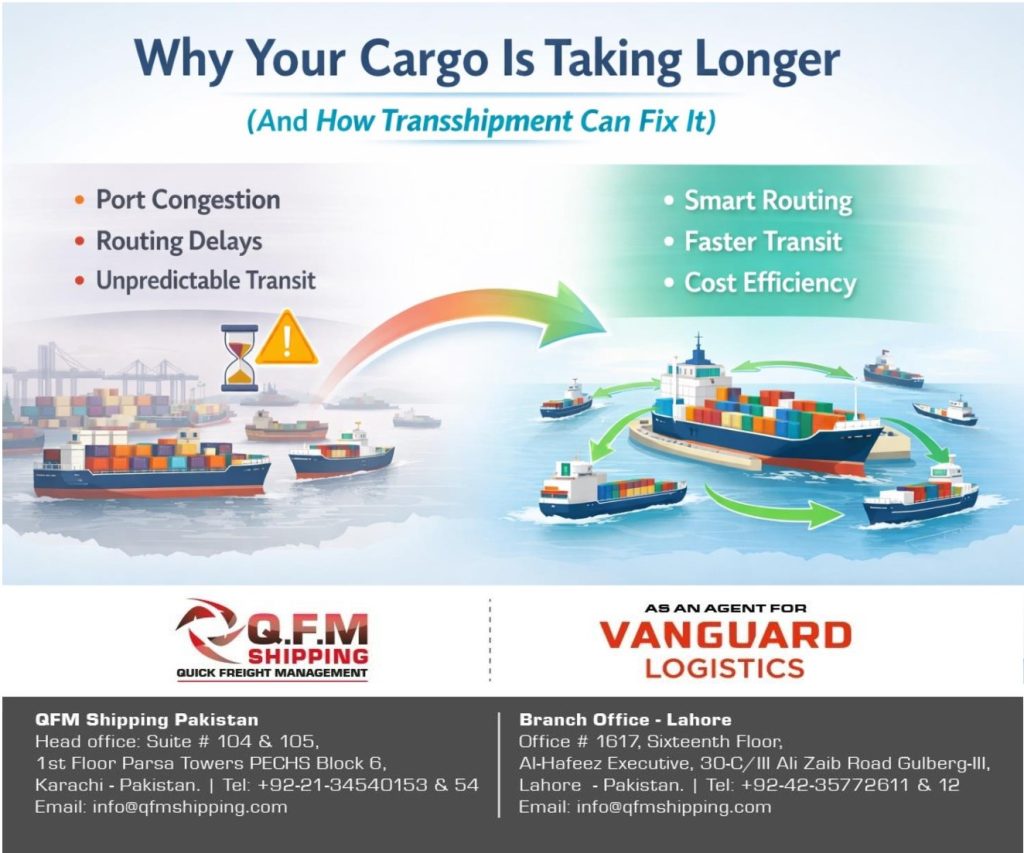
Why Your Cargo Is Taking Longer (And How Transshipment Can Fix It)
The Growing Problem of Cargo Delays
In today’s volatile logistics environment, cargo delays have become a major concern for exporters, importers, and freight forwarders alike. From port congestion to geopolitical disruptions, delays are no longer occasional—they are systemic.
Businesses relying on predictable delivery schedules are now facing:
- Missed deadlines
- Increased costs
- Customer dissatisfaction
But there is a strategic solution gaining global traction: transshipment logistics.
Why Your Cargo Is Taking Longer Than Expected
Understanding the root causes of cargo delays is critical before solving them.
1. Port Congestion Is Getting Worse
Major global ports are overwhelmed due to rising trade volumes and inefficient turnaround times. Ships often wait days—or even weeks—before unloading.
Impact: Extended dwell times and disrupted supply chains.
2. Geopolitical Disruptions Are Reshaping Routes
Conflicts and instability in key shipping lanes (such as the Red Sea region) have forced vessels to reroute.
Impact: Longer transit times and higher fuel costs.
3. Limited Direct Shipping Options
Direct vessel connections are not always available, especially for LCL (Less than Container Load) shipments.
Impact: Cargo waits longer to consolidate or move.
4. Inefficient Routing Strategies
Traditional shipping routes may no longer be optimal in a rapidly changing global trade environment.
Impact: Increased transit time and unnecessary delays.
5. Capacity Constraints & Equipment Shortages
Shortages of containers and vessel space are adding pressure to global logistics networks.
Impact: Shipment rollovers and unpredictable schedules.
What Is Transshipment and Why Does It Matter
Transshipment refers to the process of transferring cargo from one vessel to another at an intermediate hub before reaching its final destination.
Instead of relying solely on direct routes, cargo is strategically routed through efficient global hubs.
How Transshipment Solves Cargo Delays
1. Access to Faster Alternative Routes
Transshipment enables cargo to bypass congested ports and disrupted routes.
Result: Reduced transit time and improved reliability.
2. Increased Sailing Frequency
Through major transshipment hubs, shipments can connect to multiple vessel schedules.
Result: Faster movement compared to waiting for direct sailings.
3. Optimized LCL Shipping
For LCL shipments, transshipment allows better consolidation and routing.
Result: Efficient cargo handling and reduced delays.
4. Flexibility in a Disrupted Market
Transshipment allows logistics providers to adapt quickly to changing global conditions.
Result: More resilient supply chains.
5. Cost Efficiency Despite Disruptions
While it may seem indirect, transshipment often reduces overall logistics costs by avoiding delays and penalties.
Result: Better cost control for exporters.
Why Transshipment Is Becoming Essential in 2026
Global shipping is undergoing a transformation. Businesses that rely solely on traditional routes are facing increasing risks.
Key trends driving transshipment adoption:
- Rise in global trade disruptions
- Shift toward hub-and-spoke logistics models
- Increased demand for flexible shipping solutions
- Growth of regional transshipment hubs
Pakistan’s Strategic Advantage in Transshipment
Pakistan is rapidly emerging as a key transshipment hub in South Asia.
With ports like:
1- Karachi Port
2- Port Qasim
The country is now positioned to handle international transshipment efficiently, especially for GCC and regional trade routes.
How QFM Shipping Helps You Overcome Cargo Delays
At QFM Shipping, we specialize in smart transshipment solutions designed to minimize cargo delays and maximize efficiency.
Our Key Advantages:
- Strategic routing via global transshipment hubs
- Reliable LCL consolidation services
- Flexible scheduling options
- Strong international partner network
- Real-time shipment visibility
We don’t just move cargo—we optimize your entire logistics chain.
Real-World Example
An exporter facing repeated delays on direct routes to the Middle East shifted to a transshipment model.
Before:
- Transit time: 28–35 days
- Frequent delays
After using transshipment:
- Transit time: 18–22 days
- Improved reliability
Actionable Tips to Reduce Cargo Delays
- Choose flexible routing over direct-only shipping
- Work with experienced freight forwarders
- Plan shipments with buffer time
- Leverage LCL consolidation hubs
- Monitor global shipping trends regularly
Conclusion: Adapt or Fall Behind
Cargo delays are no longer temporary disruptions—they are part of the new logistics reality.
Businesses that adapt by leveraging transshipment logistics will gain:
- Faster delivery times
- Greater reliability
- Competitive advantage
Those who don’t risk falling behind.
Call to Action
Ready to reduce cargo delays and optimize your shipments?
Partner with QFM Shipping today and unlock smarter, faster, and more reliable logistics solutions.
QFM Shipping Pakistan
Karachi : Suite # 104 & 105, 1st Floor Parsa Towers PECHS Block 6 Karachi
Tel: 0092-21-34540153 & 54
Lahore: Suite # 1617, 16th Floor, Al Hafeez Executive Gulberg III, Lahore
Tel: 0092-42-35772611 & 12
Email: pricing.pkkhi@qfmshipping.com
Mobile: 0092-321-8280327
Tags
cargo delays transshipment, transshipment logistics, qfm shipping, reduce shipping time, freight delays solutions, LCL shipping Pakistan, global shipping disruptions, cargo transit optimization, logistics efficiency,
Read More:
1- Neutral LCL Transshipment | Secure Trade Confidentiality
2- Pakistan–GCC Transshipment | Faster Routes to GCC
3- Pakistan Transshipment Policy 2026 | Logistics Shift
