
Introduction
Global supply chains are experiencing increasing volatility due to geopolitical tensions, shipping route disruptions, rising freight rates, and port congestion. For exporters and importers, these challenges make shipping planning more complex than ever.
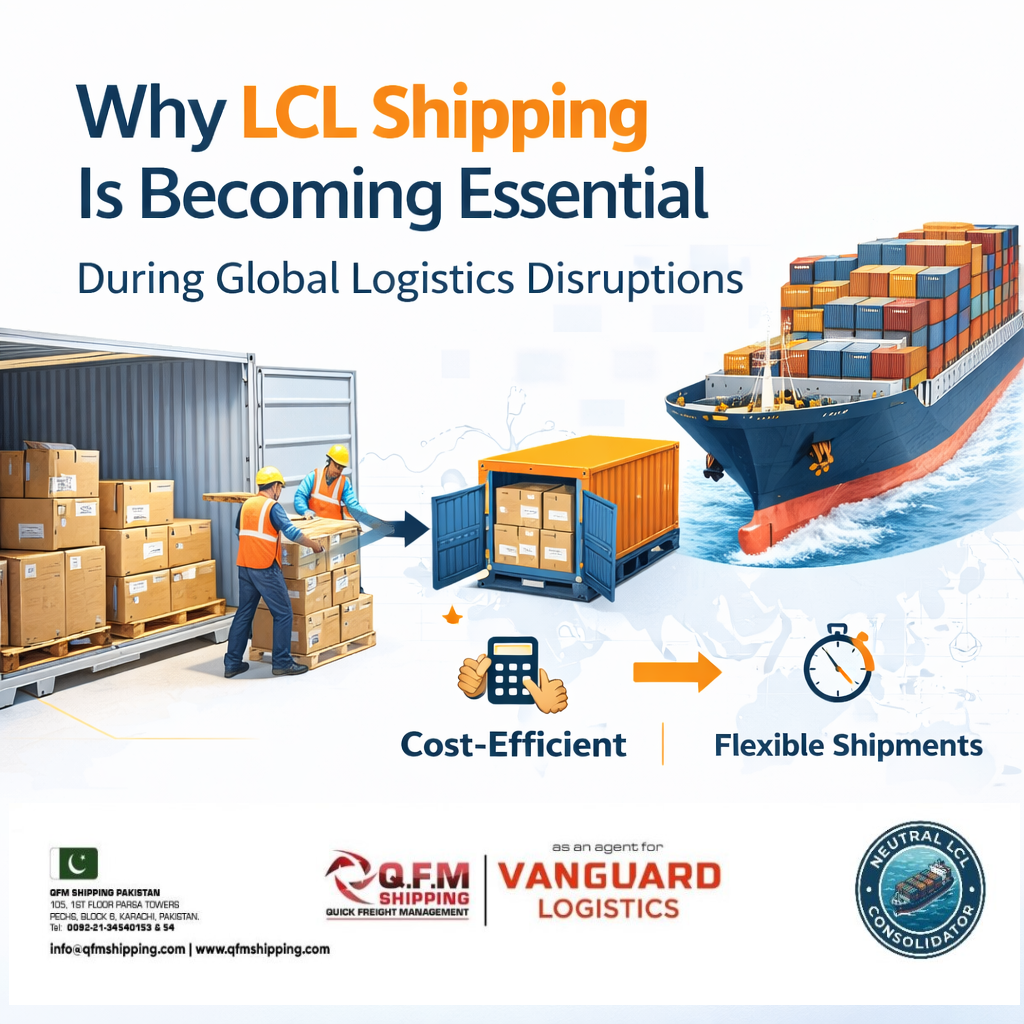
In this uncertain environment, LCL Shipping During Global Logistics Disruptions has become a critical logistics solution. LCL (Less-than-Container-Load) shipping allows multiple shipments from different exporters to share container space, making international shipping more flexible and cost-effective.
For businesses that do not have enough cargo to fill an entire container, LCL shipping provides an efficient way to keep goods moving even when global logistics conditions become unpredictable.
What Is LCL Shipping?
LCL shipping, or Less-than-Container-Load shipping, is a freight solution where multiple smaller shipments are consolidated into one container for international transport.
Instead of paying for an entire container (FCL), exporters only pay for the space their cargo occupies.
Key characteristics of LCL shipping:
-
Shared container space
-
Lower shipping costs for smaller cargo volumes
-
Flexible shipment scheduling
-
Ideal for SMEs and growing exporters
Freight forwarders such as QFM Shipping Pakistan manage the consolidation process by combining shipments from multiple clients into a single container.
Why Global Logistics Disruptions Are Increasing
In recent years, global shipping has been affected by several factors:
Geopolitical conflicts
Security risks in major maritime corridors such as the Red Sea and the Strait of Hormuz are forcing shipping lines to reconsider routes.
Freight rate volatility
Fuel costs, insurance premiums, and capacity shortages are increasing transportation costs.
Port congestion
Delays at major ports create schedule disruptions across global trade lanes.
Supply chain uncertainty
Exporters must adapt quickly to changing transit times and logistics risks.
These disruptions make LCL Shipping During Global Logistics Disruptions increasingly valuable for businesses seeking flexibility.
Why LCL Shipping Is Becoming Essential
1. Cost Efficiency During Freight Rate Volatility
When freight rates increase, booking a full container can become expensive for small and medium exporters.
LCL shipping allows businesses to:
-
Pay only for cargo space used
-
Avoid paying for unused container capacity
-
Reduce logistics costs
This makes LCL shipping a cost-effective option during volatile freight markets.
2. Greater Flexibility for Exporters
Exporters often face fluctuating cargo volumes.
With LCL shipping, businesses can:
-
Ship smaller quantities more frequently
-
Avoid waiting to fill a full container
-
Maintain consistent delivery schedules
This flexibility is critical when supply chains are under pressure.
3. Reduced Supply Chain Delays
Waiting for enough cargo to fill an FCL container can delay shipments.
LCL consolidation services allow cargo to move faster because:
-
Shipments are grouped together
-
Containers depart regularly
-
Freight forwarders coordinate consolidation schedules
This helps exporters reduce inventory delays and maintain customer commitments.
4. Ideal for Small and Medium Exporters
Many exporters in Pakistan operate with limited shipment volumes.
LCL shipping enables these businesses to access international markets without requiring large shipment quantities.
This is especially valuable for industries such as:
-
Textile exports
-
Surgical instruments
-
Consumer goods
-
Small manufacturing exports
The Role of Freight Forwarders in LCL Shipping
Successful LCL shipping requires professional cargo consolidation and coordination.
Freight forwarders handle key logistics processes including:
-
Cargo consolidation
-
Container space management
-
Documentation and customs clearance
-
Shipment tracking and coordination
At QFM Shipping Pakistan, LCL consolidation services enable exporters to ship cargo efficiently across global trade routes while minimizing logistics risks.
When Should Exporters Choose LCL Shipping?
LCL shipping is the best option when:
✔ Cargo volume is less than a full container
✔ Shipment timing is critical
✔ Exporters want to reduce logistics costs
✔ Supply chains are facing uncertainty
In times of global logistics disruption, LCL shipping provides greater flexibility and operational resilience.
How QFM Shipping Pakistan Supports Exporters
Quick Freight Management Pakistan (QFM) provides reliable freight forwarding and LCL consolidation services for exporters and importers.
Our services include:
-
Global LCL consolidation
-
Export and import logistics coordination
-
Freight forwarding solutions
-
Cargo handling and documentation support
By leveraging global logistics networks, QFM ensures cargo moves efficiently even during challenging shipping conditions.
Conclusion
Global logistics disruptions are reshaping international trade, forcing exporters to adopt more flexible shipping strategies.
LCL Shipping During Global Logistics Disruptions has emerged as one of the most effective solutions for managing cost, flexibility, and shipment reliability.
By allowing businesses to share container space and ship smaller cargo volumes efficiently, LCL shipping helps exporters maintain supply chain continuity even during uncertain global trade conditions.
For exporters seeking reliable and cost-effective logistics solutions, LCL shipping remains a smart and strategic choice.
Tags:
LCL shipping benefits, LCL consolidation services, less than container load shipping, global logistics disruptions, freight forwarding Pakistan, export shipping solutions, shared container shipping, supply chain disruption logistics
