
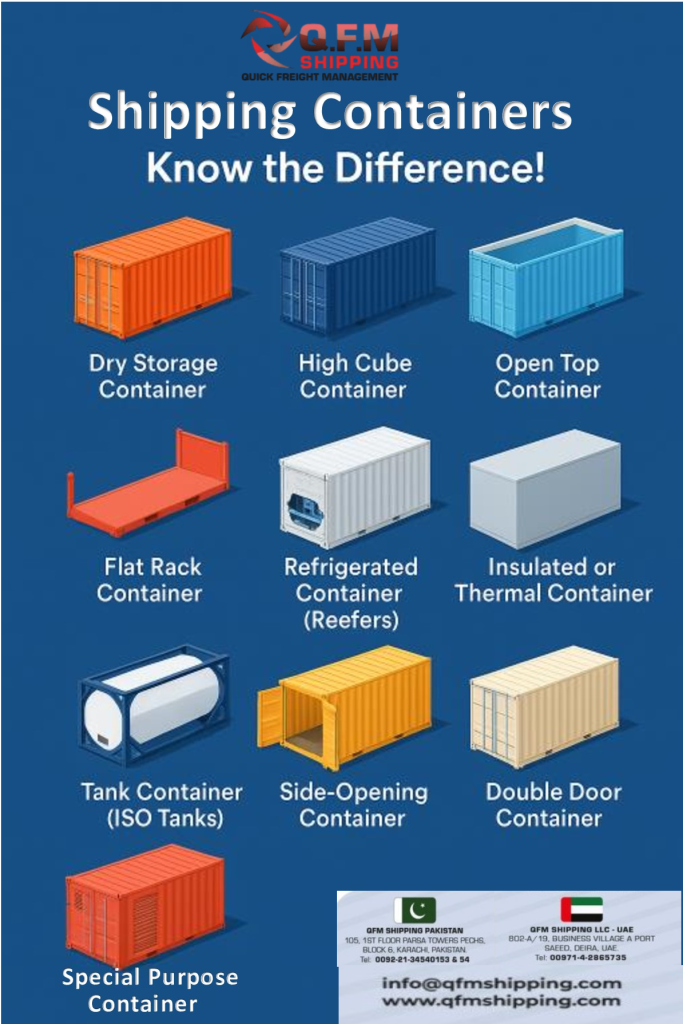
Types of Shipping Containers – Know the Difference!
In today’s interconnected world, shipping containers are the unsung heroes of global trade. They are the secure, standardized “boxes” that make it possible to transport everything from fresh fruit to heavy machinery across oceans, railways, and highways. But not all containers are created equal. Understanding the different types of shipping containers can help businesses choose the right one for their cargo, ensuring efficiency, safety, and cost-effectiveness.
Whether you are an importer, exporter, freight forwarder, or small business owner, knowing your container options is essential. Let’s unpack the world in a box—and see what makes each type unique.
1- Standard Dry Storage Containers (Dry Vans)
The most common type of shipping container, dry storage containers are used for general cargo that does not require temperature control.
Key Features:
-
Available in 20-foot and 40-foot sizes (and sometimes 10-foot for smaller loads).
-
Fully enclosed, weatherproof, and made of steel or aluminum.
-
Ideal for transporting electronics, textiles, furniture, and packaged goods.
Best For: Non-perishable and dry cargo.
2- High Cube Containers
High cube containers are similar to standard dry vans but offer extra height—usually an additional foot (9’6” high instead of the standard 8’6”).
Key Features:
-
Great for bulky, lightweight cargo that needs more vertical space.
-
Commonly available in 40-foot sizes.
-
Slightly higher cost but more capacity.
Best For: Large machinery, tall equipment, or voluminous goods.
3- Open Top Containers
These containers have a removable tarpaulin roof instead of a fixed metal top, allowing easy loading from above.
Key Features:
-
Perfect for oversized cargo that can’t fit through container doors.
-
Can handle heavy items loaded with cranes or forklifts.
-
Strong steel frame for extra durability.
Best For: Machinery, timber, scrap metal, and heavy construction materials.
4- Flat Rack Containers
Flat racks have collapsible sides or no sides at all, creating a flat loading platform.
Key Features:
-
Designed for extra-wide or awkwardly shaped cargo.
-
Can carry loads up to 45,000 kg.
-
Often used for breakbulk shipments.
Best For: Boats, vehicles, pipes, or industrial equipment.
5. Refrigerated Containers (Reefers)
Reefers are temperature-controlled containers designed to transport perishable goods.
Key Features:
-
Maintain temperatures from -30°C to +30°C.
-
Equipped with an integrated refrigeration unit.
-
Require power from the ship, port, or truck.
Best For: Fresh produce, dairy, seafood, frozen goods, and pharmaceuticals.
6- Insulated or Thermal Containers
Similar to reefers but without active cooling, these containers have thermal insulation to protect cargo from extreme temperatures.
Key Features:
-
Maintain steady internal temperature for extended periods.
-
Often used with dry ice or cold packs.
Best For: Beverages, chocolates, and temperature-sensitive chemicals.
7- Tank Containers (ISO Tanks)
Designed for liquid or gas cargo, tank containers are cylindrical tanks inside a steel frame.
Key Features:
-
Built to ISO standards for safe transport.
-
Can carry hazardous and non-hazardous liquids.
-
Made from stainless steel with protective coating.
Best For: Chemicals, oils, wine, and industrial liquids.
8- Side-Opening Containers
These containers have doors along the side panels, making it easier to load and unload cargo that won’t fit through end doors.
Key Features:
-
Convenient for bulky but lightweight goods.
-
Ideal for quick loading with forklifts.
Best For: Lumber, large machinery parts, and palletized cargo.
9- Double Door Containers
Also known as “tunnel containers,” they have doors at both ends, providing flexible loading and unloading.
Key Features:
-
Speeds up loading processes.
-
Easier to organize cargo.
Best For: Steel, building materials, or long equipment.
10- Special Purpose Containers
Custom-built for specific needs, these include ventilated containers (for coffee or cocoa), car carriers, and offshore containers for oil rigs.
Best For: Highly specialized cargo.
Selection of the Right Container
When selecting a container, consider:
-
Type of Cargo: Perishable, oversized, hazardous, or general goods.
-
Volume & Weight: Determine the right size and structural strength.
-
Route & Climate: Temperature-controlled containers for extreme environments.
-
Cost Efficiency: Match the container to your budget without compromising safety.
Why It Matters
Choosing the right container isn’t just about fitting your goods—it’s about protecting them, optimizing costs, and meeting international shipping regulations. The right container ensures your cargo arrives on time, intact, and compliant.
The QFM Shipping Advantage
At QFM Shipping, we handle every type of container with expertise. Whether it’s a 20-foot dry van to Europe or a refrigerated container to the Middle East, we provide transparent pricing, real-time tracking, and complete logistics support. With our global network and local insight, your cargo is in safe hands—every route, every time.
Getting Started is Easy
Ready to simplify your shipping? Contact us today for a free consultation and a custom quote. Our team is ready to design a logistics plan that will save you time, reduce costs, and give you peace of mind.
Contact Us:
- Email: info@qfmshipping.com
- Website: www.qfmshipping.com
Keywords for SEO: types of shipping containers, shipping container guide, container shipping services, 20ft container, 40ft container, reefer container, open top container, ISO tank container, QFM Shipping.
