Understanding POD and POL in Shipping: What They Mean, When & Where They’re Used
In global trade and logistics, two key terms often appear in contracts, bills of lading, and shipment discussions: POD and POL. These are essential markers in the shipping journey that define the responsibilities, timelines, and costs of moving cargo. Let’s break them down clearly.
What is POL?
POL stands for Port of Loading.
-
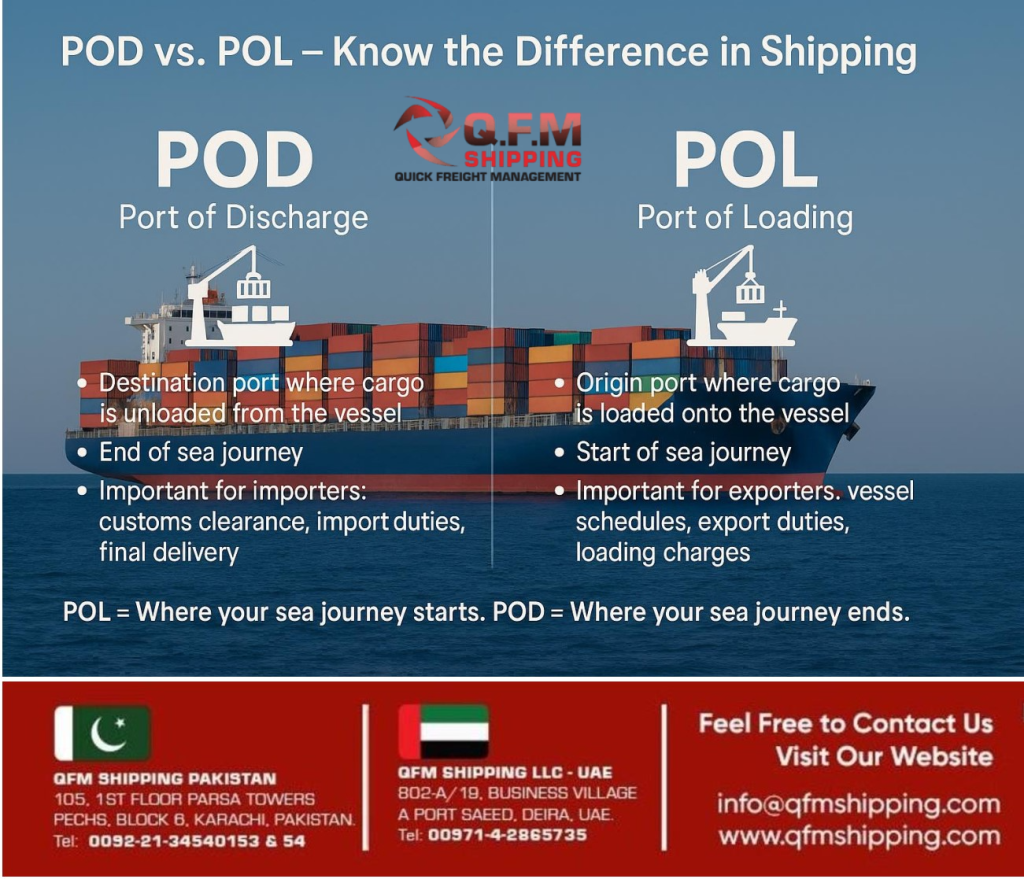
It is the origin port where goods are loaded onto the vessel for transportation.
-
The POL marks the beginning of the sea journey in international shipping.
For example, if goods are being shipped from Karachi to London, Karachi Port would be the POL.
When it’s used:
-
During export documentation.
-
In freight contracts and Incoterms.
-
To determine export duties, port handling charges, and vessel schedules.
What is POD?
POD stands for Port of Discharge.
-
It is the destination port where goods are unloaded from the vessel.
-
The POD marks the end of the sea leg of the journey, though inland transportation may still follow.
Using the earlier example, London Gateway would be the POD for a shipment leaving Karachi.
When it’s used:
-
In import documentation.
-
To calculate duties, taxes, and port handling charges.
-
For coordinating customs clearance and final delivery arrangements.
Key Differences Between POD and POL
| Aspect | POL (Port of Loading) | POD (Port of Discharge) |
|---|---|---|
| Meaning | The port where cargo is loaded onto the vessel | The port where cargo is unloaded from the vessel |
| Stage of Journey | Start of sea leg | End of sea leg |
| Relevance | Important for exporters, shipping lines, and carriers | Important for importers, customs, and consignees |
| Costs | Export duties, loading charges, local trucking to port | Import duties, unloading charges, final delivery to buyer |
| Documentation | Shipper/Export documents highlight POL | Consignee/Import documents highlight POD |
Why Understanding POD and POL Matters
-
For Exporters: Knowing the POL ensures cargo is correctly booked, cleared, and loaded.
-
For Importers: Knowing the POD helps plan customs clearance, duties, and inland delivery.
-
For Freight Forwarders: Correctly identifying POL and POD avoids costly mistakes and delays.
✅ In short: POL = where your cargo journey starts, POD = where your cargo journey ends (by sea).
Getting Started is Easy
Ready to simplify your shipping? Contact us today for a free consultation and a custom quote. Our team is ready to design a logistics plan that will save you time, reduce costs, and give you peace of mind.
Contact Us:
-
Email: info@qfmshipping.com
-
Website: www.qfmshipping.com
