
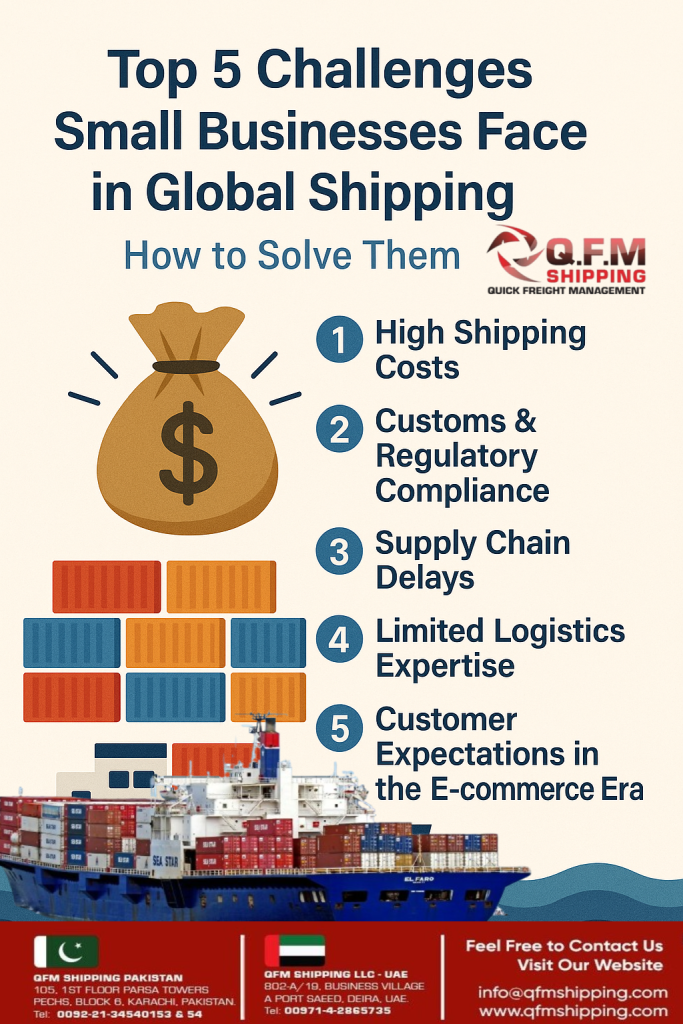
Top 5 Challenges Small Businesses Face in Global Shipping | How to Solve Them
Expanding into international markets can be an exciting step for small businesses — but global shipping often brings unexpected hurdles. From hidden costs to compliance headaches, the logistics of moving goods across borders can overwhelm many first-time exporters.
Here are the Top 5 Challenges small businesses face in global shipping — and practical ways to overcome them:
1️⃣ High Shipping Costs
The Challenge:
Freight rates, fuel surcharges, port fees, and last-mile delivery expenses can eat into already thin margins. Small businesses often don’t benefit from the volume-based discounts that larger corporations enjoy.
The Solution:
-
Use LCL (Less-than-Container Load) consolidation to share space and reduce costs.
-
Partner with freight forwarders that offer transparent pricing and negotiated carrier rates.
-
Explore hybrid shipping models (air + sea) to balance speed and savings.
2️⃣ Customs & Regulatory Compliance
The Challenge:
Every country has its own rules — from tariffs and duties to packaging and labeling requirements. A small mistake can result in shipment delays, fines, or even confiscation of goods.
The Solution:
-
Work with an experienced customs broker or freight forwarder to handle documentation.
-
Stay updated on HS codes, import restrictions, and trade agreements relevant to your products.
-
Automate compliance checks using digital logistics platforms to reduce manual errors.
3️⃣ Supply Chain Delays
The Challenge:
Port congestion, strikes, weather disruptions, and geopolitical tensions can stall shipments for weeks. Small businesses often lack the resources to absorb these delays.
The Solution:
-
Diversify shipping routes and carriers to avoid reliance on a single channel.
-
Build in buffer times for critical deliveries.
-
Use real-time shipment tracking tools for visibility and proactive communication with customers.
4️⃣ Limited Logistics Expertise
The Challenge:
Managing freight quotes, customs clearance, insurance, and multimodal transportation can be overwhelming for small business owners who are not logistics specialists.
The Solution:
-
Partner with a reliable logistics service provider that offers end-to-end support.
-
Leverage educational resources and advisory services from freight companies.
-
Invest in training or workshops for your staff to build in-house knowledge.
5️⃣ Customer Expectations in the E-commerce Era
The Challenge:
Today’s customers expect fast, affordable, and transparent delivery — no matter where they are in the world. For small businesses, meeting these demands while staying profitable is difficult.
The Solution:
-
Offer tiered shipping options (standard, expedited, premium).
-
Be transparent about delivery timelines at checkout.
-
Use tech-driven logistics partners that provide tracking links and proactive updates to customers.
Final Thought:
Global shipping doesn’t have to be a roadblock for small businesses. By choosing the right logistics partners, leveraging digital tools, and building a resilient shipping strategy, even small players can compete with global giants.
At QFM Shipping, we help businesses navigate these challenges with smarter, cost-effective, and reliable solutions.
Getting Started is Easy
Ready to simplify your shipping? Contact us today for a free consultation and a custom quote. Our team is ready to design a logistics plan that will save you time, reduce costs, and give you peace of mind.
Contact Us:
-
Email: info@qfmshipping.com
-
Website: www.qfmshipping.com
