
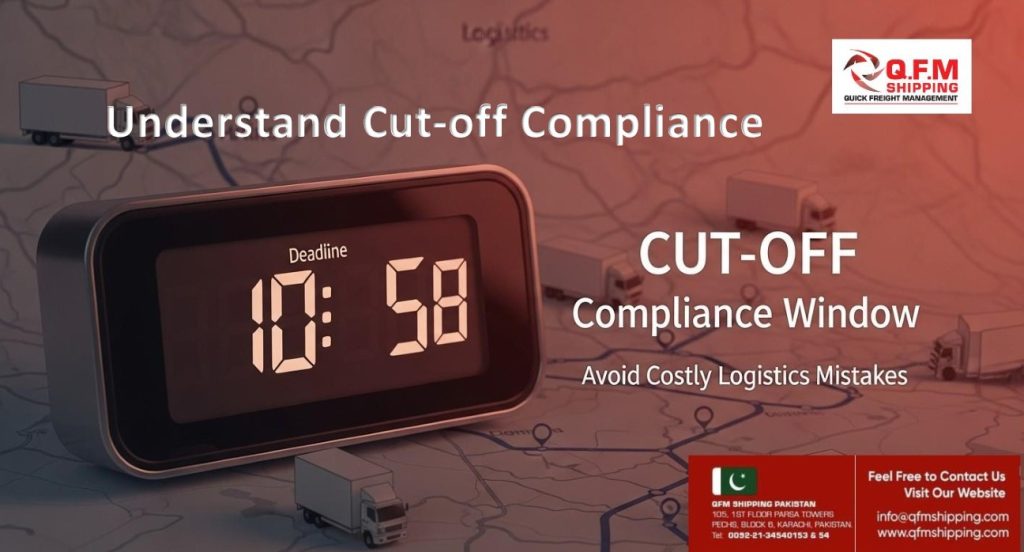
Understand Cut-off Compliance Window and Avoid Costly Mistakes
Introduction: Timing Is Everything in Global Shipping
In ocean freight, precision is not a luxury — it’s a requirement. Every shipment revolves around cut-off windows, those critical time frames that determine whether your cargo makes it aboard or sits idle until the next sailing. Understanding and complying with these cut-offs can mean the difference between on-time delivery and thousands of dollars in penalties, demurrage, or lost business.
This guide breaks down what a cut-off compliance window is, why it matters, and how you can manage it efficiently to safeguard your logistics chain.
What Is a Cut-off Compliance Window?
The cut-off window refers to the final deadlines established by shipping lines, terminals, or consolidators for accepting various shipment components — such as cargo, documents, and VGM (Verified Gross Mass).
Missing any of these cut-offs can prevent your shipment from being loaded on schedule, leading to operational and financial setbacks.
Common types of cut-offs include:
| Type | Meaning | Typical Timing Before ETD |
|---|---|---|
| Cargo Cut-off | Last time cargo can be gated-in at the terminal or CFS | 24–48 hours before ETD |
| Documentation Cut-off | Deadline for submitting shipping instructions (SI) or BL data | 24–72 hours before ETD |
| VGM Cut-off | Final time to submit Verified Gross Mass to the carrier | 24 hours before vessel loading |
| Customs Cut-off | Final filing or clearance time with port authorities | Varies by port/country |
These cut-off points together create the compliance window — the operational zone where shippers must complete all actions to ensure a smooth sailing.
Why Compliance Matters
Failing to meet cut-off windows triggers a chain reaction of avoidable problems:
-
Roll-overs: Cargo misses the intended vessel, delaying delivery by days or even weeks.
-
Extra Charges: Shipping lines may charge roll-over fees, storage, or CFS handling fees.
-
Customer Dissatisfaction: Late deliveries damage trust and affect future business.
-
Supply-Chain Disruption: Production schedules or retail launches dependent on timely arrivals get disrupted.
Compliance isn’t just about meeting a date — it’s about maintaining rhythm in your logistics operations.
Example: Missing the LCL Cut-off Window
Imagine an exporter from Karachi shipping an LCL consignment to Singapore with QFM Shipping.
The cargo cut-off is Wednesday 12 PM, and the ETD is Friday morning.
Due to delayed trucking, the cargo arrives Wednesday 3 PM — three hours late.
Result: the cargo is rolled to the next sailing, adding a 7-day delay, plus additional CFS re-handling charges. A simple misstep in timing costs both money and credibility.
How to Stay Within the Compliance Window
-
Know Your Deadlines
Request updated cut-off schedules from your NVOCC or freight forwarder each week. Ports and lines frequently change cut-off times based on congestion and vessel rotation. -
Pre-Plan Documentation
Prepare shipping instructions and customs filings as soon as your booking is confirmed. Electronic submission platforms like INTTRA or CargoSmart reduce delays. -
Weigh and Submit VGM Early
Do not wait for the final day to weigh your container or submit data. Delayed VGM submission is one of the most common reasons for cargo roll-overs. -
Coordinate Trucking and CFS Operations
Schedule pickup with enough buffer to account for traffic, inspection, or gate delays. For LCL cargo, confirm CFS receiving hours in advance. -
Automate Reminders
Use digital logistics tools or ERP integrations that trigger alerts before each cut-off point — documentation, cargo, and VGM. -
Partner with Reliable Forwarders
Working with a company like QFM Shipping, which offers weekly LCL services and in-house CFS coordination, ensures your cargo always meets compliance windows.
Cut-off Compliance in LCL Consolidation
In LCL (less-than-container load) operations, the cut-off window is even tighter because consolidators must receive, verify, and load multiple shipments into one container.
Missing your LCL cut-off doesn’t just delay your cargo — it affects the entire consolidation schedule.
Hence, most reliable NVOCCs maintain weekly fixed cut-offs to keep the network predictable and reliable.
For example:
Karachi → Jebel Ali | Cut-off: Monday 12 PM | ETD: Tuesday Night
Karachi → Singapore | Cut-off: Thursday 12 PM | ETD: Saturday Morning
Consequences of Missing Compliance Windows
| Mistake | Possible Outcome |
|---|---|
| Late cargo arrival | Cargo roll-over to next vessel |
| Late document submission | Bill of Lading errors or non-release |
| VGM not submitted on time | Non-loading or fines by carrier |
| Customs filing delay | Port hold or clearance issues |
| Mismatched schedule communication | Extra demurrage and detention costs |
How Digital Visibility Helps
Modern NVOCCs and freight forwarders use digital dashboards that show real-time cut-off timings, vessel ETAs, and documentation status.
Systems integrated with E-BL (electronic Bill of Lading) and track-and-trace features allow exporters to stay proactive.
At QFM Shipping, customers get automatic notifications 48 and 24 hours before each cut-off window — minimizing human error and maximizing efficiency.
Final Thought: Compliance Is Control
The cut-off compliance window is not a constraint — it’s a control mechanism that keeps your logistics precise, predictable, and cost-efficient.
Whether you ship FCL, LCL, or project cargo, respecting the window ensures your shipment stays on schedule and your clients stay happy.
Remember: In shipping, it’s not the distance that delays you — it’s the missed deadline.
At QFM Shipping, our commitment is not just to move cargo — it’s to move your business forward with dependable global connectivity.
Book Your Space Today
Contact Us:
Email: info@qfmshipping.com
Phone: +92-21-34540153 & 54
+92-21-34540135 & 36
Website: www.qfmshipping.com
Tags:
cut-off compliance window, shipping cut-off time, cargo documentation deadline, VGM submission, LCL cut-off, shipping schedule, freight forwarder, cargo compliance, port cut-off, vessel ETD, export logistics, QFM Shipping, Shipping Navigators, cargo roll-over, shipping mistakes
