
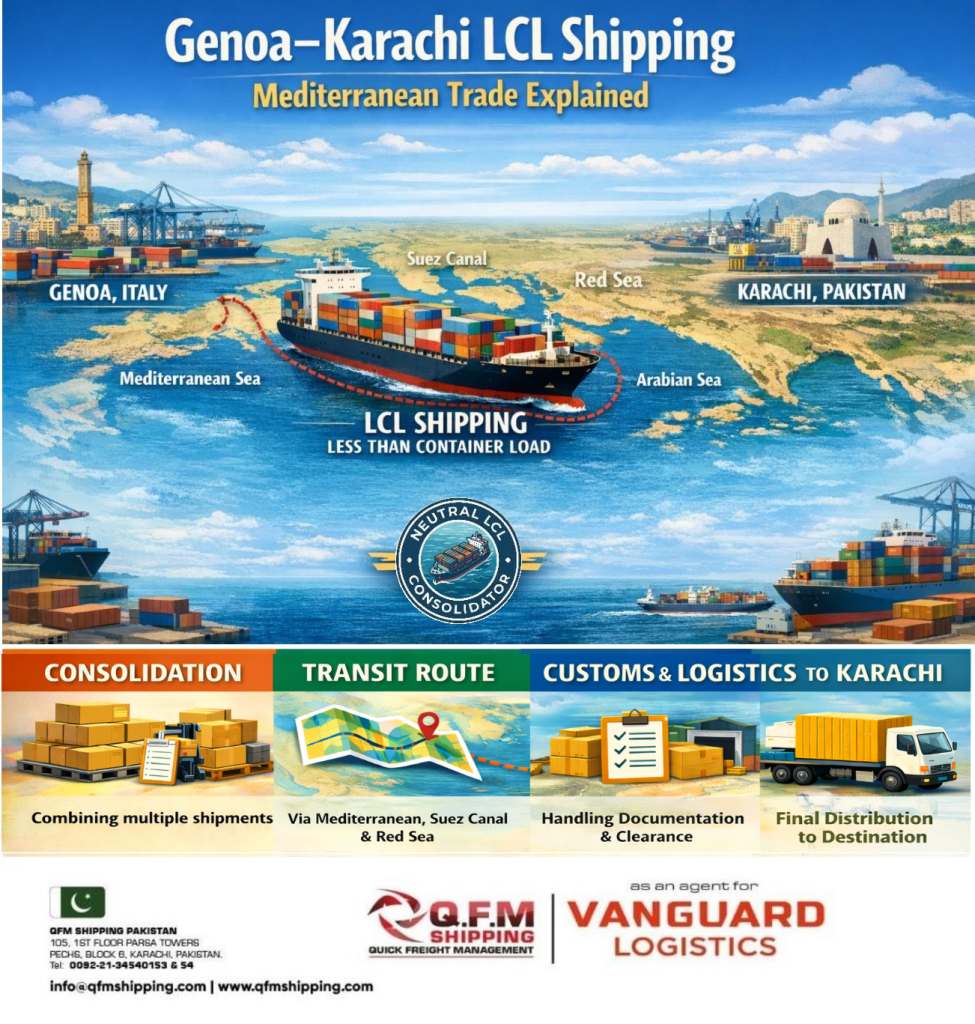
Genoa–Karachi LCL Shipping | Mediterranean Trade Explained | QFM Shipping
Shipping Less-than-Container Load (LCL) cargo from Northern Italy to Pakistan is a practical option when your shipment is too small for a full container, or when you want to reduce inventory risk by shipping more frequently. The Genoa–Karachi corridor is one of the key Mediterranean-to-South Asia pathways because Genoa is a major gateway for industrial and consumer exports, while Karachi is Pakistan’s primary maritime entry point for general cargo.
This guide breaks down how the Mediterranean trade lane works in real operations—routes, transit-time drivers, documentation, cost components, common pitfalls, and what shippers should do to avoid delays and demurrage.
Why Genoa–Karachi LCL makes commercial sense
For many Pakistan-bound importers—retailers, spare-parts traders, SMEs, and project cargo buyers—LCL is the most economical way to move:
-
1–10 CBM shipments without paying for an entire 20’/40’ container
-
Multi-supplier purchases consolidated into one shipment (when done correctly)
-
Frequent replenishment to reduce stockholding costs
-
Trial orders for new SKUs or suppliers in Italy/EU
Because this lane often relies on transshipment and feeder connectivity, the operational success of your LCL is less about “booking a rate” and more about choosing the right consolidation plan, cut-off discipline, and documentation accuracy.
How the Mediterranean trade lane typically routes to Karachi
Most Genoa-to-Karachi LCL moves don’t sail “direct.” Instead, cargo is routed through transshipment hubs that connect Mediterranean services to South Asia networks.
Common routing patterns (practical, not theoretical)
-
Genoa → Mediterranean hub → Middle East hub → Karachi
-
Genoa → Middle East hub → Karachi
-
Genoa → South Asia relay hub → Karachi (less common; depends on service strings)
Key drivers:
-
Vessel schedules and blank sailings
-
Feeder availability out of Genoa
-
Hub congestion and berthing windows
-
LCL warehouse cut-offs (often stricter than FCL)
What this means for shippers: your transit time is largely determined by how well the consolidation aligns with the sailing window and how reliable the hub connection is.
Typical transit-time ranges (and why they vary)
Transit times fluctuate due to service strings and transshipment dwell time. In practice, your total timeline is shaped by four “time buckets”:
-
Origin processing time (Genoa area)
-
Cargo receiving, measuring, labeling, and documentation checks
-
-
Mainline sailing time (Mediterranean → hubs → Pakistan)
-
Transshipment dwell time
-
The biggest swing factor (missed connections = days or weeks)
-
-
Destination handling & clearance (Karachi)
-
Depends on HS code, duties/taxes, examination, and broker readiness
-
Best practice: plan LCL shipments using calendar weeks, not “days,” and build a buffer for connection risk.
What you actually pay for in Genoa–Karachi LCL
LCL charges are not “one number.” They’re a stack of line items that vary by carrier, consolidator, season, and commodity.
Cost components you should expect
-
Ocean freight (LCL): priced per W/M (whichever is higher: weight or CBM)
-
Origin charges: receiving, handling, documentation, terminal/warehouse fees
-
Destination charges (Karachi): deconsolidation, handling, delivery order fees, etc.
-
Surcharges: fuel, peak season, congestion, security, equipment imbalance (varies)
-
Customs & local compliance costs: duties/taxes, broker fees, exams, scanning, etc.
-
Inland movement: pickup in Italy (if arranged) + delivery in Pakistan (if arranged)
W/M reality check
LCL is usually billed on:
-
1 CBM = 1000 kg (rule-of-thumb used in rate structures)
So a dense shipment may bill on weight; a light bulky shipment bills on volume.
Actionable takeaway: Always get your shipment professionally measured and weighed before confirming the booking, especially for cartons, displays, and mixed packaging.
Documentation: the fastest way to lose time (and money) in Karachi
Most “shipping delays” are actually paperwork delays that show up at destination as demurrage, storage, or customs holds.
Core documents for Pakistan-bound imports
-
Commercial Invoice (accurate values, currency, Incoterms, seller/buyer details)
-
Packing List (carton count, net/gross weight, dimensions, marks & numbers)
-
Bill of Lading / Sea Waybill (consignee, notify, correct description)
-
Certificate of Origin (if required by your bank/customer/compliance)
-
Product-specific docs (if applicable): MSDS, test reports, permits, labeling compliance
Common Genoa–Karachi documentation mistakes
-
Mismatch between invoice and packing list (weights, quantities, HS description)
-
Over-generic descriptions (“parts,” “items,” “accessories”)
-
Incorrect consignee/NTN details (Pakistan importer identifiers)
-
Declared values that don’t match payment terms/banking trail
-
Missing marks & numbers that warehouse teams rely on for segregation
Rule: If your documents are not “clear enough for a stranger to clear the cargo,” they are not clear enough for Karachi.
Packaging & cargo integrity for LCL (Mediterranean to South Asia)
LCL cargo is handled more than FCL. Your cartons may be moved, stacked, or repositioned. The lane also crosses multiple climate zones.
Packaging rules that reduce claims and damage
-
Use export-grade cartons (double-wall for heavy goods)
-
Palletize when possible; strap and wrap properly
-
Apply clear labels on two sides (shipper, consignee, PO/SKU, carton number)
-
Keep liquids/fragile items in reinforced inner packaging
-
Ensure wood packaging complies with ISPM 15 if using wooden pallets/crates
Operational tip: If your shipment is fragile or high-value, request handling instructions and consider cargo insurance.
Customs clearance in Karachi: what importers should prepare for
Clearance time depends on commodity and compliance readiness. Importers should pre-align:
-
HS codes (consistent, defensible, and supported by product specs)
-
Import permits/approvals where required
-
Correct valuation and banking trail
-
Broker readiness to file immediately upon arrival notice
-
Funds available for duties/taxes and port charges
Avoidable cost center: demurrage and port storage. These often happen when clearance starts late or paperwork is inconsistent.
Risk management: where Genoa–Karachi LCL most commonly breaks
1) Missed consolidation cut-offs
LCL cut-offs can be earlier than you expect because cargo must be received, screened, and built into containers.
Fix: deliver cargo to origin facility earlier and finalize docs before cut-off week.
2) Transshipment delays
Congestion, schedule changes, and missed connections can cascade.
Fix: choose routings with reliable hub connectivity, and avoid “cheapest route” logic that adds fragile connections.
3) Destination charge surprises
Shippers often compare only ocean freight and ignore destination deconsolidation costs.
Fix: request an “all-in estimate” including destination local charges and delivery, not just the freight rate.
4) Mixed cargo sensitivity
Some commodities don’t travel well together (odors, moisture, chemical sensitivity).
Fix: disclose commodity details early so stowage and segregation can be planned.
Where QFM Shipping fits in (and how it should help shippers)
As a Pakistan-focused freight-forwarding partner, QFM Shipping supports importers and traders who need predictable LCL execution, not just a booking.
What “good” support looks like for this lane
-
Lane planning: selecting practical routings and realistic timelines
-
Origin discipline: clear cut-offs, cargo readiness checks, document validation
-
Neutral handling mindset: protecting shipper confidentiality where needed
-
Visibility: milestone updates (cargo received, stuffed, transshipped, arrived)
-
Karachi-side coordination: aligning arrival with broker readiness and delivery plans
If you operate through networks such as Vanguard Logistics (commonly referenced by neutral consolidators and agents), the advantage is broader lane coverage and standardized consolidation processes—provided the execution is tightly managed.
Practical shipper checklist for Genoa–Karachi LCL
Before booking
-
Confirm cargo dimensions/weight (final, not estimated)
-
Confirm commodity restrictions (battery, liquid, hazardous, regulated items)
-
Decide Incoterms and who pays destination charges
-
Validate importer details for Pakistan clearance
Before origin cut-off
-
Deliver cargo early to origin facility
-
Lock invoice + packing list with consistent line items
-
Confirm marks & numbers and carton count
-
Ensure pallets/crates comply with ISPM 15 (if applicable)
Before arrival in Karachi
-
Pre-alert broker with documents
-
Pre-align HS codes and valuation support
-
Arrange funds and delivery plan
-
Prepare for examinations (if your commodity is prone to checks)
FAQs
Is Genoa–Karachi LCL cheaper than air freight?
For most general cargo, yes—especially above small weights/volumes. But you must factor in destination charges and longer lead time.
Can I consolidate multiple suppliers into one Karachi LCL shipment?
Yes, but only if documents are consistent and cargo is delivered within planned cut-offs. Supplier discipline is critical.
What’s the biggest reason Genoa–Karachi LCL gets delayed?
Transshipment connection delays and documentation mismatches are the most common operational causes.
Should I insure LCL cargo?
If the goods are fragile, high-value, or time-sensitive, cargo insurance is strongly recommended.
Conclusion: treat this lane like a process, not a price
Genoa–Karachi LCL works best when shippers manage it as an end-to-end process: clean documentation, export-grade packaging, realistic timelines, and a partner who coordinates origin cut-offs, routing logic, and Karachi clearance readiness. If you build discipline into the shipment plan, the Mediterranean trade lane becomes a reliable supply channel—not an expensive guessing game.
QFM Shipping is a Pakistan-based neutral LCL consolidator and freight-forwarding partner focused on network-centric logistics, exporter-first service design, and reliable multi-origin routing to global markets.
Ready to explore collaboration opportunities? Reach out to our team to discuss your LCL needs, strategic partnerships, and custom routing options. Let’s build stronger, smarter logistics together.
Email: info@qfmshipping.com
Phone: +92-21-34540153 & 54
+92-21-34540135 & 36
Tags:
Genoa Karachi LCL shipping, LCL freight Genoa to Karachi, Mediterranean trade lane, Italy to Pakistan sea freight, neutral LCL consolidation Pakistan, Karachi port import process, LCL transit time Genoa Karachi, QFM Shipping Pakistan
