
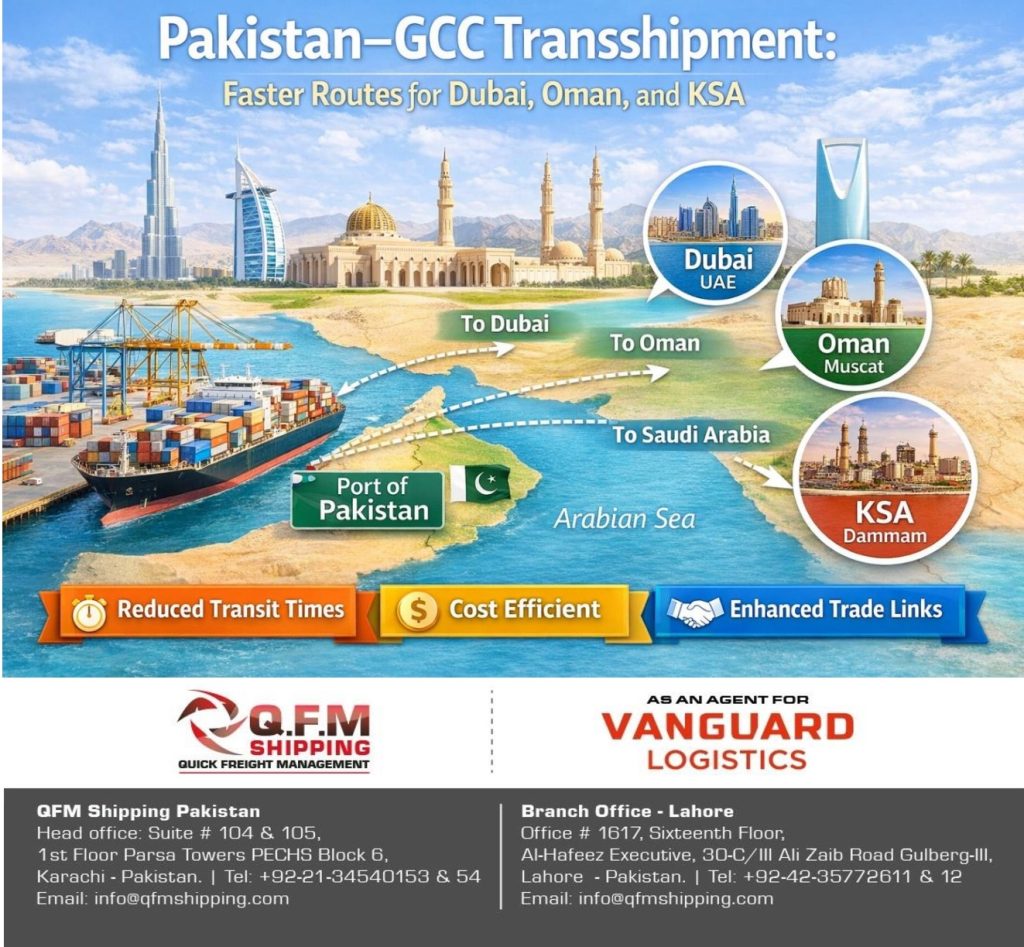
Pakistan–GCC Transshipment | Faster Routes for Dubai, Oman, and KSA
A New Era in Regional Logistics
The logistics landscape in South Asia and the Middle East is rapidly evolving. Pakistan–GCC transshipment is emerging as a strategic solution for exporters and freight forwarders seeking faster, more reliable routes to key Gulf markets such as Dubai, Oman, and Saudi Arabia (KSA).
With recent regulatory support and improved port infrastructure, Pakistan—especially Karachi and Port Qasim—is becoming a powerful transshipment hub connecting South Asia to the Gulf Cooperation Council (GCC).
For businesses navigating global disruptions, rising freight costs, and route instability, this shift is not just an option—it’s a competitive advantage.
What Is Pakistan–GCC Transshipment?
Pakistan–GCC transshipment refers to the movement of cargo—particularly LCL (Less than Container Load)—from Pakistan ports to GCC destinations through optimized, direct, or hub-based routes.
Instead of relying solely on congested or disrupted global shipping lanes, cargo is consolidated in Pakistan and efficiently routed to:
- Dubai (UAE)
- Muscat (Oman)
- Dammam/Jeddah (Saudi Arabia)
This model enhances transit efficiency while maintaining flexibility for freight forwarders and agents.
Why Pakistan Is Becoming a GCC Gateway
1. Strategic Geographic Position
Pakistan sits at the crossroads of South Asia, Central Asia, and the Middle East, offering shorter sailing distances to GCC ports compared to traditional transshipment hubs.
2. Government Policy Support
Recent regulatory developments (such as SRO 525(I)/2026) have enabled international LCL transshipment, allowing Pakistan to function as a regional consolidation hub.
3. Modern Port Infrastructure
Ports like Karachi and Port Qasim now support:
- High container throughput
- Efficient customs handling
- Faster vessel turnaround times
4. Neutral Consolidation Opportunities
Pakistan is increasingly supporting neutral LCL consolidation, ensuring agent confidentiality while improving cargo flow.
Key Benefits of Pakistan–GCC Transshipment
1. Faster Transit Times
Direct and optimized routes reduce transit duration significantly compared to indirect routing via distant hubs.
Example:
- Karachi → Dubai: Faster than traditional transshipment via Singapore or Colombo
- Karachi → Oman/KSA: Reduced sailing and waiting time
2. Cost Efficiency
Shorter routes mean:
- Lower fuel costs
- Reduced port handling charges
- Competitive freight rates
This makes Pakistan–GCC transshipment ideal for SMEs and volume-sensitive exporters.
3. Enhanced Flexibility with LCL Shipments
LCL shipments benefit from:
- Frequent sailings
- Flexible consolidation schedules
- Reduced inventory holding time
4. Improved Supply Chain Reliability
With global disruptions (e.g., Middle East rerouting, Red Sea tensions), Pakistan offers a stable alternative route for GCC-bound cargo.
Dubai, Oman, and KSA: Key Trade Corridors
Dubai (UAE) – The Regional Trade Hub
Dubai remains a central distribution hub for the Middle East, Africa, and beyond. Faster access via Pakistan strengthens re-export capabilities.
Oman (Muscat) – Emerging Logistics Gateway
Oman offers less congestion and strategic access to Gulf markets, making it an attractive destination for transshipment.
Saudi Arabia (KSA) – High-Growth Market
With Vision 2030 driving imports and infrastructure growth, efficient shipping routes to KSA are more critical than ever.
Role of QFM Shipping Pakistan
At the center of this transformation is QFM Shipping Pakistan, enabling seamless and efficient Pakistan–GCC transshipment solutions.
What Sets QFM Shipping Apart?
1. Neutral LCL Consolidation
QFM Shipping ensures:
- Complete agent confidentiality
- Secure cargo handling
- Trusted global partnerships
2. Strong GCC Network
With established connections across:
- UAE
- Oman
- Saudi Arabia
QFM ensures smooth cargo movement and last-mile coordination.
3. Optimized Routing Solutions
QFM leverages:
- Direct sailings
- Multi-country consolidation
- Flexible schedules
to reduce delays and costs.
4. Real-Time Coordination & Support
Clients benefit from:
- Shipment tracking
- Proactive communication
- Expert logistics consultation
Challenges in Traditional GCC Shipping (and How Pakistan Solves Them)
| Challenge | Traditional Routes | Pakistan–GCC Solution |
|---|---|---|
| Congestion | High (Singapore/Colombo) | Lower congestion |
| Transit Time | Longer | Faster |
| Costs | Higher fuel & handling | Reduced costs |
| Flexibility | Limited | High (LCL options) |
| Disruptions | Vulnerable | Alternative routes |
Future Outlook: Pakistan as a Regional Logistics Hub
The future of Pakistan–GCC transshipment is highly promising.
Key Trends to Watch:
- Growth in LCL demand
- Expansion of neutral consolidation networks
- Increased GCC trade volumes
- Digitalization of freight forwarding
- Strategic partnerships with global logistics players
Pakistan is not just catching up—it is positioning itself as a primary logistics gateway for GCC trade.
Why Exporters Should Act Now
Businesses that adopt the Pakistan–GCC transshipment early can gain:
- Faster delivery cycles
- Lower logistics costs
- Competitive pricing advantage
- Stronger supply chain resilience
In a volatile global shipping environment, agility is everything.
Conclusion: A Smarter Route to the Gulf
Pakistan–GCC transshipment is transforming regional trade by offering faster, cost-effective, and reliable shipping routes to Dubai, Oman, and KSA.
With strong infrastructure, regulatory support, and expert logistics providers like QFM Shipping Pakistan, exporters now have a smarter way to reach the Gulf.
Call to Action
Ready to optimize your GCC shipments?
Partner with QFM Shipping Pakistan and unlock faster, smarter, and more secure transshipment solutions.
Contact today to streamline your logistics.
QFM Shipping Pakistan
Karachi : Suite # 104 & 105, 1st Floor Parsa Towers PECHS Block 6 Karachi
Tel: 0092-21-34540153 & 54
Lahore: Suite # 1617, 16th Floor, Al Hafeez Executive Gulberg III, Lahore
Tel: 0092-42-35772611 & 12
Email: pricing.pkkhi@qfmshipping.com
Mobile: 0092-321-8280327
Tags:
Pakistan–GCC transshipment, Pakistan GCC shipping routes, LCL transshipment Pakistan, Dubai Oman KSA shipping, GCC logistics Pakistan, freight forwarding Pakistan GCC,
