
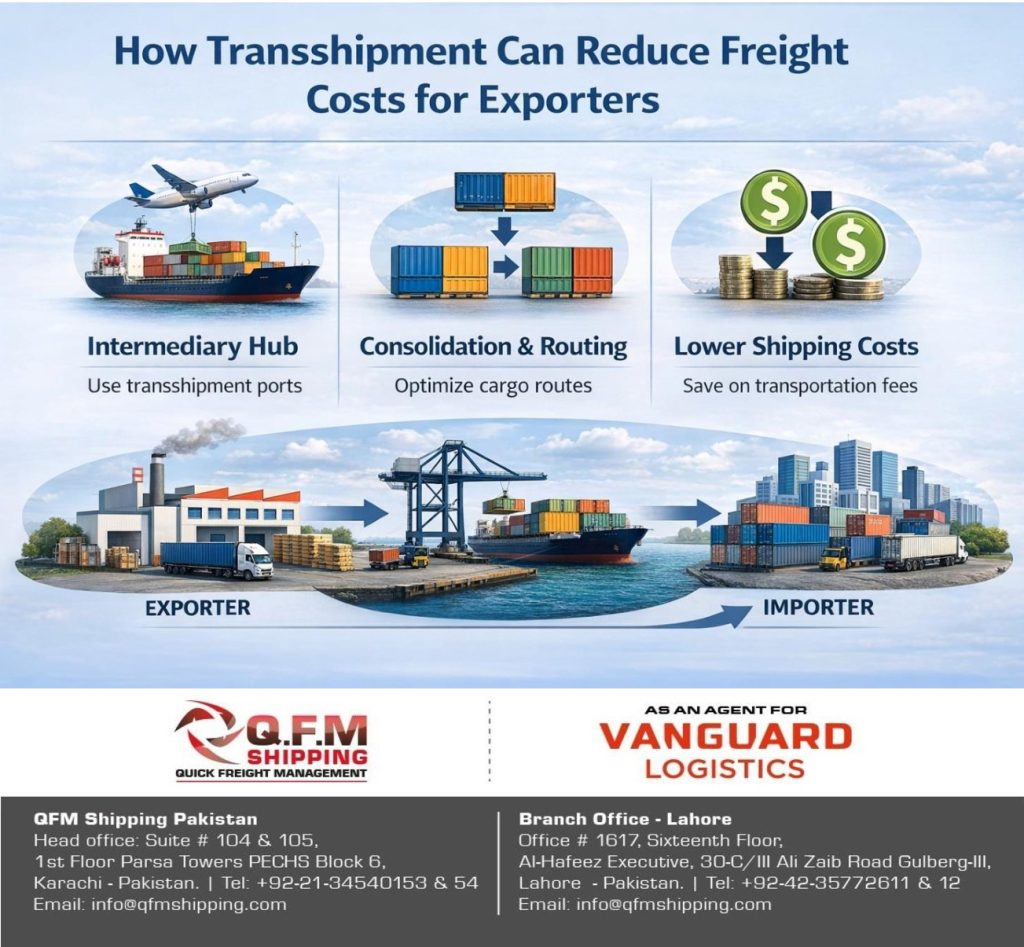
How Transshipment Can Reduce Freight Costs for Exporters
In today’s volatile global shipping environment—marked by rising freight rates, fuel surcharges, and geopolitical disruptions—exporters are under increasing pressure to optimize logistics costs without compromising delivery timelines.
One of the most powerful yet underutilized strategies is transshipment.
For exporters in Pakistan and across emerging markets, transshipment freight cost reduction is no longer just an option—it is a competitive necessity.
What Is Transshipment in Logistics?
Transshipment refers to the process of transferring cargo from one vessel to another at an intermediate port before reaching its final destination.
Instead of direct shipping routes (which are often expensive or unavailable), cargo is routed through strategic hub ports—such as Dubai, Colombo, or Singapore—to optimize cost and efficiency.
Why Freight Costs Are Increasing for Exporters
Before understanding cost reduction, it’s important to identify the challenges exporters face:
- Rising fuel prices and bunker surcharges
- Port congestion and delays
- War risk surcharges in key shipping lanes
- Limited direct vessel connectivity from regional ports
- Equipment shortages and container imbalances
These challenges make direct shipping more expensive, especially for small and medium exporters.
How Transshipment Reduces Freight Costs
1. Optimized Shipping Routes
Transshipment allows cargo to move through cost-efficient global trade lanes instead of expensive direct routes.
- Carriers use high-volume routes to reduce per-unit costs
- Avoids congested or high-risk regions
- Enables flexible routing based on market conditions
Result: Lower base freight rates and improved cost predictability
2. Cargo Consolidation (LCL Efficiency)
Through Less than Container Load (LCL) consolidation:
- Multiple shipments are combined into one container
- Exporters pay only for the space they use
- Reduces the cost burden of full container booking
This is especially beneficial for SMEs and growing exporters.
Result: Significant transshipment freight cost reduction for smaller shipments
3. Access to Major Shipping Hubs
Transshipment connects exporters to major global hubs, where:
- Shipping frequency is higher
- Competition among carriers reduces rates
- Better vessel availability ensures faster movement
Example: Routing via UAE hubs instead of direct limited routes
Result: Lower costs due to economies of scale
4. Reduced Empty Space & Better Utilization
Direct shipments often lead to:
- Underutilized containers
- Higher per-unit shipping cost
With transshipment:
- Containers are optimized for maximum capacity
- Space is efficiently allocated across multiple shipments
Result: Cost savings through improved container utilization
5. Flexibility in Carrier Selection
Transshipment enables logistics providers like QFM Shipping Pakistan to:
- Choose the most cost-effective carriers for each leg
- Switch routes dynamically based on market conditions
- Avoid dependency on a single shipping line
Result: Better negotiation power and reduced freight rates
6. Avoidance of High-Risk and Expensive Routes
In times of geopolitical instability (e.g., Middle East disruptions):
- Direct routes may incur war risk surcharges
- Insurance premiums increase significantly
Transshipment offers alternative routing options.
Result: Reduced risk-related costs and more stable pricing
Why Transshipment Is Critical for Pakistan Exporters
Pakistan’s geographic location positions it as a rising transshipment hub, especially with recent regulatory developments.
Exporters benefit from:
- Strategic access to GCC, Asia, and Africa
- Improved connectivity via Karachi and Port Qasim
- Cost-effective routing alternatives amid global disruptions
This makes transshipment freight cost reduction a key growth driver for Pakistan’s export sector.
How QFM Shipping Pakistan Maximizes Cost Efficiency
At QFM Shipping Pakistan, transshipment is not just a process—it is a strategic advantage.
What Sets QFM Apart:
✔ Neutral LCL consolidation (protecting agent confidentiality)
✔ Strong partnerships with global carriers
✔ Access to major transshipment hubs (UAE, Asia, Europe)
✔ Flexible routing strategies based on real-time market trends
✔ Cost optimization for both SMEs and large exporters
By leveraging these capabilities, QFM ensures:
👉 Lower freight costs
👉 Faster transit times
👉 Reliable cargo handling
Real-World Example of Cost Savings
Consider an exporter shipping goods from Karachi to Europe:
- Direct route: Limited availability + high freight cost
- Transshipment via Dubai or Colombo:
- Lower base rate
- Better vessel frequency
- Reduced delays
Outcome: Up to 15–30% cost savings depending on cargo type and volume
When Should Exporters Use Transshipment?
Transshipment is ideal when:
- Shipping smaller volumes (LCL cargo)
- Direct routes are expensive or unavailable
- Freight rates are volatile
- Flexibility and cost control are priorities
Potential Challenges (and How to Overcome Them)
While transshipment offers clear benefits, exporters should consider:
| Challenge | Solution |
|---|---|
| Slightly longer transit time | Choose optimized hub routes |
| Handling at multiple ports | Work with experienced forwarders like QFM |
| Risk of delays | Use reliable consolidation partners |
Future of Transshipment in Global Trade
With increasing disruptions in global shipping, transshipment is becoming:
- A core logistics strategy, not a backup option
- Essential for cost management
- Critical for supply chain resilience
For exporters, adopting transshipment freight cost reduction strategies will define competitiveness in the coming years.
Conclusion
Transshipment is no longer just a routing alternative—it is a powerful cost optimization tool for exporters navigating today’s complex logistics landscape.
By leveraging:
- Efficient routing
- Cargo consolidation
- Strategic hub connectivity
Exporters can significantly reduce freight costs while maintaining reliability.
Partnering with experienced logistics providers like QFM Shipping Pakistan ensures that businesses not only save costs—but also gain a strategic edge in global trade.
Tags:
transshipment freight cost reduction, Pakistan logistics, LCL consolidation Pakistan, freight cost optimization, global shipping routes, export logistics Pakistan, QFM Shipping Pakistan,
Read More:
1- Neutral LCL Transshipment | Secure Trade Confidentiality
2- From Disruption to Opportunity | The Rise of Transshipment Hubs in Global Logistics
3- Karachi & Port Qasim | Emerging Transshipment Gateways in South Asia
