In the domain of business logistics, understanding 3PL vs. 4PL is an essential consideration for organizations looking to streamline their supply chain operations. As companies grow and evolve, the demands on logistics become increasingly complex. It leads to the need for strategic partnerships that can enhance efficiency and effectiveness. In this article, we will deep dive into the definitions, functions, differences, and factors to consider when deciding between Third-Party Logistics (3PL) and Fourth-Party Logistics (4PL).
Introduction to Third-Party and Fourth-Party Logistics
Before making an informed decision on logistics partnerships, it’s vital to understand what 3PL and 4PL entail, how they differ, and the advantages and drawbacks of each model. As orchestrators of logistics solutions, these partners play critical roles in managing supply chains, but their approaches and capabilities can vary significantly.
Defining 3PL | What It requires and Core Functions
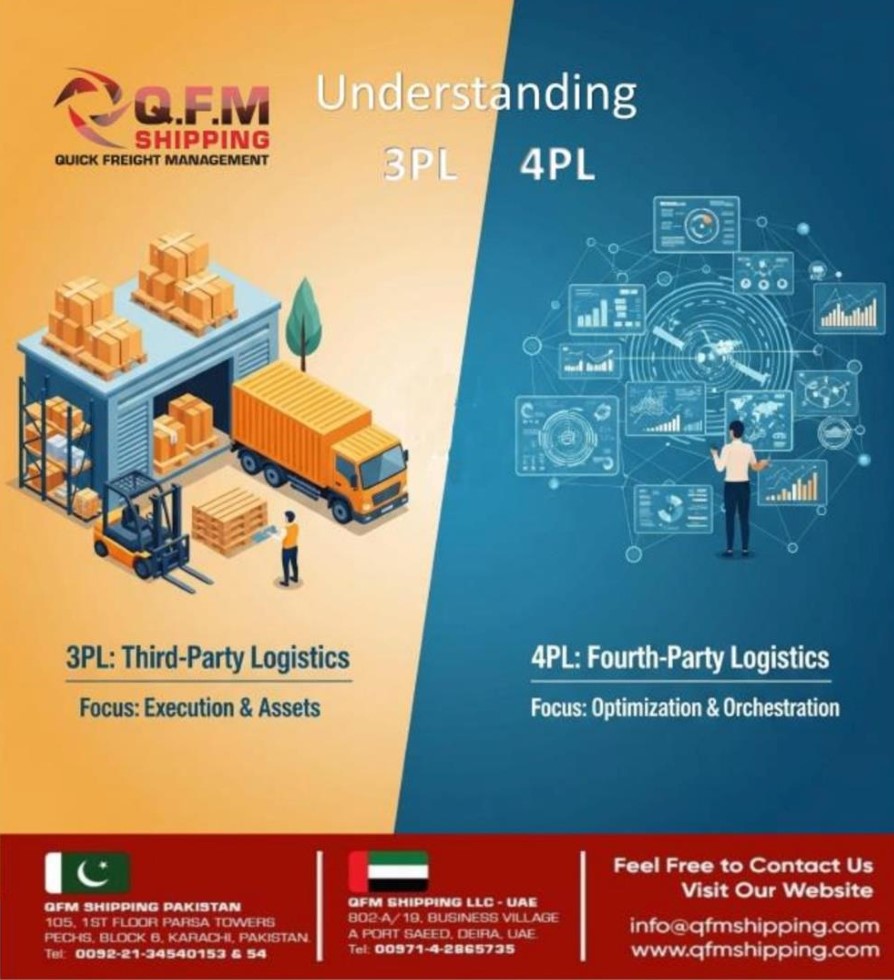
Third-Party Logistics (3PL) refers to a company that provides outsourced logistics services, which encompass transportation, warehousing, distribution, and other supply chain functions. 3PL providers are typically engaged when businesses seek to optimize specific components of their logistics operations without relinquishing full control. Core functions of 3PL include:
- Transportation Management: Overseeing the physical movement of goods.
- Warehousing Services: Storing and managing inventory.
- Order Fulfillment: Picking, packing, and shipping products to customers.
- Freight Forwarding: Coordinating shipment across international borders.
The primary objective of a 3PL partner is to help companies reduce operational costs and improve service delivery by the use of their expertise and established networks.
Defining 4PL | An Overview of Its Role and Responsibilities
In contrast, 4PL (Fourth-Party Logistics) providers take a more consolidative and consultative approach to (SCM) supply chain management. A 4PL can be seen as a logistics manager that acts as a single entity between a business and various logistics service providers. It includes 3PL, to create seamless supply chain solutions.
Responsibilities of a 4PL include:
- Supply Chain Design: Analyzing existing systems and proposing improvements.
- Data Management and Analysis: Utilyzing analytics to optimize logistics processes.
- Vendor Management: Coordinating relationships with multiple logistics service providers.
- End-to-End Management: Providing oversight and management for the entire supply chain, from supplier to customer.
Overall, 4PL focuses on optimizing the logistics process with a strategic long-term vision, prioritizing efficiency and innovation.
The Evolution from 3PL to 4PL | Historical Context and Industry Trends
The evolution from 3PL to 4PL is rooted in the growing complexity of global supply chains. As businesses faced escalating competition and customer demands, traditional 3PL services began to shift toward more comprehensive logistics solutions that encompass broader strategic planning. The rise of technology and data analytics has further propelled this transition, allowing for real-time insights and greater decision-making capabilities. Consequently, the lines between 3PL and 4PL have blurred as logistics partners strive to offer more value and differentiation in meeting customer needs.
Importance of Choosing the Appropriate Logistics Partner for Business Success
The choices surrounding logistics partnerships are pivotal when it comes to business success. Selecting the right logistics partner can facilitate growth, reduce costs, streamline operations, and elevate customer satisfaction. Companies must carefully assess their unique requirements, operational complexities, and strategic goals to ensure they align with the strengths of either 3PL or 4PL services.
Comparing 3PL and 4PL | Key Differences and Similarities
Understanding the details between 3PL and 4PL is very important for informed decision-making. Below, we explore some key differences and similarities in their offerings.
Scope of Services Provided by 3PL and 4PL
While both providers offer logistics-related services, the scope varies significantly.
- 3PL Services:
- Focus on supply chain work, including transportation, warehousing, and order fulfillment.
- Limited involvement in strategic planning or overall supply chain design.
- 4PL Services:
- Comprehensive management that encompasses all elements of logistics.
- Provides strategic check and is involved in decision-making for the supply chain.
Level of Control and Supply Chain Integration
The level of control and integration offered by 3PL and 4PL can greatly affect a business’s operations.
- 3PL Control:
- Generally, it provides a semi-independent operation.
- Companies retain control over logistics decisions, while 3PL manages basic logistics functions.
- 4PL Control:
- Partners closely with the company to manage the entire logistics process.
- Centralizes key decisions to streamline operations and enhance synergies across the supply chain.
Technological Capabilities and Data Management
Technological integration is becoming an increasingly critical part of logistics.
- 3PL Technology:
- Investment in logistical technologies for efficient operations.
- Focus is on all operational software to manage transport and warehousing.
- 4PL Technology:
- Requires to use of latest data analytics and software to optimize the entire supply chain.
- Capable of predictive analytics for better forecasting and decision-making.
Cost Structures and Pricing Models
The pricing models between 3PL and 4PL also differ, it impacts budget considerations.
- 3PL Cost Structure:
- Often based on transactional fees for each service rendered (e.g., per shipment, storage fees).
- Easy to budget for specific logistics activities.
- 4PL Cost Structure:
- Typically involves a fee for comprehensive management services, combining multiple aspects of the supply chain.
- More suited for businesses seeking overall cost efficiency long-term as it streamlines functions and reduces redundancies.
Flexibility and Customization Options
Businesses might seek flexibility and customization in logistics partnerships to meet unique requirements.
- 3PL Flexibility:
- Offers flexibility to select individual services as needed.
- Customizes elements of logistics but may not integrate them fully.
- 4PL Flexibility:
- Provides complete customization for logistics strategy and execution.
- Adapts to shifts in market demands and can pivot operations more swiftly.
Advantages and Disadvantages of 3PL
Benefits of Engaging a 3PL Provider
Engaging a 3PL provider offers several benefits, including:
- Cost-effective solutions due to economies of scale.
- Access to industry expertise and established networks.
- Increased operational efficiency and improved service levels.
Potential Limitations and Challenges of 3PL Partnerships
Despite the advantages, challenges exist when partnering with a 3PL provider:
- Limited control over logistics functions, which can lead to disconnects in strategy.
- Relatively lower integration with strategic planning when compared to 4PL.
- Best suited for less complex operations.
Advantages and Disadvantages of 4PL
Benefits of Partnering with a 4PL Provider
Partnering with a 4PL provider can enhance logistics efficiency through:
- Comprehensive management of the entire supply chain.
- Higher levels of strategic planning and innovation.
- Integration of advanced logistics technology and data analytics.
Possible Drawbacks and Considerations of 4PL Engagements
However, potential drawbacks may be encountered with a 4PL partner:
- Higher initial costs may deter small businesses.
- Complexity in managing multiple providers under single oversight.
- Greater reliance on the 4PL’s capabilities and expertise.
Factors to be Considered When Choosing Between 3PL and 4PL
Selecting the appropriate logistics partner depends on various factors affecting business operations.
Business Size and Growth Stage
The size of your business has an important role. Small to mid-sized businesses may benefit more from engaging a 3PL, while large enterprises could find 4PL more aligned with their complex needs.
Complexity of Supply Chain Operations
Evaluate the current complexity of your operations. If you have more elaborate logistics needs spanning multiple regions or markets, a 4PL might be better suited for handling those challenges.
Technology Integration Needs
Understanding your technological requirements is crucial. Companies seeking sophisticated data analytics and higher-level logistics integration should consider 4PL options.
Budget Constraints and Cost-Benefit Analysis
Develop a clear picture of your budget. 3PL may offer straightforward costs, while 4PL services can yield long-term savings through increased efficiency.
Long-term Strategic Goals and Scalability
Reflect on your long-term goals and potential growth. Companies aiming for scalability in the global market may greatly benefit from the comprehensive nature of 4PL services
Case Studies and Industry Examples
To further illustrate the distinctions and impacts of 3PL vs. 4PL:
Small Business Implementing 3PL Solutions
A local manufacturing company began working with a 3PL provider to manage its warehousing and transportation. By focusing on these aspects of logistics, the business reduced operating costs and improved delivery times without needing to invest excessively in its own logistics infrastructure.
Large Enterprise Transitioning to 4PL
A multinational retail giant transitioned from using a 3PL to a 4PL provider to achieve better efficiencies. The 4PL managed all aspects of the supply chain, enhancing data analytics and responsiveness to customer demands. This shift led to improved inventory management and significant savings.
Sector-Specific Insights (e.g., E-commerce, Manufacturing, Retail)
- E-commerce: Many e-commerce businesses leverage 3PL for quick fulfillment and shipping, while those looking to expand internationally often transition to 4PL for better logistical integration.
- Manufacturing: Manufacturers that innovate their production processes often require 4PL support to optimize their supply chain effectively, ensuring raw materials and finished goods flow seamlessly.
- Retail: Retail companies may initially work with 3PLs for logistics but consider shifting to 4PL as they enhance operational capabilities and seek overall supply chain strategies.
Making the Right Choice for Your Business
An informed approach is necessary for selecting a logistics partner, and several steps can streamline this choice.
Conducting a Needs Assessment
Begin by assessing your logistics needs. Consider what specific services you require, the scale of operations, and your anticipated growth.
Evaluating Potential Partners
Identify and evaluate potential 3PL and 4PL providers. Look for partners with proven industry experience, customer service strength, and technological capabilities.
Aligning Logistics Strategy with Business Objectives
You must ensure that your logistics provider aligns with business goals. The selected partner should complement your growth strategy and improve operational performance.
Planning for Implementation and Transition
Facilitate a smooth transition by developing a plan that includes timelines, communication strategies, and training for your staff as they adapt to new logistics processes.
Conclusion
Understanding the variances between 3PL and 4PL is the most important factor in the selection the right logistics partner that can meets your business’s needs. Engaging in a strategic assessment of your logistics requirements, operations, and long-term goals enables you to make informed decisions. By prioritizing efficiency and optimizing your supply chain, your business can effectively navigate the complexities of modern logistics while maximizing opportunities for growth and success.
Global shipping, made local. Global logistics, made simple.
That’s the QFM Shipping promise.
Contact QFM Shipping today and experience logistics reimagined.
