
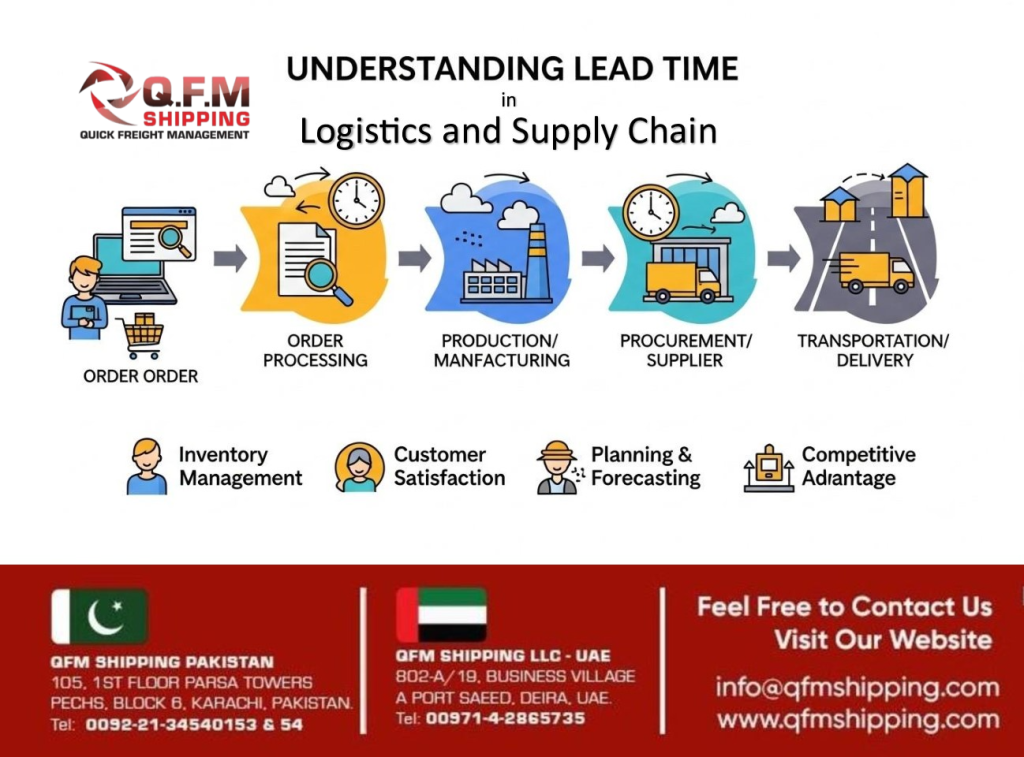
In the context of logistics and supply chain management, lead time is the total amount of time that elapses between the initiation of a process and its completion.
More specifically, it’s the period from the moment a customer places an order until that order is delivered to them. This isn’t just about the time the package spends in transit; it’s a comprehensive measurement that includes all the steps in between.
Lead time can be broken down into various components, which are crucial for businesses to understand and manage:
- Order Processing Lead Time: The time it takes for a company to receive, verify, and prepare an order for fulfillment. This includes administrative tasks, payment verification, and getting the order ready to be picked from inventory.
- Production/Manufacturing Lead Time: The time required to produce a product from start to finish. This is especially important for companies that manufacture goods on a “make-to-order” basis, as it includes sourcing raw materials, assembly, quality control, and packaging.
- Procurement/Supplier Lead Time: The time it takes for a company to acquire the necessary raw materials or components from its suppliers. This is a critical factor for manufacturers.
- Transportation/Delivery Lead Time: The time it takes for a shipment to move from its point of origin (e.g., a warehouse or factory) to its final destination (the customer’s location). This includes all transit time, customs, and any other regulatory processes.
Why is lead time so important?
- Inventory Management: A shorter, more predictable lead time allows businesses to hold less inventory, reducing storage costs and the risk of obsolete stock.
- Customer Satisfaction: Fast and reliable delivery times are a key factor in customer satisfaction and loyalty.
- Planning and Forecasting: Understanding lead times helps companies more accurately forecast demand and plan their operations, as a shorter lead time reduces the uncertainty associated with long-term predictions.
- Competitive Advantage: Businesses with shorter lead times can often respond more quickly to market changes and offer a superior customer experience compared to competitors.
Global shipping, made local. Global logistics, made simple.
That’s the QFM Shipping promise.
Contact QFM Shipping today and experience logistics reimagined.
