
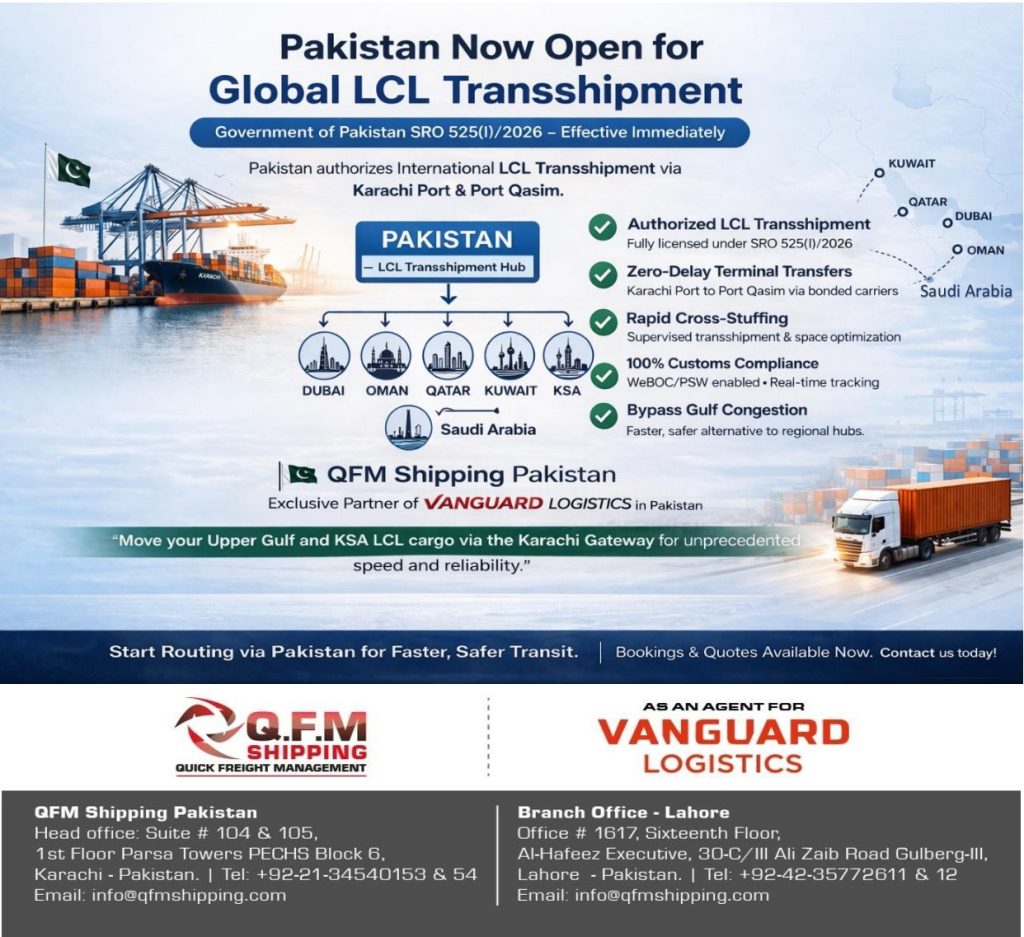
Pakistan LCL Transshipment Hub Opens New Trade Routes A New Era in Global Logistics The emergence of the Pakistan LCL transshipment hub marks a transformative milestone in international freight forwarding. With the Government of Pakistan introducing SRO 525(I)/2026, the country has officially authorized international LCL (Less-than-Container Load) transshipment via Karachi Port and Port Qasim. This […]
Tag Archives: freight forwarding Pakistan
25
Mar
Mar
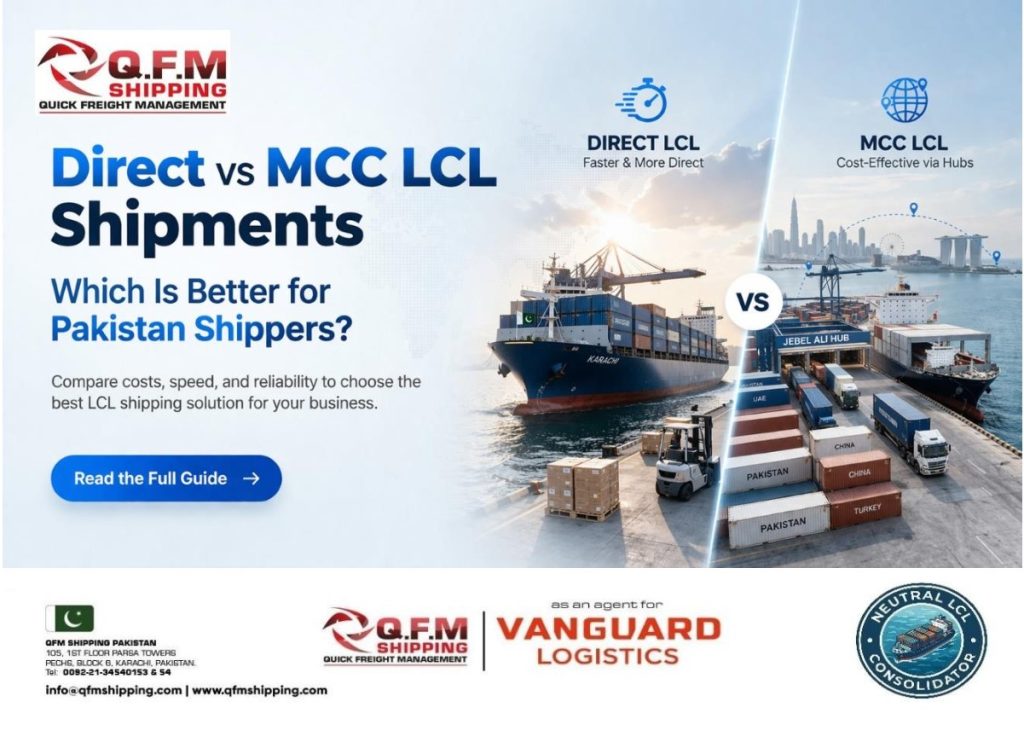
Direct vs MCC LCL Pakistan: Which Option Saves More for Shippers? In today’s volatile global shipping environment, choosing the right consolidation strategy can significantly impact cost, transit time, and shipment reliability. For exporters and importers, the debate around direct vs MCC LCL Pakistan shipping has become increasingly relevant. With rising freight rates, route disruptions, and […]
18
Mar
Mar
Why Smart Exporters Are Choosing QFM Shipping Pakistan Right Now Global shipping is no longer predictable. Rising freight rates, port congestion, geopolitical tensions, and sudden carrier disruptions have fundamentally changed how exporters operate. In this environment, success is no longer defined by who finds the cheapest freight—but by who builds the most resilient logistics […]
International Transportation, Shipping News
Why LCL Shipping Is Essential During Global Logistics Disruptions | QFM Shipping Pakistan
11
Mar
Mar
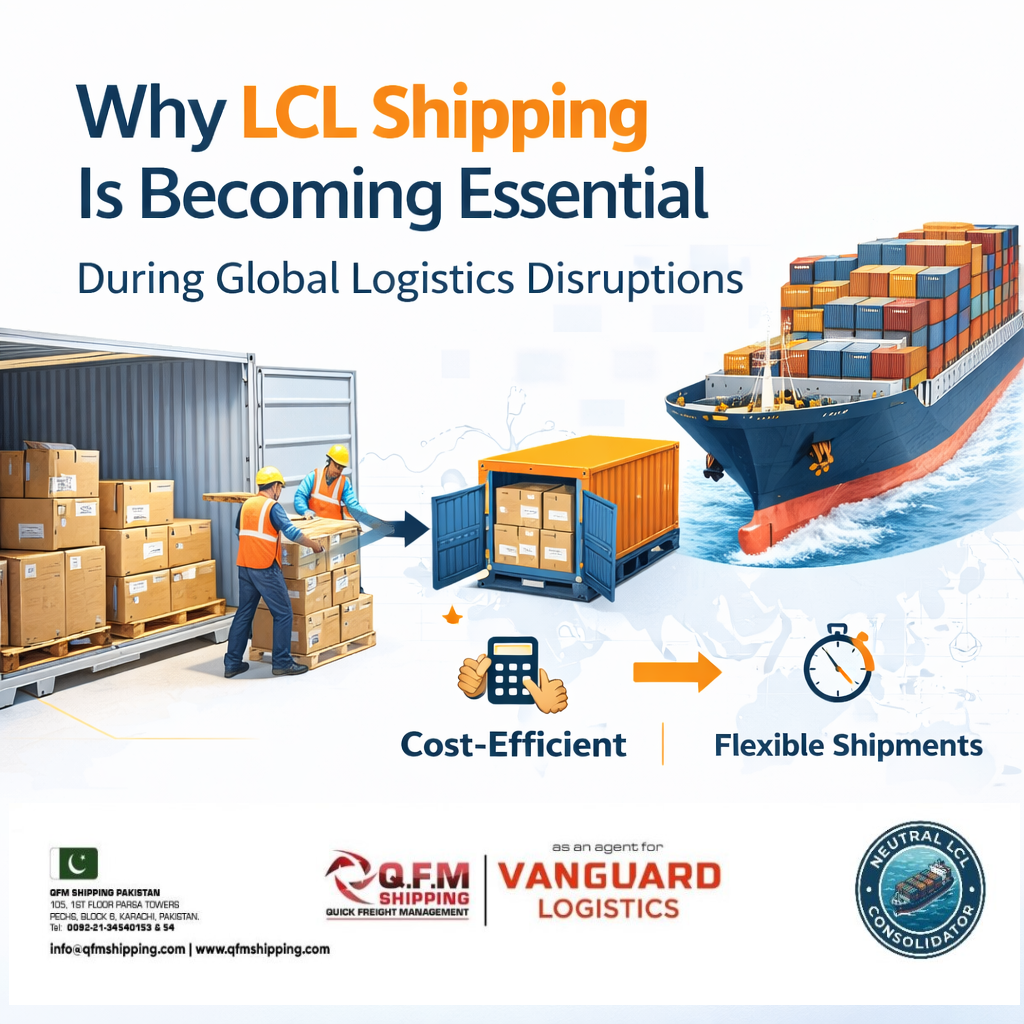
Introduction Global supply chains are experiencing increasing volatility due to geopolitical tensions, shipping route disruptions, rising freight rates, and port congestion. For exporters and importers, these challenges make shipping planning more complex than ever. In this uncertain environment, LCL Shipping During Global Logistics Disruptions has become a critical logistics solution. LCL (Less-than-Container-Load) shipping allows multiple […]
27
Feb
Feb
QFM Shipping Pakistan | How Connectivity Delivers Value in Global Trade Why Connectivity Defines Modern Logistics In today’s fragmented supply chains, connectivity is not a marketing slogan — it is a commercial advantage. Freight forwarders and exporters are no longer competing on price alone. They compete on speed, reliability, network strength, and operational transparency. […]
24
Feb
Feb
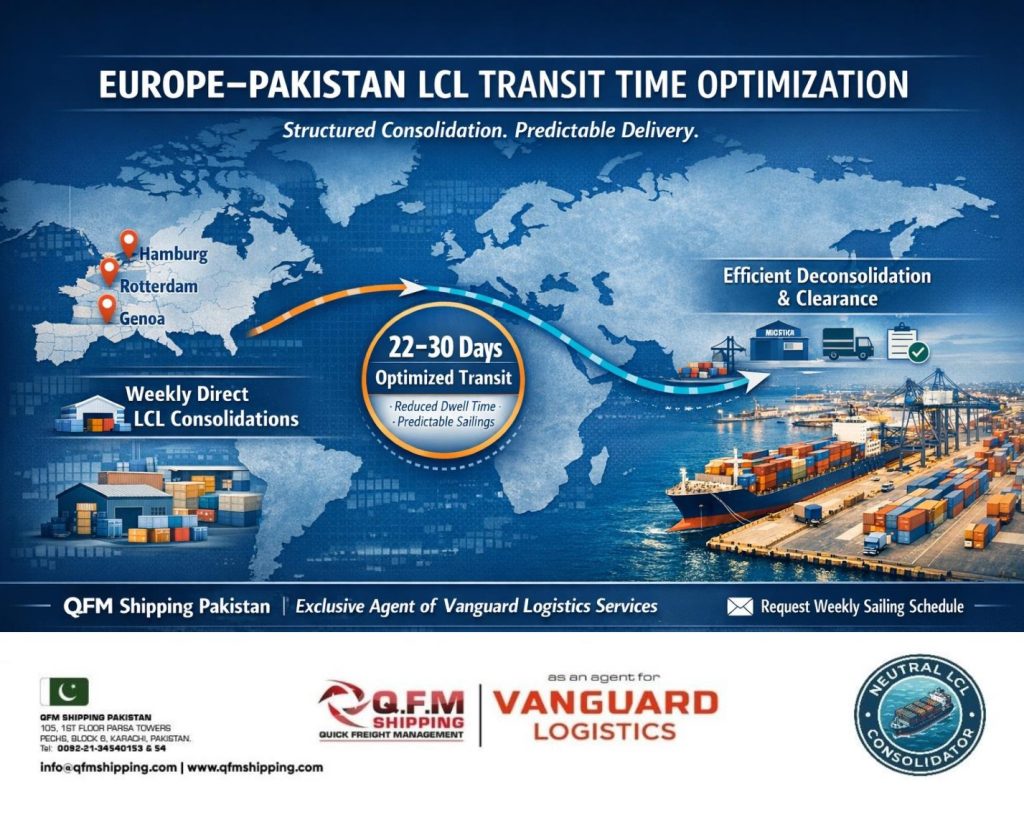
Europe–Pakistan LCL Transit Time Optimization via Vanguard Network In today’s freight environment, Europe–Pakistan LCL transit time optimization is no longer a competitive advantage — it is a necessity. Importers and exporters moving smaller cargo volumes between Europe and Pakistan face increasing pressure to reduce dwell time, improve schedule predictability, and maintain cost efficiency without […]
International Transportation, Shipping News
Why Neutral Agents Are Critical in Competitive Freight Markets
12
Feb
Feb
Why Neutral Agents Are Critical in Competitive Freight Markets In today’s fragmented and margin-sensitive logistics environment, neutral agents are critical in competitive freight markets where trust, confidentiality, and operational transparency define long-term partnerships. As freight forwarding becomes increasingly consolidated and vertically integrated, independent forwarders face a structural risk: sharing cargo and commercial intelligence with […]
International Transportation, Shipping News
Powering Pakistan’s Exports Through Smarter Logistics | QFM Shipping
29
Jan
Jan
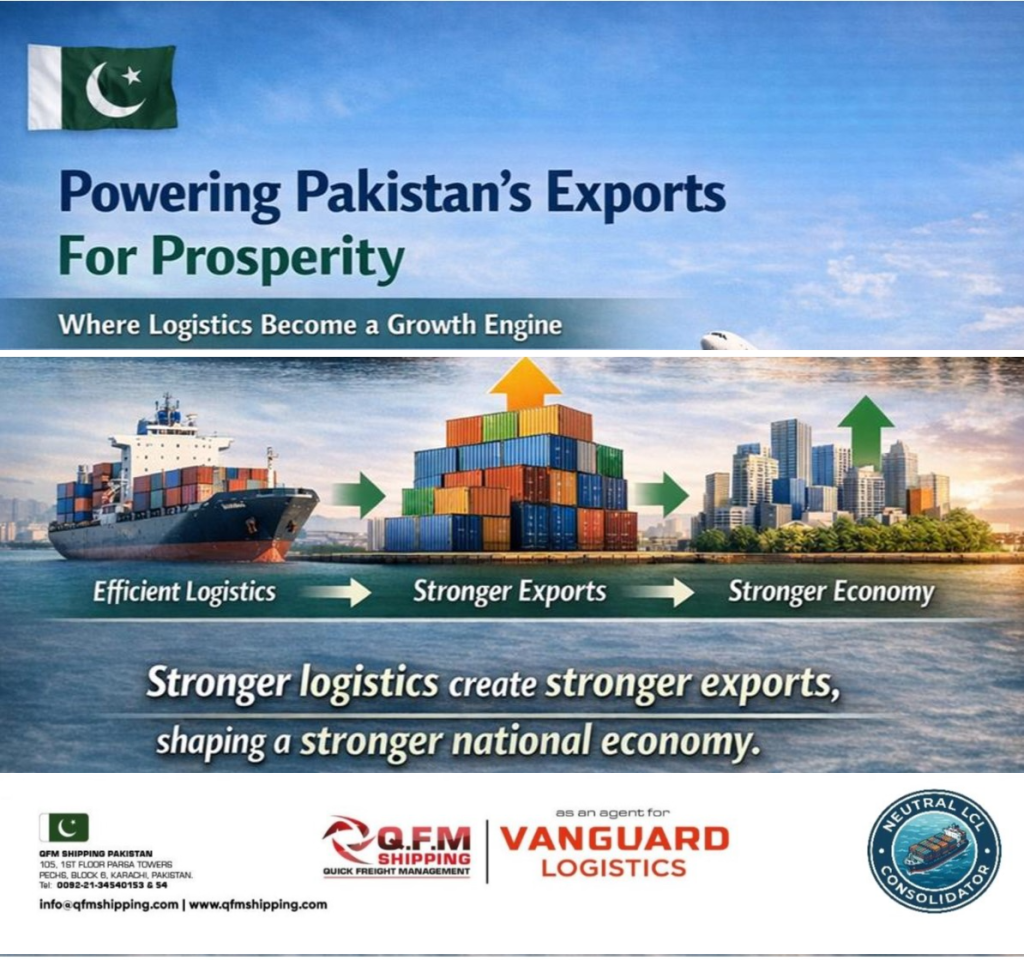
Powering Pakistan’s Exports for Prosperity Why Export Growth Begins with Smarter Logistics Pakistan’s export ambitions depend on more than production capacity or market access. In today’s global trade environment, logistics performance has become a defining competitive factor—one that directly influences cost structures, delivery reliability, and buyer confidence. As export volumes grow and supply chains become […]
24
Jan
Jan
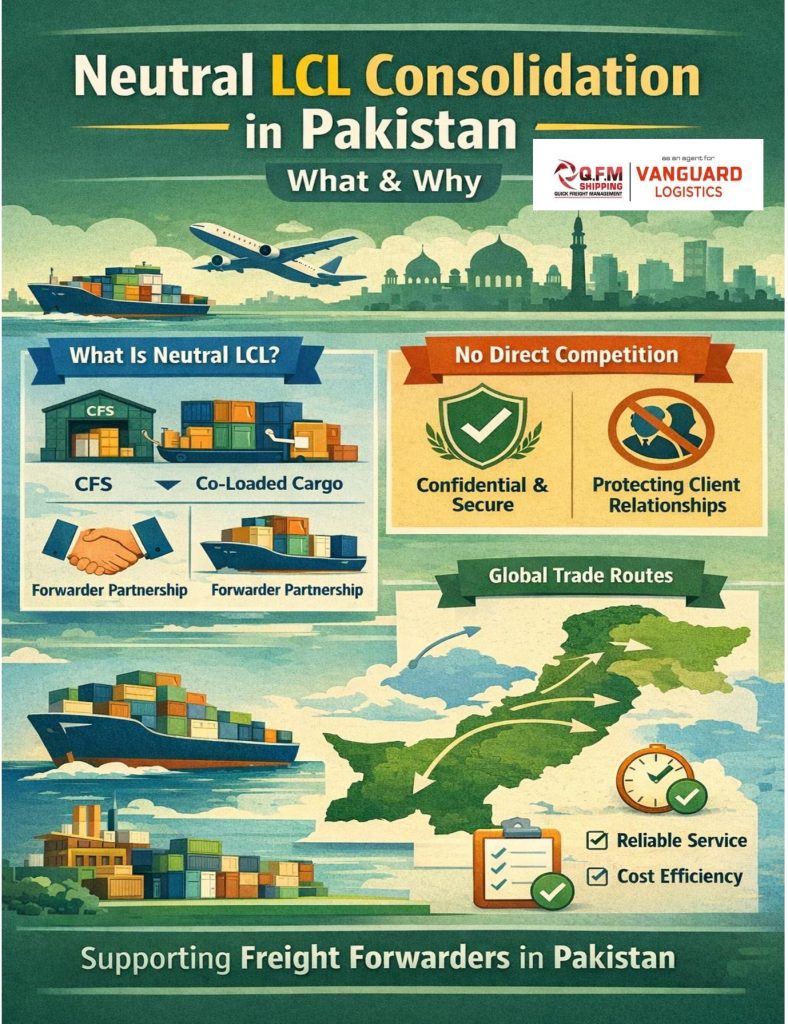
Neutral LCL Consolidation in Pakistan What & Why What Is Neutral LCL Consolidation—and Why It Matters in Pakistan In the freight forwarding ecosystem, LCL (Less-than-Container Load) is often the most practical choice for small and mid-sized shippers who do not have enough cargo to fill a full container. But LCL also introduces complexity: cargo […]
International Transportation, Shipping News
The Evolution of Freight Forwarding in Pakistan: From Traditional to Network-Centric Models
14
Jan
Jan
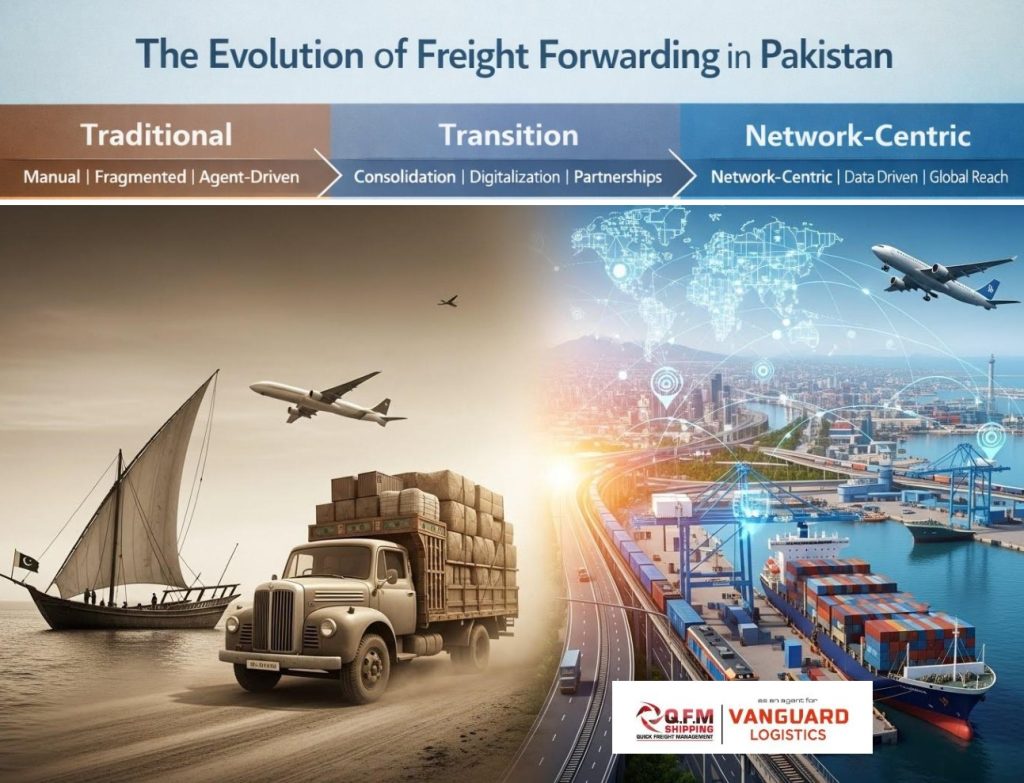
The Evolution of Freight Forwarding in Pakistan: From Traditional to Network-Centric Models (and the Role of QFM Shipping) Freight forwarding in Pakistan has moved from relationship-led, paper-heavy operations to a more integrated, technology-enabled, network-centric model. This evolution is being driven by shifts in global trade requirements, customer expectations for visibility and speed, the rise of […]