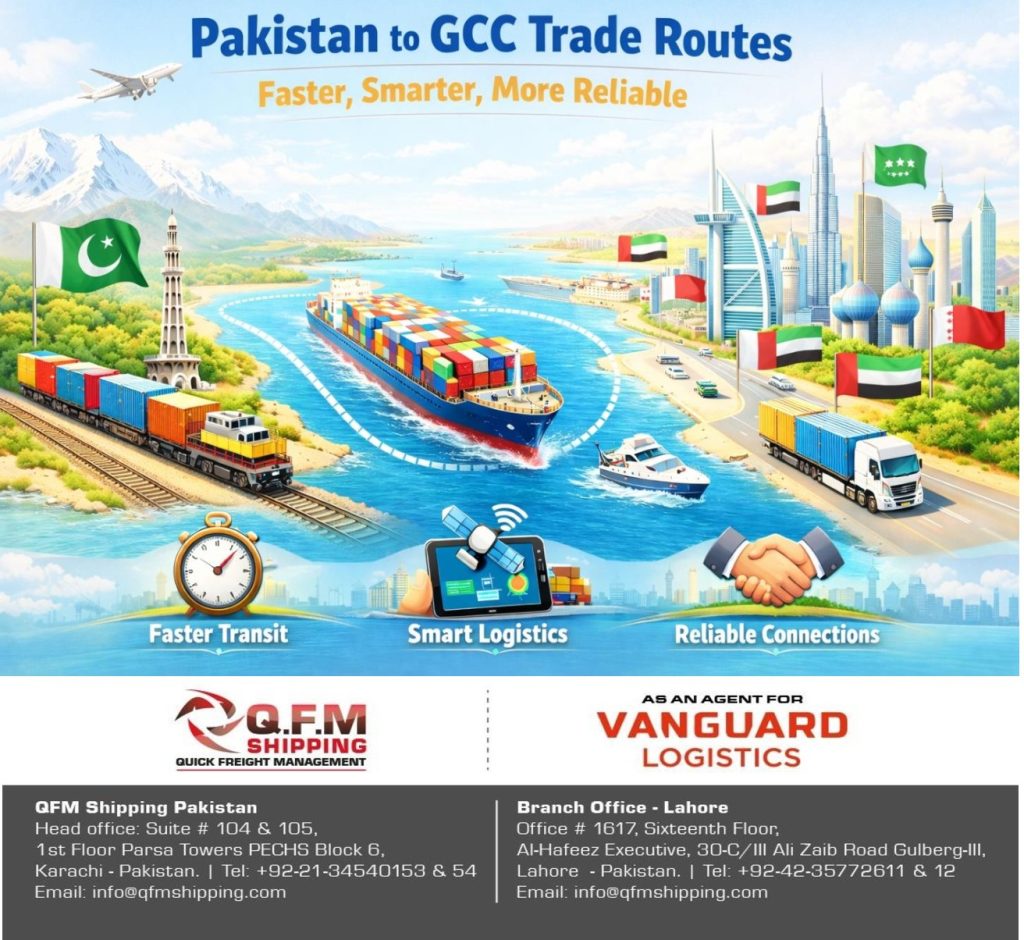
Pakistan to GCC Trade Routes: Faster, Smarter, More Reliable
A New Era for Pakistan–GCC Trade
Trade between Pakistan and the GCC region (UAE, Saudi Arabia, Oman, Qatar, Kuwait, Bahrain) is evolving rapidly. With shifting global shipping dynamics, rising freight costs, and regional disruptions, businesses now demand faster, smarter, and more reliable logistics solutions.
Pakistan is strategically positioned to serve as a high-efficiency trade gateway to the GCC, especially through Karachi Port and Port Qasim. Leveraging modern logistics strategies like LCL consolidation and transshipment, exporters can now move cargo with greater speed and cost efficiency.
Why Pakistan to GCC Trade Routes Matter More Than Ever
1. Strategic Geographic Advantage
Pakistan sits at the crossroads of South Asia, the Middle East, and Central Asia, offering shorter transit routes to GCC ports compared to many global alternatives.
- Faster sailing times to UAE, Oman, and Saudi Arabia
- Reduced dependency on congested global hubs
- Ideal for time-sensitive cargo
2. Rising Demand for Pakistan LCL Shipping
With increasing SME exports and diversified cargo volumes, Pakistan LCL shipping is becoming the preferred choice for exporters.
Key Benefits:
- Lower shipping costs (pay only for used space)
- Flexible shipment schedules
- Reduced inventory holding costs
3. Faster Transit Through Optimized Routes
Modern trade routes from Pakistan to GCC are designed for speed and efficiency:
- Direct sailings from Karachi to Dubai, Jebel Ali, and Dammam
- Optimized feeder networks to Oman and Qatar
- Reduced dwell time at ports
This ensures cargo reaches GCC markets faster than traditional routes.
Smarter Logistics: The Role of Consolidation & Technology
Neutral LCL Consolidation: A Game Changer
Using a neutral freight forwarder in Pakistan ensures:
- Confidentiality between competing agents
- Efficient cargo consolidation
- Better container utilization
This is particularly critical in competitive logistics environments where trust and neutrality drive long-term partnerships.
Digital Tracking & Smart Supply Chains
Modern logistics is no longer just about transportation—it’s about intelligence.
Smart logistics solutions include:
- Real-time cargo tracking
- Predictive ETAs
- Automated documentation
- Route optimization
These technologies help businesses make data-driven decisions, improving overall supply chain performance.
More Reliable Connections in Uncertain Times
Global shipping disruptions—such as geopolitical tensions and port congestion—have highlighted the need for reliable logistics partners and routes.
Pakistan to GCC routes offer:
- Alternative corridors avoiding high-risk zones
- Stable transit schedules
- Reduced exposure to global delays
Reliability today is not optional—it’s a competitive advantage.
Freight Cost Optimization: A Key Business Priority
Shipping costs remain a major concern for exporters. Optimizing freight is essential to maintaining margins.
How Pakistan–GCC Routes Reduce Costs:
- Shorter transit distances = lower fuel costs
- LCL consolidation reduces per-unit shipping cost
- Efficient port operations minimize demurrage
By working with experienced logistics providers, businesses can achieve significant freight cost optimization.
Key GCC Trade Destinations from Pakistan
UAE (Dubai / Jebel Ali)
- Primary trade hub for re-exports
- Fastest transit times from Pakistan
Saudi Arabia (Dammam / Jeddah)
- High-volume import market
- Growing demand for Pakistani goods
Oman (Muscat / Sohar)
- Emerging logistics hub
- Strategic access to Gulf markets
Qatar & Kuwait
- Strong demand for construction and consumer goods
Why Choose QFM Shipping for Pakistan to GCC Routes
QFM Shipping provides end-to-end logistics solutions designed for speed, efficiency, and reliability.
Core Strengths:
- Expertise in Pakistan LCL shipping
- Reliable neutral consolidation services
- Strong GCC network coverage
- Cost-effective freight solutions
- Real-time shipment visibility
With a focus on customer-centric logistics, QFM ensures your cargo moves seamlessly across borders.
Future Outlook: Pakistan as a Regional Logistics Hub
With supportive policies and infrastructure development, Pakistan is rapidly emerging as a regional transshipment and logistics hub.
Key trends shaping the future:
- Growth in LCL trade volumes
- Increased demand for GCC connectivity
- Expansion of port capabilities
- Adoption of smart logistics technologies
Businesses that leverage these developments early will gain a significant competitive edge.
Conclusion: Faster, Smarter, More Reliable Trade Starts Here
Pakistan to GCC trade routes are no longer just an option—they are a strategic advantage.
By combining:
- Faster transit routes
- Smarter logistics solutions
- Reliable shipping networks
Businesses can unlock greater efficiency, lower costs, and stronger market access.
Call to Action
Partner with QFM Shipping to optimize your LCL shipments through Karachi and Port Qasim.
Partner with QFM Shipping today and experience:
✔ Faster transit
✔ Smarter logistics
✔ Reliable delivery
Contact us today to streamline your global logistics operations.
QFM Shipping Pakistan
Karachi : Suite # 104 & 105, 1st Floor Parsa Towers PECHS Block 6 Karachi
Tel: 0092-21-34540153 & 54
Lahore: Suite # 1617, 16th Floor, Al Hafeez Executive Gulberg III, Lahore
Tel: 0092-42-35772611 & 12
Email: pricing.pkkhi@qfmshipping.com
Mobile: 0092-321-8280327
Tags:
Pakistan LCL shipping, Pakistan to GCC trade routes, QFM Shipping, freight cost optimization, neutral freight forwarder Pakistan, GCC logistics routes, Karachi to Dubai shipping, LCL consolidation Pakistan, Middle East shipping routes,
Read More:
1- Neutral LCL Consolidation | Protect Your Business
2- The Hidden Logistics Strategy Top Freight Forwarders Use
