
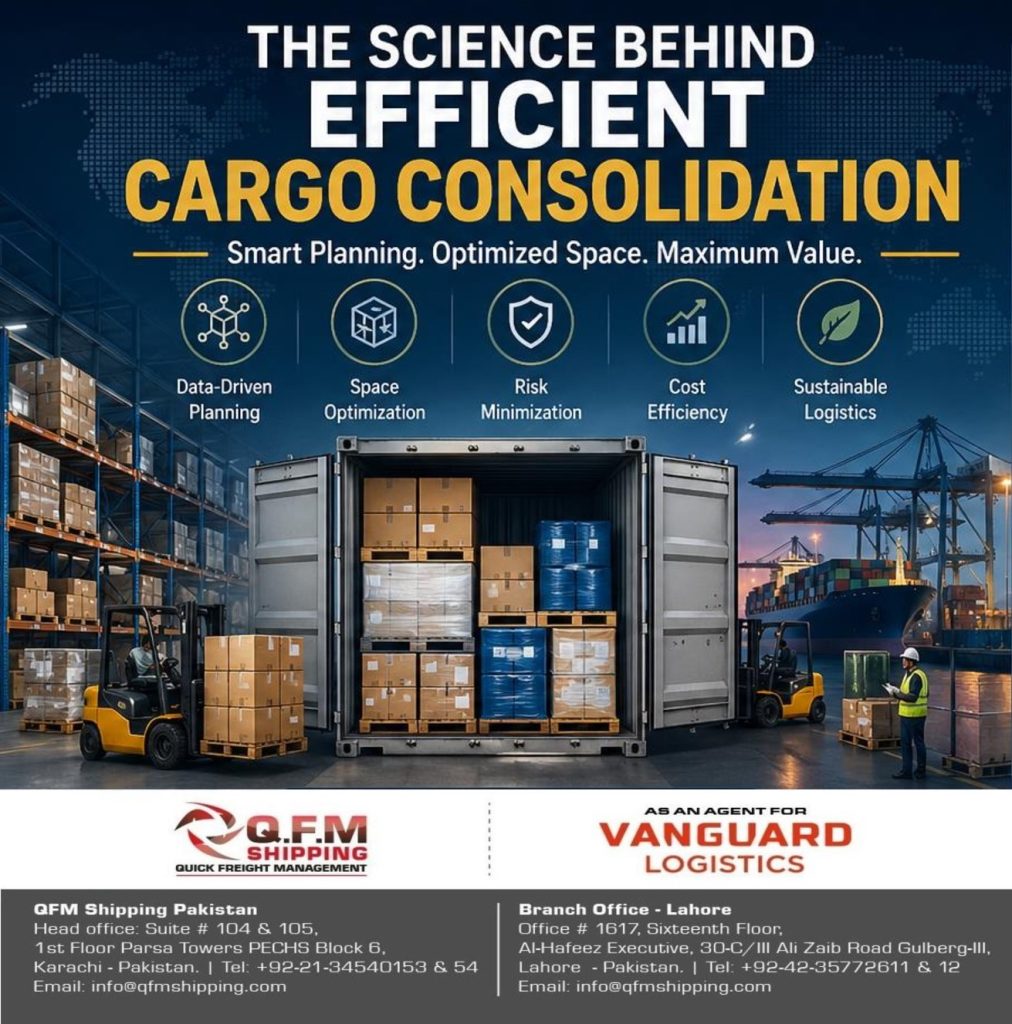
The Science Behind Efficient Cargo Consolidation
In today’s competitive global trade environment, businesses are under constant pressure to reduce logistics costs, improve delivery timelines, and minimize risks. One of the most powerful strategies to achieve this is efficient cargo consolidation—a data-driven logistics approach that transforms how shipments move across borders.
But what exactly makes cargo consolidation “efficient”? Let’s break down the science behind it.
What Is Cargo Consolidation?
Cargo consolidation is the process of combining multiple smaller shipments from different shippers into a single container, commonly known as Less than Container Load (LCL) shipping.
Instead of paying for an entire container, businesses share space, significantly reducing shipping costs while maintaining flexibility.
👉 Related: Explore LCL Shipping Services (Internal Link)
The Core Science Behind Efficient Consolidation
Efficient cargo consolidation is not just about grouping shipments—it’s about precision planning, optimization algorithms, and logistics intelligence.
1. Data-Driven Planning
Modern logistics providers like QFM Shipping use advanced systems to:
- Analyze shipment size, weight, and destination
- Group compatible cargo
- Optimize routing and scheduling
Result: Reduced transit time + lower operational costs
2. Space Optimization (Container Utilization)
Every cubic meter inside a container has value.
Efficient consolidation ensures:
- Maximum space utilization
- Proper cargo stacking techniques
- Balanced weight distribution
Impact: Lower cost per shipment unit
3. Cost Efficiency Through Shared Logistics
By sharing container space:
- Freight cost is divided among multiple importers
- Businesses avoid paying for unused space
- Smaller shipments become economically viable
This is why LCL shipping is ideal for SMEs and growing importers.
4. Risk Minimization
Efficient consolidation reduces risk through:
- Proper cargo segregation
- Standardized handling procedures
- Professional packaging and labeling
Prevents:
- Cargo damage
- Misrouting
- Customs delays
5. Smart Routing & Network Optimization
Global logistics networks use:
- Strategic consolidation hubs
- Optimized trade routes
- Real-time shipment tracking
Outcome: Faster, more predictable deliveries
Cost Benefits of Efficient Cargo Consolidation
Here’s how businesses benefit:
- ✔ Up to 30–40% reduction in shipping costs
- ✔ Lower warehousing and handling expenses
- ✔ Reduced inventory holding costs
- ✔ Improved cash flow through smaller shipments
👉 Related: How to Reduce Freight Costs (Internal Link)
Common Mistakes in Cargo Consolidation
Even though consolidation is powerful, inefficiencies can occur if not managed properly:
- ❌ Poor packaging leading to damage
- ❌ Incorrect documentation is causing customs delays
- ❌ Choosing unreliable freight partners
- ❌ Lack of shipment visibility
👉 Related: Top Shipping Risks & How to Avoid Them (Internal Link)
Practical Example (Real-World Scenario)
A growing importer shipping electronics monthly:
- Before consolidation:
- Used partial containers → high cost
- After switching to LCL consolidation:
- Shared container space
- Reduced freight cost by 32%
- Improved delivery frequency
Result: Higher efficiency + faster business scaling
When Should You Use Cargo Consolidation?
Efficient cargo consolidation is ideal when:
- You ship small to medium volumes
- You want cost savings over speed
- You need flexible shipment schedules
- You are scaling imports gradually
Why Choose QFM Shipping for Cargo Consolidation?
At QFM Shipping, we apply the science of logistics optimization to deliver:
- ✔ Advanced LCL consolidation solutions
- ✔ Strategic global routing
- ✔ Transparent cost structures
- ✔ Risk-managed shipping processes
- ✔ Real-time shipment visibility
Our goal is simple:
👉 Lower your costs. Increase your efficiency. Scale your business.
Get Started Today
Ready to optimize your shipping strategy?
👉 Get a Free Quote Now
👉 Talk to a Logistics Expert
👉 Optimize Your Next Shipment with Confidence
Conclusion
Efficient cargo consolidation is more than just a logistics technique—it’s a strategic advantage in modern global trade.
By combining data, optimization, and network intelligence, businesses can:
- Reduce costs
- Minimize risks
- Improve supply chain performance
And with the right logistics partner like QFM Shipping, the results are measurable and scalable.
Contact QFM Shipping (Quick Freight Management) today and discover how neutral LCL consolidation can transform your global shipping strategy.
QFM Shipping Pakistan
Karachi : Suite # 104 & 105, 1st Floor Parsa Towers PECHS Block 6 Karachi
Tel: 0092-21-34540153 & 54
Lahore: Suite # 1617, 16th Floor, Al Hafeez Executive Gulberg III, Lahore
Tel: 0092-42-35772611 & 12
Email: pricing.pkkhi@qfmshipping.com
Mobile: 0092-321-8280327
FAQ Asked Questions
Q1: What is efficient cargo consolidation?
Efficient cargo consolidation is the optimized process of combining multiple shipments into one container to reduce cost and improve logistics performance.
Q2: Is LCL shipping cheaper than FCL?
Yes, for smaller shipments, LCL is significantly more cost-effective as you only pay for the space you use.
Q3: How can I reduce shipping costs using consolidation?
By sharing container space, optimizing shipment size, and using strategic routing.
Tags:
Efficient Cargo Consolidation, cargo consolidation, LCL shipping, freight consolidation, reduce shipping cost, logistics optimization, import shipping strategy, container space optimization, supply chain efficiency,
